

Review
Review: Cloneboy Suction Cup
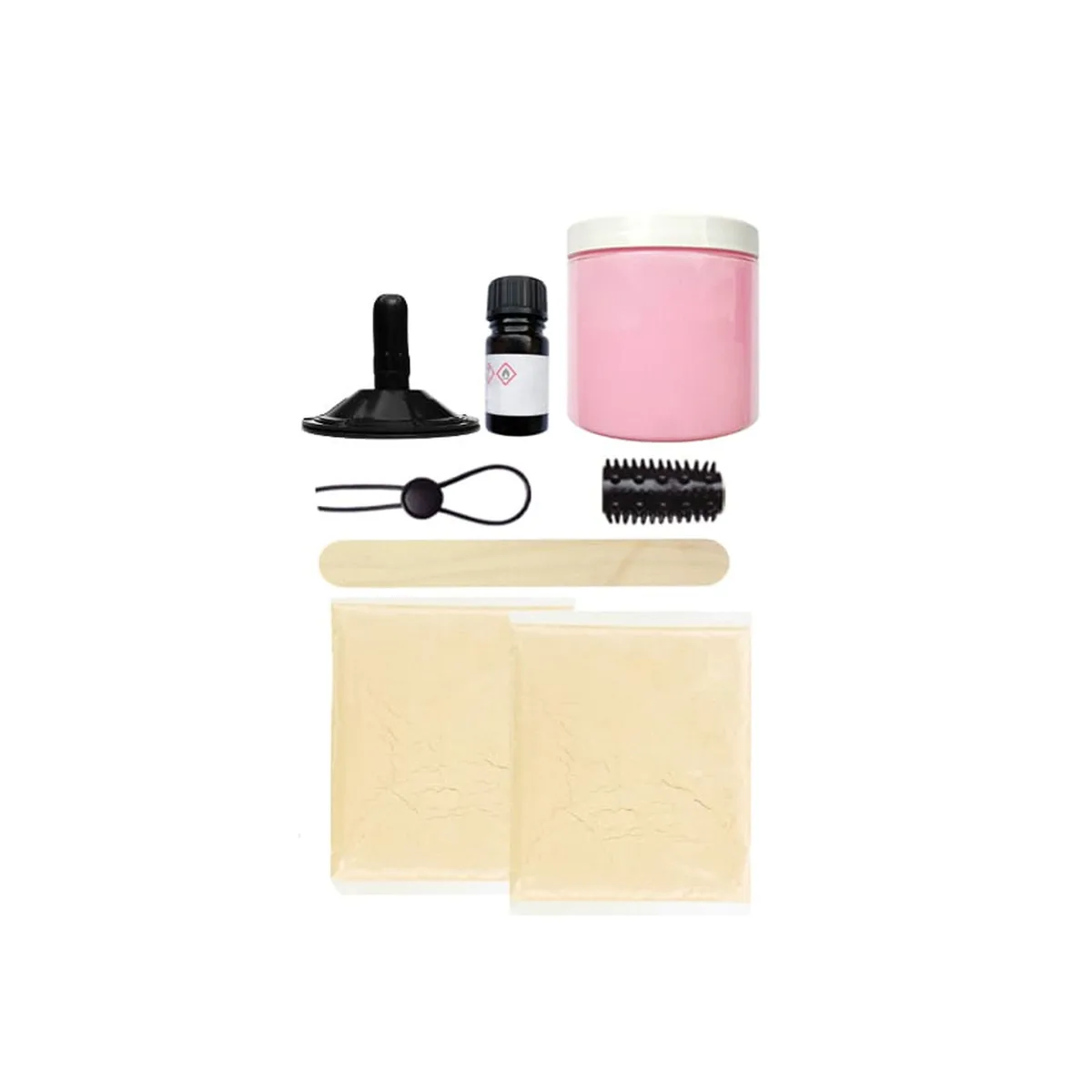
The same kit with an integrated suction cup—the most complete of the casting kits.
29 July 2026
 Best budget
Review · Casting kit · Black silicone dildo
Cloneboy’s black casting kits reviewed against the manufacturer’s own information and price data from seven Swedish stores. Two bags of plaster-free algae gel, three minutes of setting time, lasso penis ring, and stimulating sleeve are included in the price — but neither the silicone curing system, measurements of the casting tube, nor curing time are published, and there is no manufacturer warranty.
The cheapest way to try penis casting in Sweden, and the kit in Cloneboy’s Black series with the fewest parts that can break. Two bags of algae gel give a second chance to the shape; the Lassopenis ring and stimulating sleeve are included instead of costing 9.95 euro per piece, and the three-minute setting time provides an unusually good working margin. What you pay for is the documentation: neither the silicone’s curing system, amounts in grams, the dimensions of the casting tube, nor any curing time is published, and there is no manufacturer warranty.
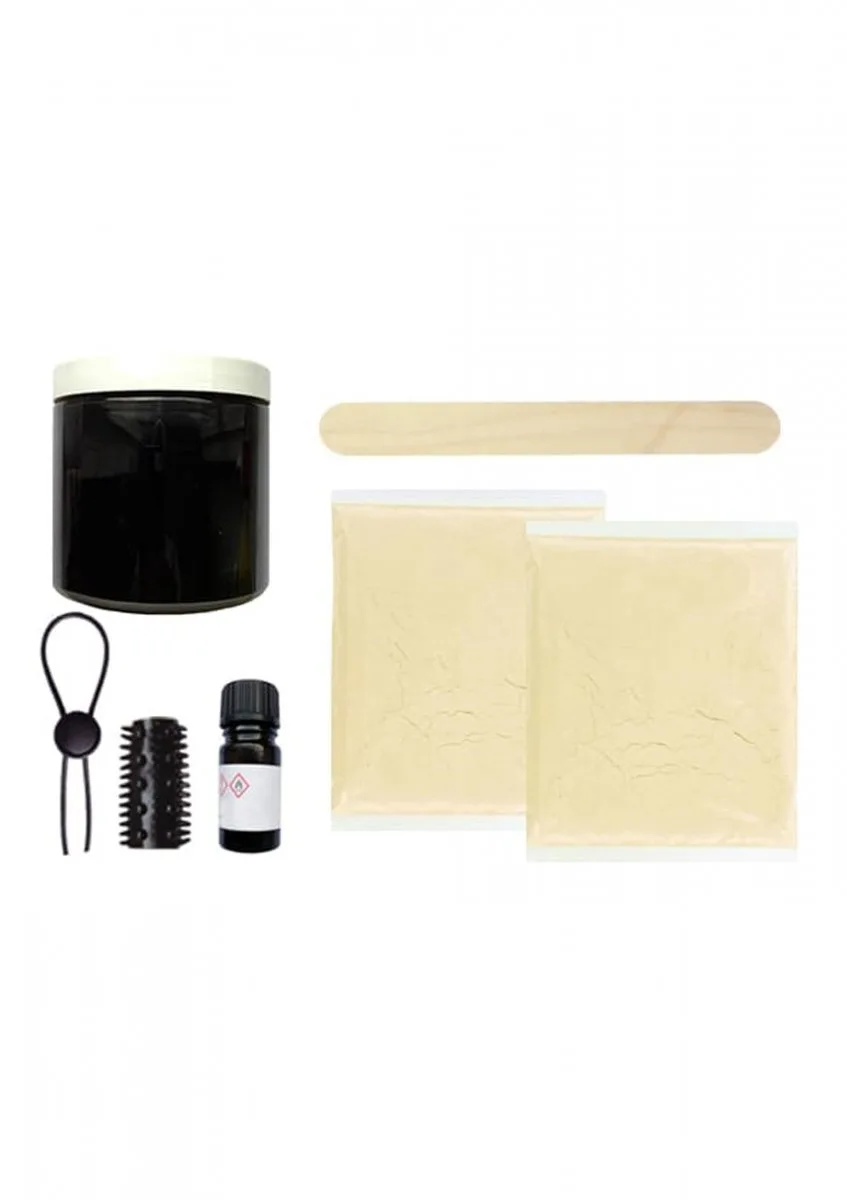
Cloneboy Dildo Black is not a finished dildo. It’s a casting kit, and the difference is the whole point of the product. What’s inside the black tube when you open it are raw materials: impression compound in powder form, a jar of black silicone rubber with a hardener, a lasso penis ring, a stimulation sleeve made of rubber, and a wooden mixing stick. What you get out of it depends on what you put into the mold and on how well you manage a process that takes a few minutes and can’t be paused halfway through.
The manufacturer is Wonderboys in Amsterdam, which sells Cloneboy in 22 different versions. This variant is called Cloneboy dildo Black, and it’s in the Cloneboy Classic line. It costs 34,95 euro directly from the manufacturer. In Sweden, the item is sold by seven retailers at prices between 299 and 449 SEK, and three of them had it in stock at the price check on September 12, 2026. The result is a black silicone copy, and the color is the only difference compared with its skin-colored sibling, Cloneboy Dildo Pink, which costs exactly the same 34,95 euro from the manufacturer.
This review is exclusively about the item with EAN 8717953006318. The manufacturer does not publish any EAN at all on its product page—instead, the number is checked against Sexonics’s EAN13 specification field and against Vuxenkuls’s specification table, where both retailers link the number to precisely the black dildo variant. It’s worth keeping track of this, because Cloneboy sells at least twelve kits that look almost identical in photos and that retailers name in at least six different ways.
The principle behind penis casting is the same as in dentistry and for protest purposes: an alginate takes a negative impression, and a casting compound fills the impression and becomes a positive. Cloneboy’s impression compound is called 3D Gel and, according to the manufacturer, is made from natural seaweed, medically tested, and completely free from plaster. Being free from plaster is not a minor detail: plaster cures exothermically, meaning during heat development, and it’s the most common cause of skin irritation in at-home casting contexts. Alginate instead cures through chemical gel formation at room temperature.
The second step is the silicone. The manufacturer describes the contents of the jar as high quality skin feel silicone rubber and states that the amount is enough for penises of all sizes. The hardener is in a separate small bottle with hazard pictograms, which you can see in the manufacturer’s own contents image, and it’s mixed into the silicone with the included wooden stick before the mixture is poured into the mold.
What this kit is not: a product with dimensions, weight, power stages, or a warranty. There is no motor, no battery, no charging port, and no IP rating, and it’s not a shortcoming—it simply has no electronics to classify. The final product’s dimensions are determined by the user, not the manufacturer, and that’s why a comparison to a standard dildo can only be done partially. What can be compared is what’s included in the package, how the process is described, and what it costs.
Cloneboy’s naming is simpler than it looks, but the stores make it complicated by inventing their own names. Three variants sit close together in the manufacturer’s black series.
So the price difference from the manufacturer is three euro for the suction cup versus the vibrator unit. The loose vibrator unit costs 9.95 euro each in the manufacturer’s own spare parts list, which says something about what three euro is worth when it’s included in a kit from the start. At the Swedish shops, the range is bigger: Blush Me lists Cloneboy Dildo With Suction Cup at 459 SEK and Cloneboy Dildo With Vibrator at 349 SEK next to the black dildo kit at 299 SEK.
Also note that several Swedish shops call this item something other than what the manufacturer does. Vuxenkul and Sexonic write "Personal Dildo Black", Joyland writes "Svart Dildo, Penisavgjutning", Lekosmek just writes "Svart Cloneboy", and Sexonics’ other listing writes "Penis Cloner Kit Black". All of them have the same EAN. It’s the EAN number that determines what you get, not the product page name.
The material issue is the only characteristic of an intimate product that can’t be compensated for with experience or care, and on a casting kit it’s doubly important: the impression compound should sit directly against skin and mucous membrane for a few minutes, and the finished product should be usable for years afterward. Cloneboy lists the materials for both parts, but at a level of detail far below what established manufacturers in the category publish.
The manufacturer’s wording for the silicone is "high quality skin feel silicone rubber". It is a marketing description, not a material specification. What it says is that the material is silicone—which in itself is real information, since silicone is non-porous and therefore can be cleaned in a way that porous TPE or softened PVC never does. What it does not say is at least as interesting.
The single most important omitted piece of information here is the curing system. Cloneboy does not publish whether the silicone is platinum-cured or tin-cured, either on the product page or on the subpage for Silicone Rubber Black. The difference is not academic. Platinum-cured silicone is addition-cured, does not release byproducts, and is the type used in medical contexts. Tin-cured silicone is condensation-cured, releases alcohol during curing, and measurably shrinks over time. It is also cheaper. The competitor Empire Labs explicitly states that Clone-A-Willy uses one hundred percent platinum-cured medical-grade silicone; Cloneboy writes nothing at all. That does not automatically mean that Cloneboy’s silicone is worse, but it does mean that you can’t know.
That also includes the fact that Cloneboy does not state any shore hardness, no tensile strength, and no information about whether the finished cast part is intended for longer contact with mucous membrane. The manufacturer’s only quantitative promise about the silicone is that the amount is enough for all penis sizes—an assertion without a number, which therefore cannot be checked against anything.
3D Gel is the part of the kit where the manufacturer actually provides usable technical information. The powder is mixed according to the manufacturer’s own subpage with 500 cc of cold water, and Cloneboy expressly states that it’s fine to stir with both a hand whisk and an electric mixer. Water temperature is not a detail—alginates cure faster in warm water, and a mix that sets too quickly gives a mold with air pockets.
The retailer Vuxenkul further specifies the working process and states that the powder should be stirred for two minutes, and that it doesn’t matter if the paste is a little lumpy. That information comes from the store, not from the manufacturer, and it should be read as an add-on rather than as an official instruction. The manufacturer’s own information, instead, is the setting time: three minutes, which Cloneboy highlights as an advantage over competing kits with shorter time windows.
The fact that the material is alginate-based and plaster-free has a concrete consequence that’s worth understanding before you start. Alginat is a disposable material. The mold can’t be washed out and reused; it dries and shrinks if it’s left standing, and it must be filled with silicone while it’s still moist. That’s also why the second bag of 3D gel in the kit is such an important detail — it’s a second chance on the mold, not a second chance on the entire process.
Phthalates are a group of plasticizers used to make plastic, especially flexible PVC, pliable. The Kemikalieinspektionen describes them as substances that can affect the endocrine system and make reproduction more difficult, and several of them are restricted or banned within the EU in a large number of products. The category of intimate products is a recurring subject of supervision just because it contains flexible plastic against skin.
Here’s the situation, easy to summarize: Cloneboy does not publish any declaration about phthalates, BPA, or latex for any part of the kit. This applies to the silicone; it applies to the penis ring; and it applies to the stimulation sleeve. Chemically speaking, real silicone doesn’t require phthalate plasticizers — the softness comes from the polymer’s own structure — so the material designation "silicone" is itself a better signal than labels like TPE or jelly rubber. But the manufacturer states that the penis ring is made of rubber and ABS plastic, and the sleeve is only described as "rubber sleeve". For the two parts, there is no material declaration that can be checked against anything at all.
The latex information is missing too. "Rubber" in English can mean both natural rubber and synthetic rubber, and the difference is crucial for someone who’s allergic to latex. Since the penis ring is intended to stay in place throughout the casting, and the sleeve is intended to be used against mucous membrane, this is something that actually matters. If you’re allergic to latex, you should assume that you don’t know, and treat the two rubber parts accordingly.
This is the weakest part of Cloneboy’s specifications, and it deserves to be written out plainly:
The comparison with Clone-A-Willy gets uncomfortable at exactly this point. Empire Labs lists the casting-mold’s dimensions as 10.8 × 2.5 inches, states that the kit is dimensioned for an average penis, gives the American average as 5.1 inches in length and 2.3 inches in width, and expressly recommends extra silicone and an XL vibrator for anyone who is longer than 7 inches. Cloneboy instead writes that the kit fits penises of all sizes, even curved ones. That’s a more generous promise and a significantly less controllable one.
What sets a casting kit apart from a regular product is that the purchase is only half the deal. The other half is a step that either works or doesn’t, and it can’t be redone without buying new parts. The manufacturer’s own instruction is a four-step, full-color graphic that, according to Cloneboy, is included in every package, and it’s short enough to reproduce in full.
The steps in the manufacturer’s graphics for the black dildo read: make your penis erect and add the 3D gel and wait a few minutes; add the 3D gel and wait a few minutes; fill the mold with the skin feel silicone rubber; now you have an exact dildo copy of your penis.
If you read that list twice, you see the problem. Step 1 and step 2 carry verbatim the exact same instruction text in the manufacturer’s own step graphic, even though the illustrations show two different moments: the first shows the penis ring in place in the tube, the second shows the gel being poured in. It’s a proofing error in Cloneboy’s own material, not two separate work steps. That the picture is still up and is additionally republished by Swedish retailers says something about how much documentation is behind this product.
Vuxenkul describes the same workflow in more detail and in an order that actually can be followed: make sure it’s hard, use the included penis ring, mix the powder with the right amount of water and stir for two minutes, insert the penis into the plastic tube and fill the tube with the mixture, make sure the penis doesn’t touch the tube’s walls while the mixture sets, remove the penis when the mold has fully set, add the black silicone mixture and let it cure. That detail about not touching the tube’s walls is the single most important thing in the entire process—touch it along the edge and the shape will be thin in one spot and will break when you pull yourself out.
There are two times to keep separate, and the manufacturer only publishes one of them.
The first is the mold-setting time. Cloneboy states it’s three minutes and emphasizes that it’s longer than with competing kits, which gives you more margin to get the penis into place before the gel sets. That’s the manufacturer’s own claim, and it’s unambiguous.
The other is the silicone curing time, i.e. how long the copy has to stand before it can be used. Cloneboy does not publish this anywhere. Here, the information also differs between the retailers that dare to put a number on it: Vuxenkul writes "let cure for several hours," while the Swiss retailer Joujou states that you should wait 24 hours before the copy is used. That’s a significant difference, and since neither of the figures comes from the manufacturer, it’s impossible to determine which one is correct. The cautious conclusion is the only reasonable one: plan on a full day, and pour it in the evening before a day when you don’t need the product.
Practically, this means you should read the included manual before you mix anything. Both Lustly and Joyland state that an illustrated manual is included in the package, and Cloneboy confirms on its assortment page that a color step-by-step guide is included with every kit. That manual is the only place where a curing time can be expected to be stated—it isn’t published on the web.
Cloneboy’s clearest selling point against the competitors is that the kit includes material for a second mold if the first one fails. The manufacturer prints it on the product page, and the printed text on the packaging says "extra 3d gel for 2 moulds".
That’s a real advantage, and of course it should be understood in its proper scope. The second chance applies to the mold, not the casting. The jar of silicone rubber is enough for a single copy, according to all the published material. If the mold fails, you have another bag of gel. If the silicone casting fails—too little mass, not mixing well enough, air pockets in the top—then you must buy a new jar. With the manufacturer, Silicone Rubber Black costs 11,95 euro and a loose bag of 3D Gel costs 9,95 euro; at Joyland, a Refill Silicone costs 179 SEK and a Refill 3D Gel costs 169 SEK.
Put those figures against the kit price and the picture becomes clear. A kit at 299 SEK plus a failed silicone casting plus a refill at 179 SEK totals 478 SEK—more than the most expensive complete kit in the Swedish price comparison. That’s the real risk with this product category, and it’s worth calculating before you order.
This is the point where reviewing all the retailers provides the most. Five of the seven Swedish shops publish a contents list, and they don’t agree. Not about the number of gel bags, not about whether gloves are included, and not about whether the stimulation sleeve is included.
This is what it looks like, with the shop indicated for each item, since none of them comes from the manufacturer:
The manufacturer determines the points where the shops say different things. Cloneboys own content image for the black dildokite shows six things: the jar with black silicone rubber, the hardener bottle, the lasso penis ring, the stimulating sleeve, the wooden mixing stick, and the 3D gel in a bag. That means that Joyland’s claim about the sleeve is correct — it is included — and that SexleksakerOutlet, Blush Me, and Lustly have all left it out. The manufacturer’s product text also confirms it in words: the kit has “an added stimulation sleeve.”
The question about the number of gel bags goes the other way. The manufacturer’s product text promises material for a second mold; the packaging print explicitly states gel for two molds; and both Blush Me, SexleksakerOutlet, and Lustly state two packs. Joyland states one bag. Here, the manufacturer’s own commitment weighs most, and Joyland’s claim about a single gel bag is therefore the one that deviates — which is also visible in the shop’s own product image, where only one bag is shown.
The plastic gloves are the third point of contention. Only Lustly lists them, and the manufacturer’s content image from May 2025 shows no gloves. However, SexleksakerOutlet’s own product image of an older version of the kit shows a small rolled-up plastic bag that looks exactly like gloves, together with pink gel powder instead of the beige. The conclusion is that the kit’s contents have changed between generations and that the shop texts have not kept up. Base your view on the manufacturer’s current content image, and don’t count on gloves.
The three accessories are each worth their own line, because they are all sold separately by the manufacturer and therefore have a price tag that can be verified.
The lasso penis ring is, according to the manufacturer, made of rubber and ABS plastic and costs 9,95 euros per piece. The lasso design means that the tightening can be adjusted with a draw strap instead of being fixed, which is the right solution in this context: the ring should be in place throughout the entire casting and then be removed without needing to pull it over a newly cast mold.
The stimulation sleeve is described by the manufacturer only as a stimulating rubber sleeve, and it also costs 9.95 euros. It is not part of the casting but an accessory for the finished copy, and it appears in the manufacturer’s contents image as a short, studded rubber sheath.
The mixing pin made of wood is included according to the manufacturer’s parts page for the silicone, which states that the hardener and mixing sticks are included with the jar. That it is made of wood and not plastic has a practical consequence: it is for one-time use, and it should not be reused for the next mix because cured silicone remains in the wood’s fibers.
If you add up the loose parts to the manufacturer’s own individual prices—silicone 11.95, gel 9.95 per bag, penis ring 9.95, and sleeve 9.95 euros—you end up with 51.75 euros for the parts that are included in a kit that costs 34.95 euros. So the kit is cheaper than the sum of its parts, which is the normal order of things, but it’s still worth noting when you consider buying replacement parts separately.
Once the silicone has cured, you have a product that Cloneboy no longer says anything about. The manufacturer does not publish any care instructions for the finished cast, no recommended cleaning method, and no information about expected lifespan. What can be established is what applies to silicone in general, and what the stores actually state.
Water-based. Joyland explicitly states water-based lubricant in its specification table for this item, and it is the same recommendation that applies to silicone products in general. The reason is chemical: silicone-based lubricants are related to the cast material and break down the surface over time so that it becomes porous. Once the surface is porous, it can no longer be cleaned properly—just throw it away.
Oil-based products like coconut oil are the other pitfall. They don’t dissolve silicone, but they leave a film that’s hard to remove and that traps dirt. With a home-cast copy that has a lot of surface texture—and the point of the product is precisely that all the details are included—this is a bigger problem than with a smooth factory dildo.
Rinse the copy in lukewarm water and use fragrance-free soap or a cleaner intended for intimate products. Let it air-dry completely before putting it away, and store it separately—silicone against silicone can cause discoloration over time, and a newly cast copy is more sensitive than a factory-cured product.
Two things belong here, and they come from what the manufacturer doesn't write. Cloneboy does not state any temperature limit for the casting material, which means that boiling and a dishwasher should be avoided—this method assumes documented heat tolerance that is not published here. And Cloneboy does not state any IP rating, which in this case is not a shortcoming: the dildo version contains no electronics. Vuxenkul lists the line “Waterproof: Yes” on its product page, but that information comes from the shop and does not correspond to any rating according to IEC 60529. If you instead choose the vibrator version of the kit, it’s the opposite—then there is electronics, and an IP rating is still missing.
We do not have price data from shops in your market yet.
The second chance applies to the shape, not the casting. An extra gel pouch is included — an extra silicone jar costs 179 SEK.
Three comparisons are relevant: against the two sibling kits in Cloneboy’s own black series, and against the American competitor that dominates the category internationally. All of the information below comes from each manufacturer’s own product pages, and all Swedish prices come from the shops’ product feeds on September 12, 2026.
Cloneboy Suction Black costs 37.95 euros from the manufacturer, versus 34.95 euros for the dildo version. The manufacturer’s description text is word-for-word identical on both sides: the same second chance at a new shape, the same cock ring, the same three-minute hardening time, the same stimulating sleeve, the same algae gel without plaster. The only difference is the suction cup, which is pressed down into the silicone before it cures and becomes a permanent part of the base.
So the question isn’t which one is better, but what you plan to do with the result. A molded-in suction cup makes the copy hands-free against a smooth surface and, at the same time, makes it impossible to use on a strap. A smooth base does the opposite. The choice is permanent and is made during casting, not afterward—there’s no way to mount a suction cup afterward on an already-cured copy.
In Sweden, the price difference is bigger than the manufacturer’s three euros. Blush Me lists the suction-cup variant for 459 SEK next to the black dildo kit for 299 SEK, i.e. a difference of 160 SEK. If the suction cup is something you’re sure you want, it’s still the cheapest way to get it, because you can’t buy it separately from Cloneboy.
Cloneboy Vibrator Black also costs 37.95 euros from the manufacturer, and here too the description text is word-for-word the same except that the kit is said to give a vibrating silicone copy. The vibrator unit is sold separately for 9.95 euros in the manufacturer’s spare parts list, which makes the three euros that separate the kits a clearly better buy than retrofitting—which, by the way, isn’t possible.
There is, however, a real objection to the vibrator version, and it comes down to lifespan. The motor is permanently cast into the silicone. If it breaks, or if the battery runs out in a unit that isn’t rechargeable, the entire copy is used up—what you have is a handmade, unique product with a broken motor inside. Cloneboy does not publish the battery type, runtime, or whether the unit can be replaced. The dildo version has none of these problems, because it has nothing that can break.
Blush Me lists Cloneboy Dildo With Vibrator and Cloneboy Personal Vibrator at 349 SEK each, i.e. 50 SEK more than the black dildo kit. It’s a small difference in kronor and a big difference in what you’ll be stuck with ten years from now.
Clone-A-Willy from Empire Labs is the international reference in the category and costs 49,95 US-dollar directly from the manufacturer, versus Cloneboy’s 34,95 euro. The comparison is interesting precisely because the American manufacturer publishes what Cloneboy does not.
Empire Labs states that the silicone is one hundred percent platinum-cured and medical grade, that the casting powder is algae-based, that the casting tube measures 10.8 × 2.5 inches, and that the kit includes a one-way vibrator, a mixing rod, a disposable thermometer, and instructions. The manufacturer also prints what is not included—scissors, mixing bowl, disposable cup, and a piece of cardboard to keep the vibrator in place—and gives a size limit: for over 7 inches in length or more than average circumference, an XL vibrator and extra silicone are recommended. The kits are assembled by hand in Portland, Oregon.
Compare that with Cloneboy. Cloneboy publishes no curing type, no measurements for the casting tube, no size limit, no list of what’s missing, and no thermometer. In return, Cloneboy gives you two things that Clone-A-Willy does not: a second bag of casting powder included instead of it being an accessory for 7,95 dollar, and a penis ring included instead of costing an extra 8,95 dollar. Cloneboy’s three-minute setting time is also a longer—and thus more forgiving—working margin than most kits in the category provide.
The conclusion then follows. If you want a kit where every material requirement is printed out, Clone-A-Willy is the better choice despite the higher price. If you want a kit that gives you room to mess up the shape, and where the penis ring isn’t an extra cost, Cloneboy is cheaper both in the purchase and in the likely second attempt. One is more documented; the other is more forgiving.
A quick footnote worth including: Lekosmek describes this item in its own product text as an "Cloneboy — Clone-A-Willy Set". These are two separate manufacturers on two continents, and the mix-up only exists in the store text. Anyone searching for Clone-A-Willy and ending up at a Swedish store should check the EAN before buying.
Seven Swedish stores sell the item with EAN 8717953006318, and together they provide eight listings in the price comparison. Sexonic lists the same EAN twice, once as “Cloneboy Personal Dildo Black” and once as “Penis Cloner Kit Black,” both at 338 SEK. Blush Me and SexleksakerOutlet are the cheapest at 299 SEK each, and the most expensive is Lustly at 449 SEK. It’s 150 SEK, or a little over 50 percent difference, for the exact same article number and the same packaging.
The stock situation is at least as important as the price spread. Only three of the seven stores had the product in stock at the price check: Blush Me and SexleksakerOutlet at 299 SEK, and Joyland at 329 SEK. SexleksakerOutlet also states on its product page that the item is in stock, with one to two days’ delivery. So the difference between the cheapest and the most expensive available store is 30 SEK, not 150.
Two additional observations belong here. The first concerns Sexonic: the store’s own product page states 320 units in stock, while the store’s product flow at the price check indicated out of stock. When the flow and the product page diverge, it’s the flow that has been captured at a given point in time, and the product page that is current right now — always check at checkout. The second concerns Vuxenkul, which lists the item at 314 SEK against a regular price of 449 SEK, and at the same time states that the lowest price in the last 30 days was 449 SEK. So the campaign price is new, and the product is out of stock.
Finally, compare the Swedish prices with the manufacturer’s. Cloneboy charges 34.95 euros for the kit in its own store, with free shipping above a threshold value. The cheapest Swedish price of 299 SEK is below that level, and you also avoid delivery from the Netherlands and a returns policy that lasts only seven days. In this case, buying from a Swedish store is both cheaper and legally better.
It’s for you if you want a copy in black silicone with a smooth base and you don’t need either a suction cup or a vibrator. It’s for you if you want some room for error — two bags of gel are the single most useful detail in this kit, and they’re missing from several competitors. It’s for you if you think it’s reasonable to get an adjustable lasso penis ring, plus a stimulation sleeve that otherwise costs 9.95 euros. And it’s for you if you want the cheapest way to try penis casting: 299 SEK is less than what many ready-made dildos cost.
It doesn’t fit you if you want to know what you’re buying at the material level. Cloneboy publishes neither curing systems for the silicone, quantities in grams, measurements of the casting tube, nor any declaration about phthalates, BPA, or latex. It doesn’t fit you if you want a published curing time before the product can be used—the only figure for 24 hours comes from a Swiss retailer, not from Cloneboy. It doesn’t fit you if you want a manufacturer’s warranty, because there is none. And it doesn’t fit you if you want to be able to cancel the purchase after opening the package: a casting kit is a consumable, and in practice the right of withdrawal is gone as soon as the seal is broken.
One more thing belongs in the decision, and it’s more important than the price tag. The result depends entirely on you. The kit contains no thermometer, no timing aid, and no troubleshooting guide beyond an illustrated manual. If the mold turns out bad, the copy will be bad too, and then you’ve burned through a bag of gel and possibly the entire jar of silicone. If you consider that part of the fun, you’ll think 299 SEK is cheap. If you expect a guaranteed result, you’ll be disappointed—and if so, you should buy a ready-made dildo instead.
Cloneboy provides no manufacturer’s warranty for its kits, and publishes no warranty period anywhere on its website. That is logical in itself for a consumable product—a jar of silicone and two bags of casting powder are materials, not an appliance—but it has to be said plainly, because several retailers in other countries print warranty periods that are not covered by the manufacturer.
What the manufacturer does publish, on the other hand, are its own purchase terms. If you buy directly from Cloneboy, you can return the order within seven days and get your money back excluding shipping, which you pay yourself. The item must be returned unused and in the original packaging in good condition. Seven days is shorter than the statutory period for distance selling within the EU, and the condition is therefore worse than what a Swedish store must offer.
If you buy in Sweden, instead your statutory rights apply, and they are significantly stronger. Under konsumentköplagen, you have three years of right to complain about defects in the goods, regardless of what the manufacturer promises—a defect can be a broken jar of silicone, a missing curing agent, or casting powder that doesn’t set. For distance selling, you also have a right of withdrawal for fourteen days under lagen om distansavtal och avtal utanför affärslokaler.
Also be aware that in practice the right of withdrawal is limited for hygiene products that have been removed from a sealed package. For this particular product, the restriction is more noticeable than usual, because the whole point of the kit is to use up the contents. An opened package and a mixed gel pouch mean in practice that the right of withdrawal is no longer usable. The right to make a complaint for defects, however, always applies. If you have questions about what applies in your case, Konsumentverket guides you via Hallå konsument.
Cloneboy Dildo Black isn’t included in any ranking yet. In best i test guides, the entire categories are compared against each other using five shared criteria, with what was left out shown.
Every numerical piece of information in the text can be traced to one of the sources below. The links were checked manually on the specified date.
This page is machine-translated from Swedish. Read the Swedish original