Water, silicone, or hybrid: choose the base depending on what the lubricant needs to meet
The brand is the least important piece of information on a bottle of lubricant. What determines whether the purchase is the right one is the base, because it determines three things at once: whether the lubricant can be used with a sex toy made of silicone, whether it can be rinsed off with water or requires soap, and whether the question of pH and osmolality is relevant at all.
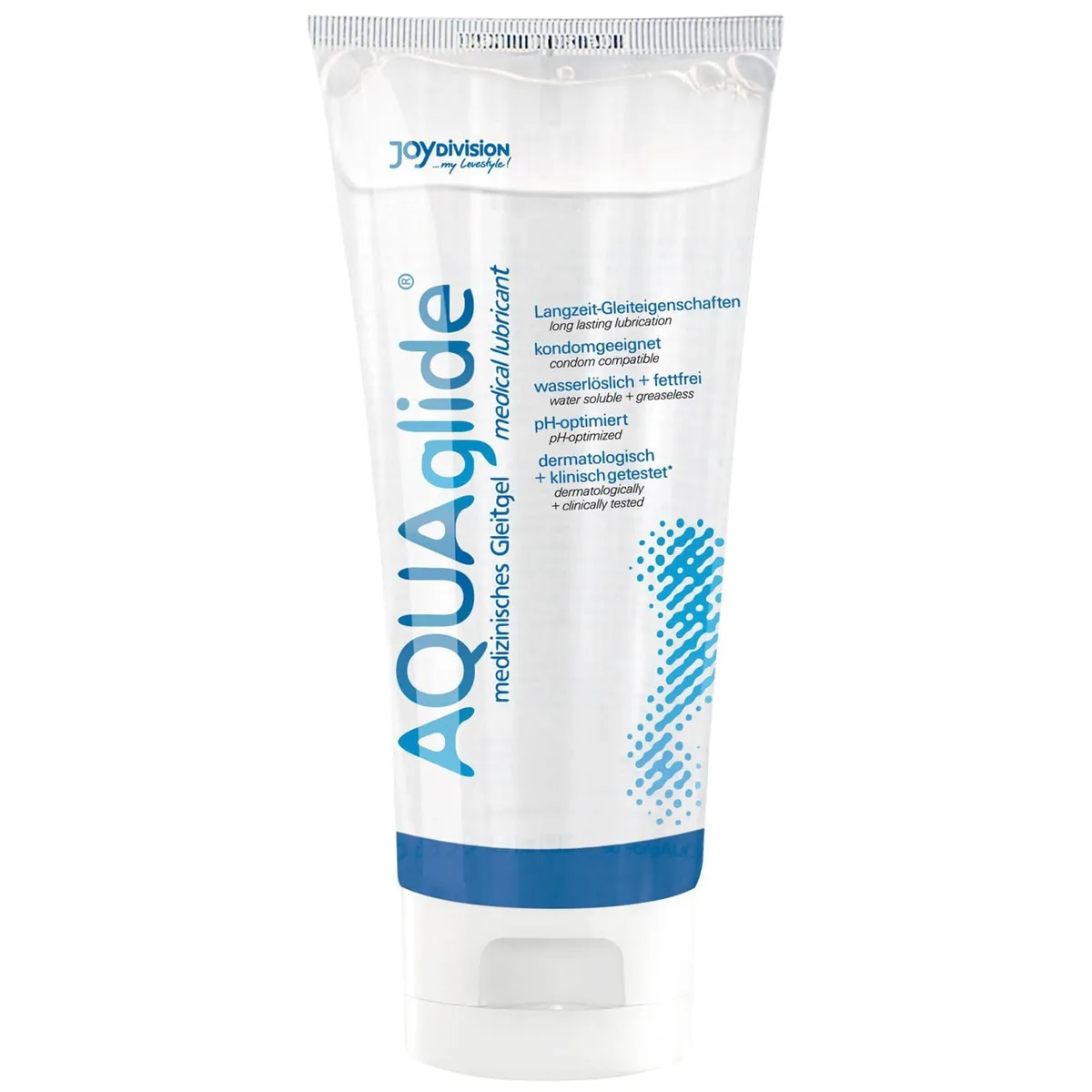
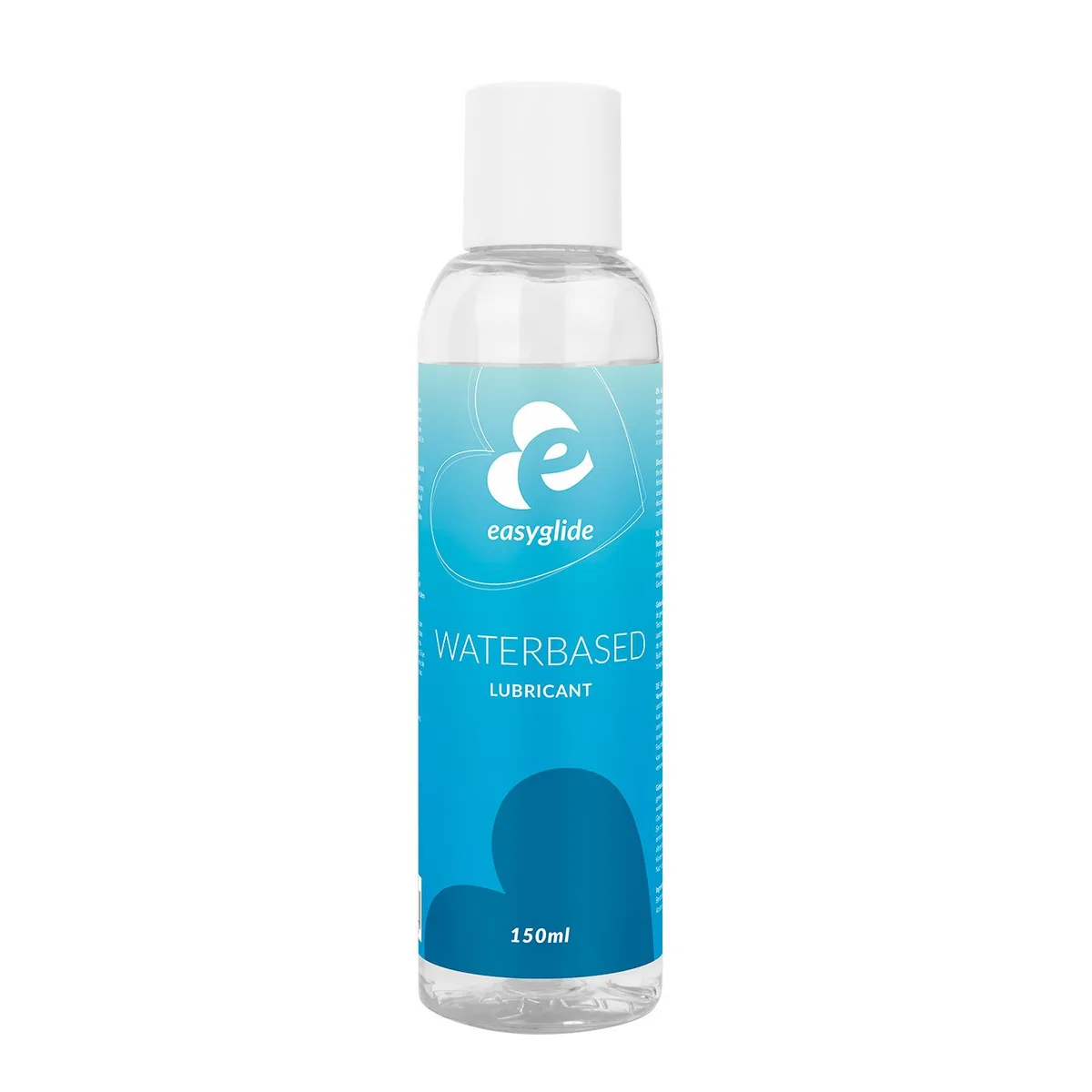
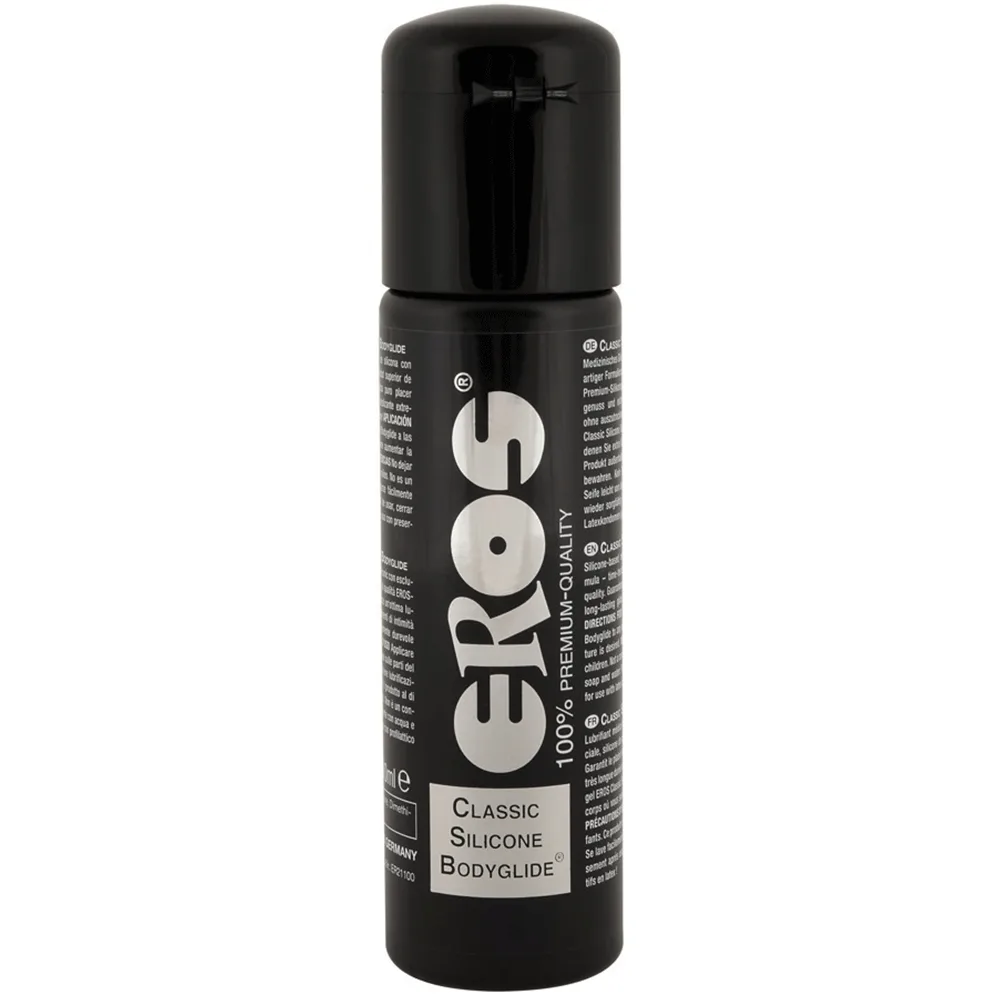
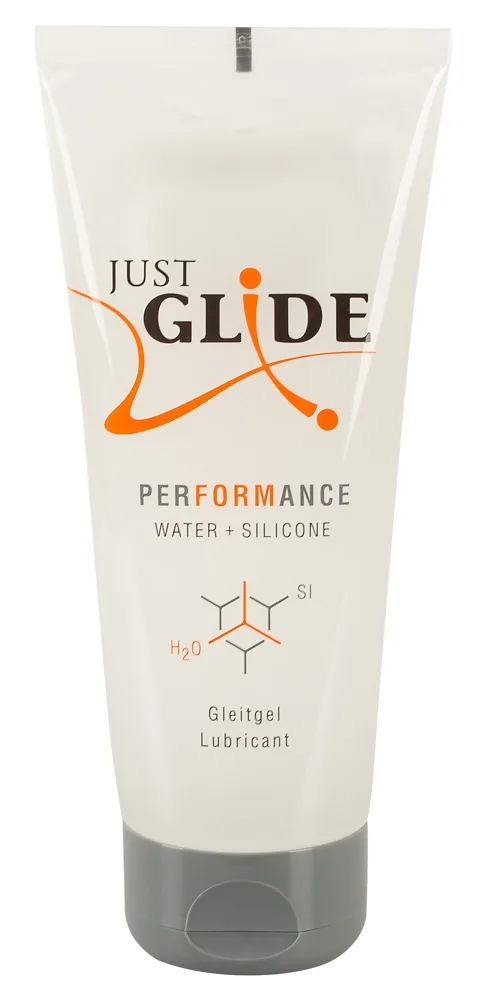
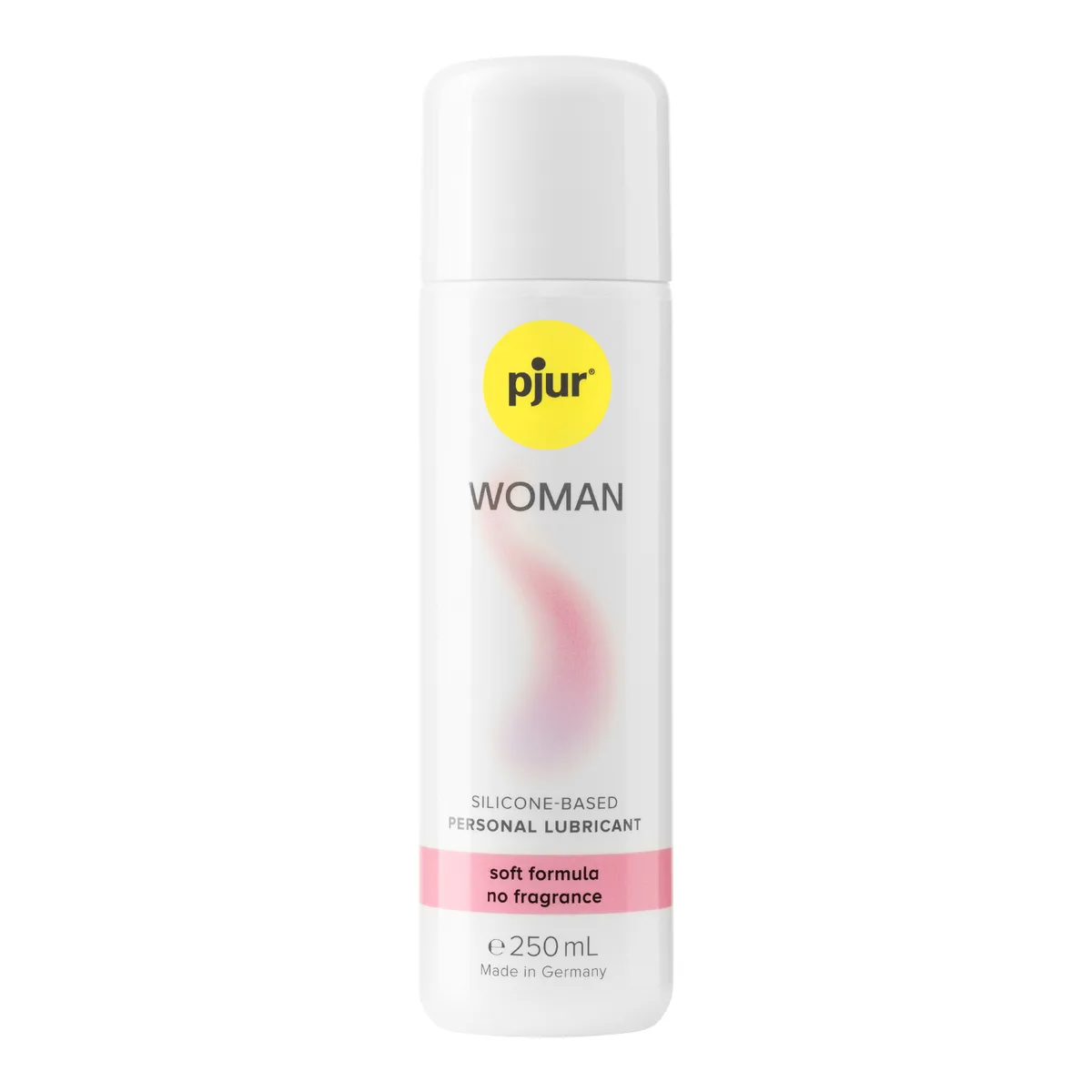
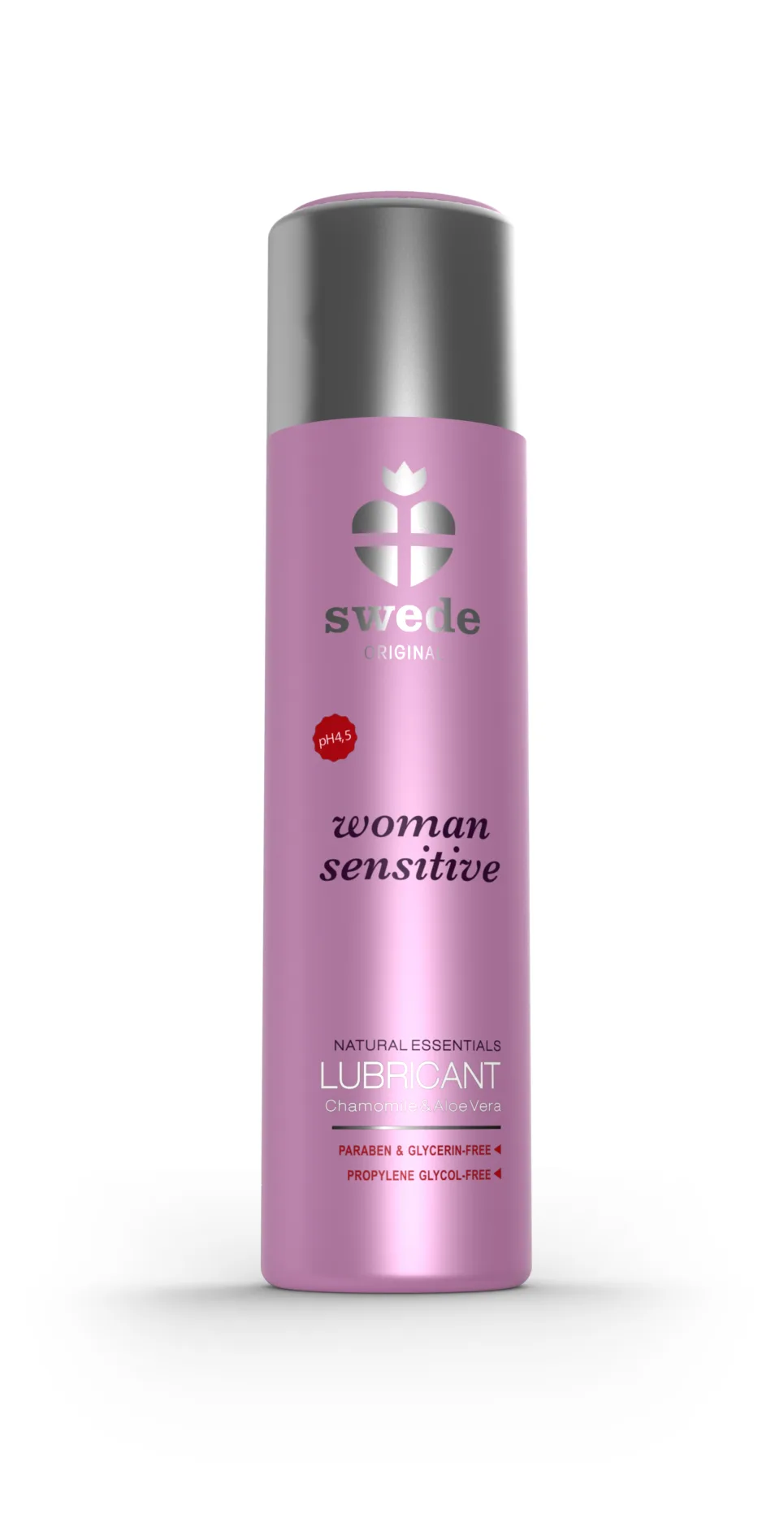
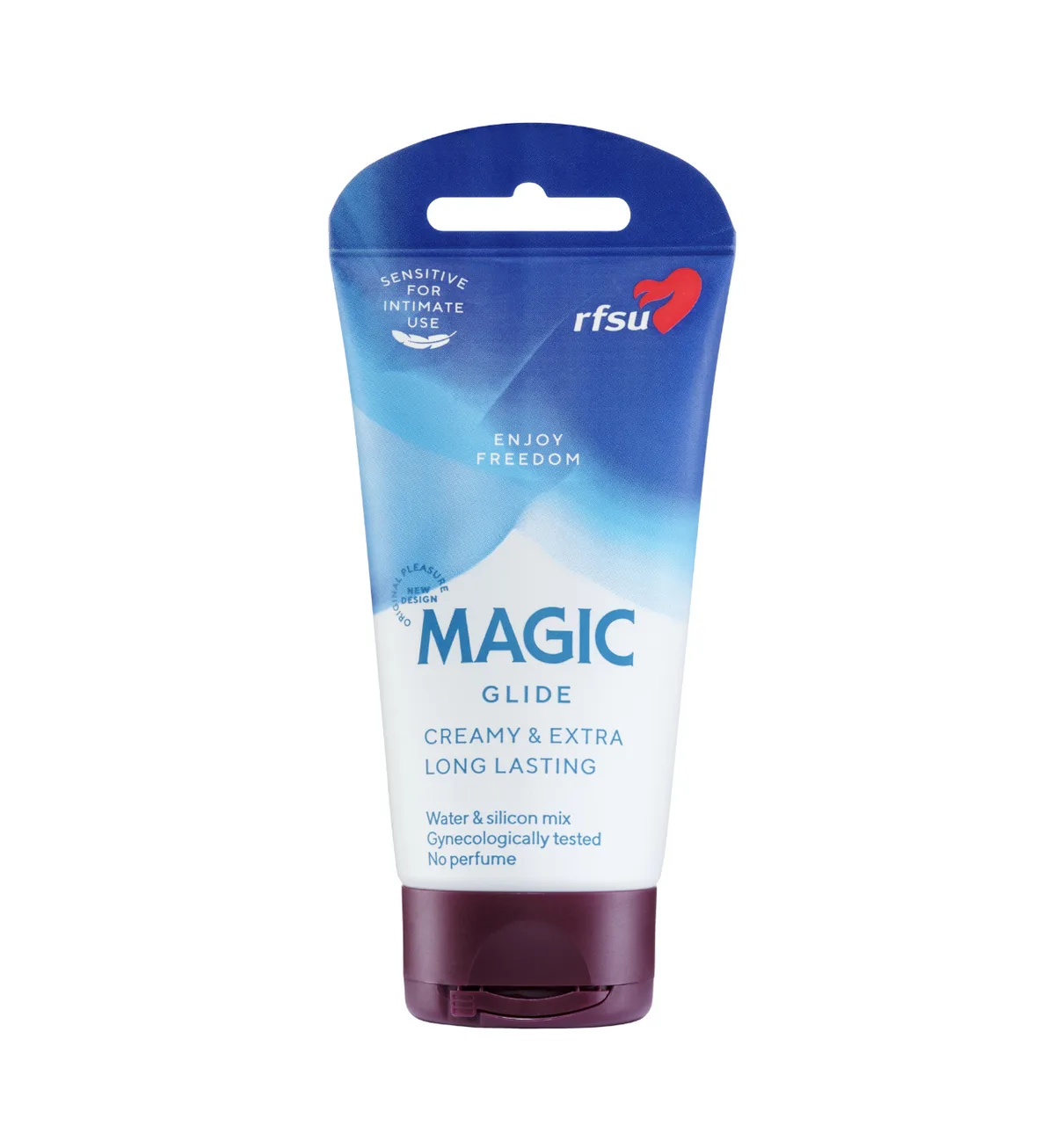
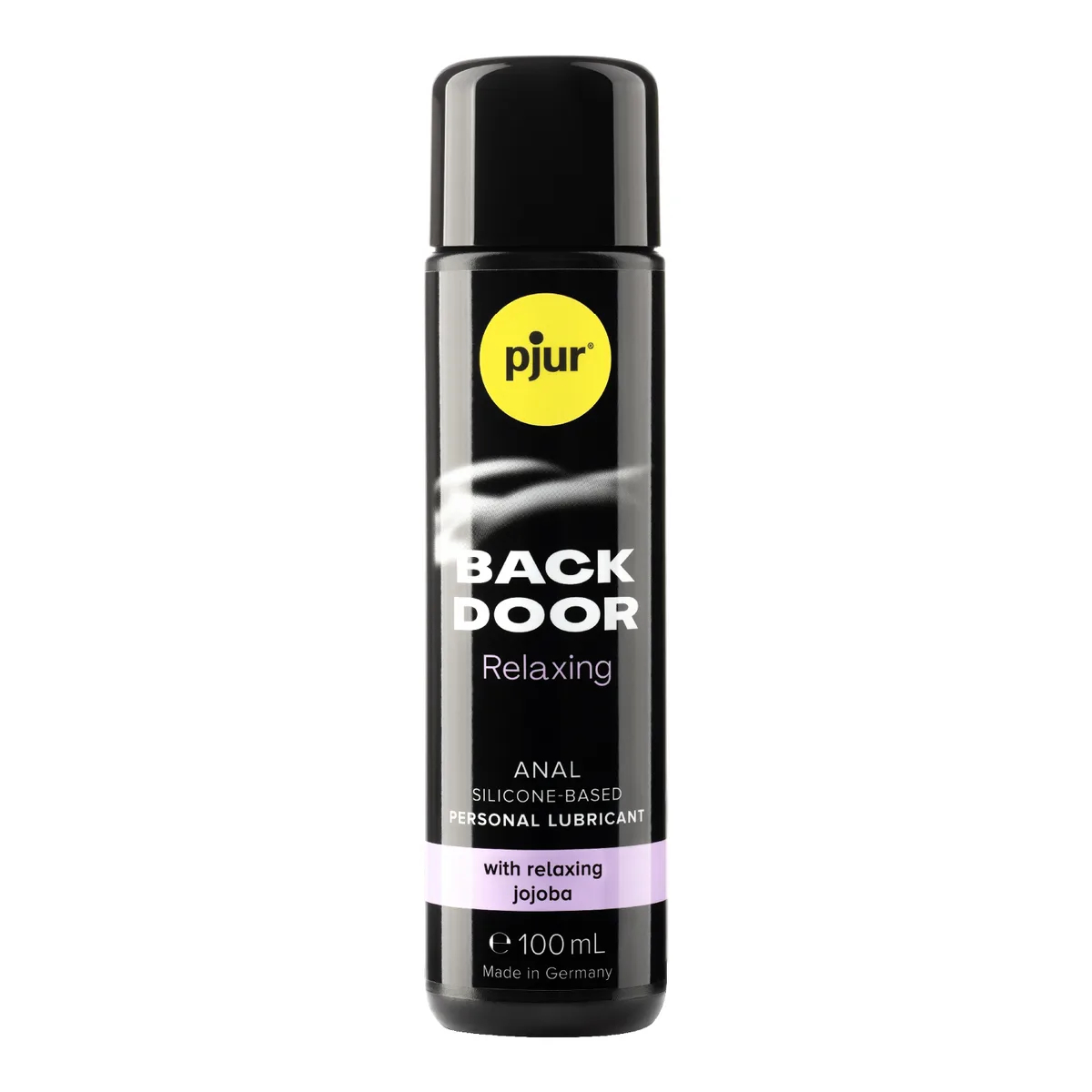
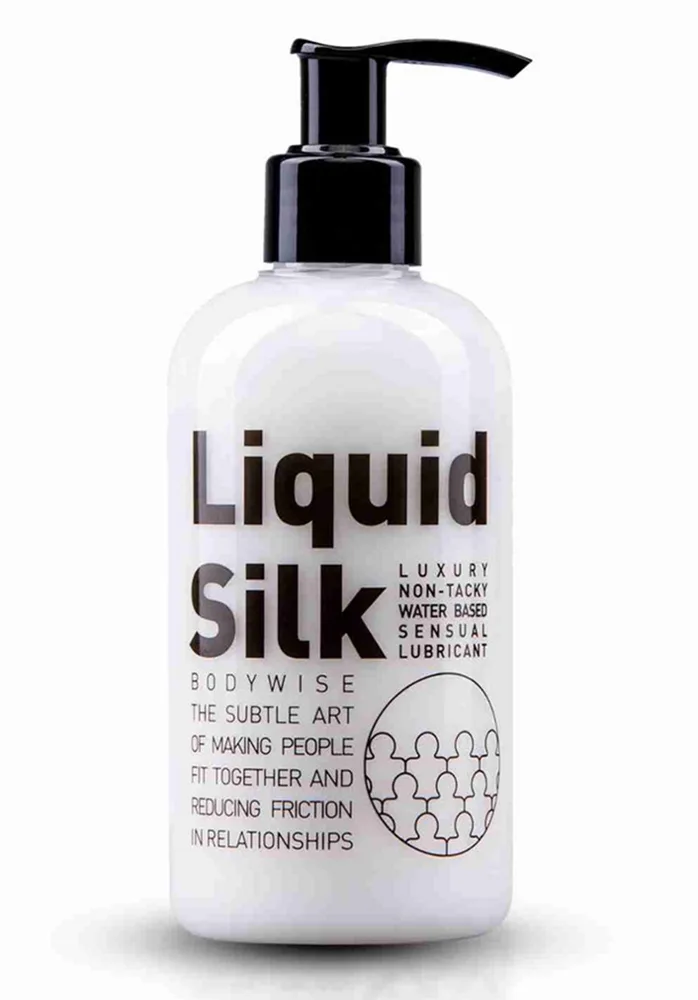
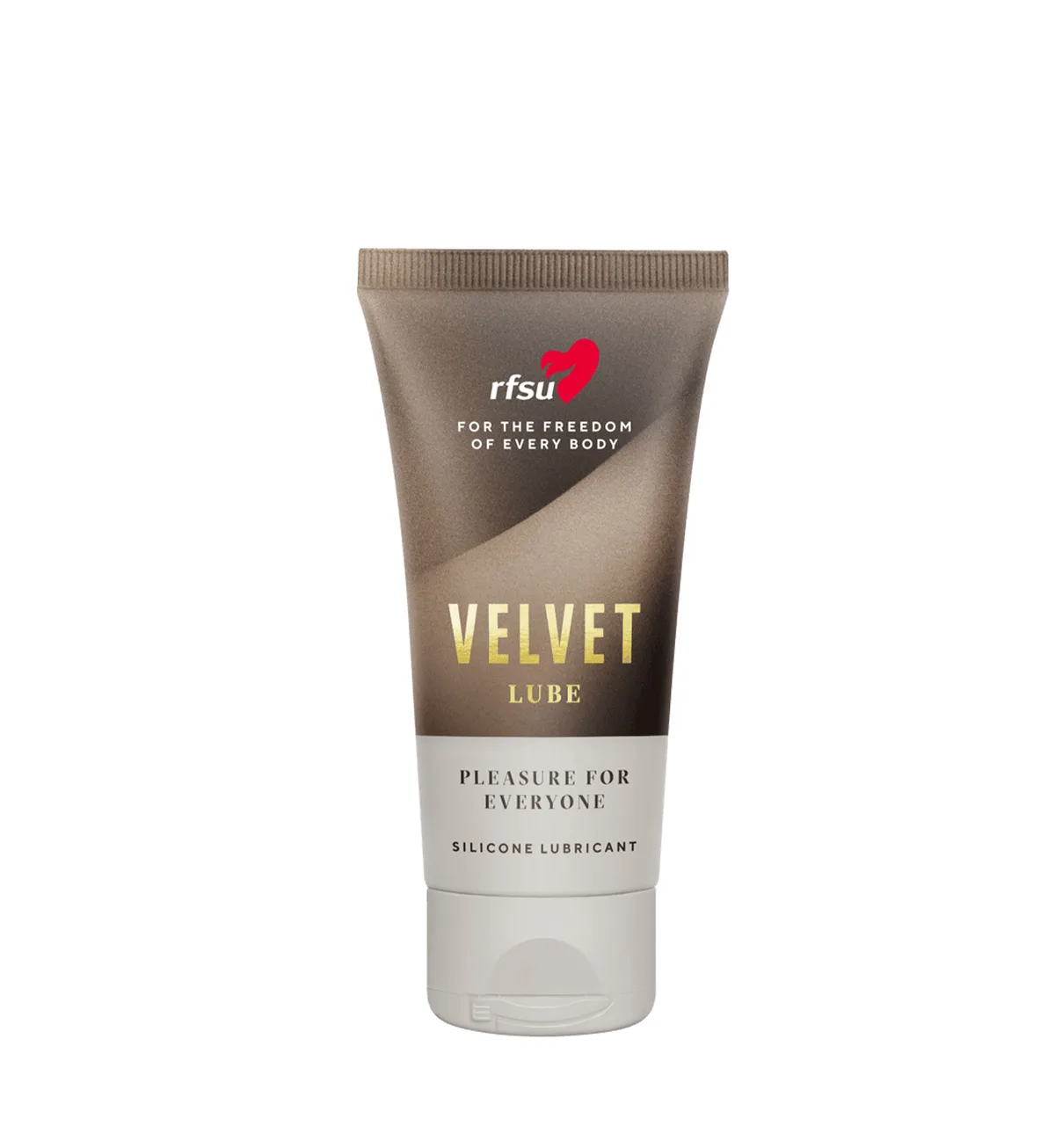
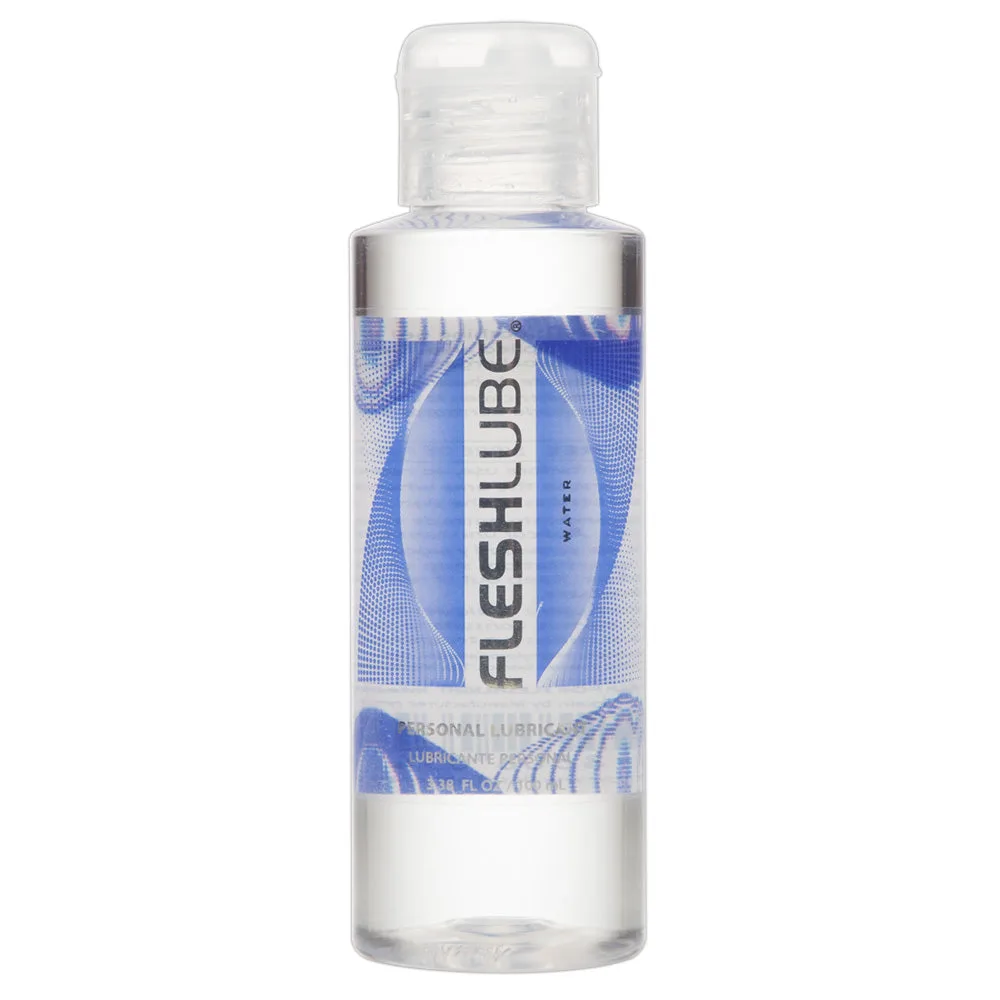
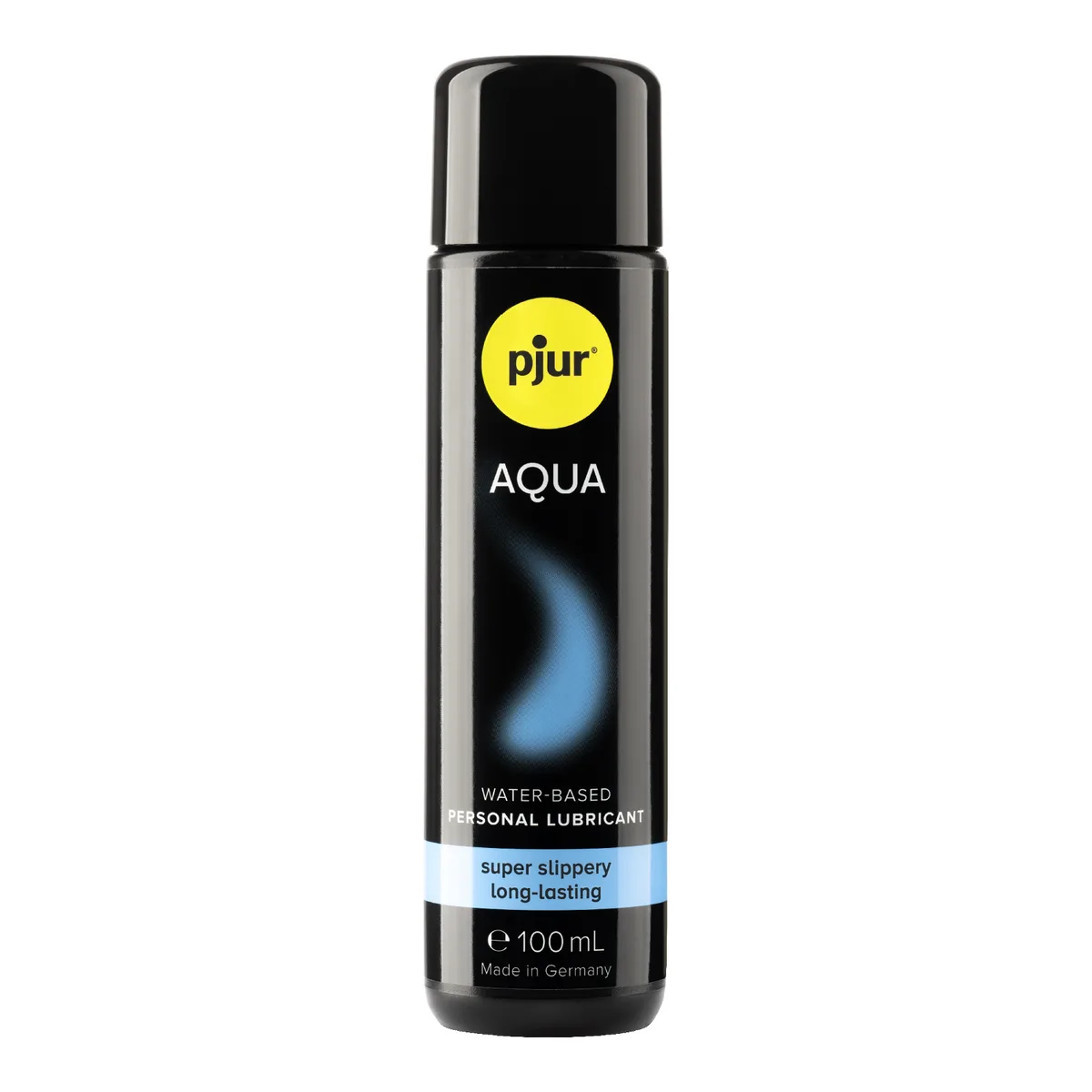
The twelve lubricants in this review break down like this. Five are water-based: Pjur Aqua, JOYDIVISION AQUAglide Neutral, EasyGlide Waterbased, Swede Original Woman Sensitive and Fleshlube Water. Four are silicone-based without a water phase: Eros Classic Silicone Bodyglide, Pjur Woman, Pjur Back Door Relaxing and RFSU Velvet Lube. Three are hybrids, meaning water with a silicone blend: Just Glide Performance, RFSU Sense Me Magic Glide and Bodywise Liquid Silk.
The rule of thumb that all manufacturers in the field share is simple. Water-based lubricants wash off with water, work with all toy materials, and evaporate—so the glide needs to be topped up. Silicone-based lubricants do not evaporate, so they do not require preservatives because they contain no water, but they require soap, can stain textiles, and can attack the surface of a silicone toy. The hybrid tries to take the best from both and, in return, inherits some of both sides’ problems. The rest of this section goes through what the manufacturers actually write about the two combinations that determine the choice: the toy and the condom.
Silicone toys: five types of messages from twelve manufacturers
If you use silicone toys, this is the most important question in the entire guide—and it has no single answer, but five. Here’s how the manufacturers’ own information breaks down:
Explicit yes: Joydivision writes “also with silicone products” in the user manual for AQUAglide and “sogar aus Silikon” in the product sheet. Pjur states that Aqua is suitable for sex toys and writes in its FAQ that water-based lubricants fit all toy types, including silicone. The wholesaler EasyGlides states “all types of sex toys”, and Swede writes that the base formula behind Woman Sensitive can be used with all sex toys—on the sister product’s page, not on Woman Sensitive’s own page.
Explicit no: Megasol advises against Eros Classic with silicone toys, and RFSU advises against Velvet Lube for the same reason. Both refer to water-based lubricant for the toy.
Try first: pjur asks you to test Pjur Woman and Back Door Relaxing on a small, hidden area of the toy before the first use. It’s neither a yes nor a no—it’s a responsibility passed on to the buyer.
Contradictory: for Just Glide Performance, Orion says that the gel fits sex toys without reservation, while German pharmacies, in the same product text that states what the manufacturer says, write “Nicht mit Silikon-Toys verwenden”. For Magic Glide, the tube says it “can be used with sex toys”, RFSU’s current page says “most sex toys”, and RFSU’s category page for silicone lubricants—where the product is listed—warns against silicone toys.
Silent: Bodywise says nothing about toys for Liquid Silk, and Fleshlight says nothing about silicone toys for Fleshlube Water. That’s where it’s just the shops that answer, and they answer yes.
The pattern is clear. Two out of three hybrids get contradictory messages, and the reason is understandable: dimethicone belongs to the same substance group as the toy’s material. If you want to avoid the question entirely, a purely water-based lubricant is the only choice where all the manufacturers that respond say the same thing.
Condoms: only one manufacturer mentions polyisoprene by name
Latex condoms are straightforward. Ten out of twelve manufacturers approve latex condoms, two of them through the wording “all types of condoms”, and WHO/UNFPA/FHI360's advice on lubricants from 2012 confirms the principle: water-, glycol-, and silicone-oil-based lubricants are considered compatible with natural rubber latex. It’s oil-based products—baby oil, petroleum jelly, coconut oil, body lotion—that make latex condoms weaker.
Latex-free condoms are a different matter. Most are made of polyisoprene, which, according to the same guidance, is just as sensitive to oils as latex, and here the field is thin. Pjur Aqua is the only lubricant where the manufacturer writes the word polyisoprene—pjur lists it along with three other products from its range, and neither Pjur Woman nor Back Door Relaxing are among them. RFSU writes that both Magic Glide and Velvet Lube work with “all types of condoms”, without mentioning any material. Of the other seven that respond, they only state latex.
Two manufacturers say nothing at all: Bodywise for Liquid Silk and Fleshlight for Fleshlube Water. The shops fill in “condom-safe”, and for latex they have WHO’s general rule on their side. But in Liquid Silk it lists isopropyl palmitate, a fatty acid ester, and in Magic Glide both isopropyl palmitate and shea butter. No source says that they damage latex, and no one publishes a test showing that they don’t. If you use a condom for protection, it’s the condom’s packaging that should indicate which lubricants work.
pH and osmolality: twelve lubricants, one single measured value
Two numbers say more than all the others about how a water-based lubricant relates to the mucous membrane. pH determines whether it disrupts the acidic environment in the vagina. Osmolality determines whether it draws water out of the mucous membrane cells— a concentrated lubricant does, and according to the studies the WHO guidance refers to, it can damage the surface layer.
This section lays out what each of the twelve manufacturers publishes about the two numbers. The answer is that almost nobody publishes anything.
Benchmark: what the 2012 WHO guidance states
The guidance from WHO, UNFPA and FHI360 is written for organizations that purchase lubricants in bulk, not for consumers, but it is the reference that all twelve reviews measure against. Their values in brief:
pH: a healthy vagina normally lies at 3.8–4.5. A lubricant for vaginal use should preferably be around 4.5, one for anal use—or where the use can’t be determined—at 5.5–7. Lubricants with pH above 7 are not recommended. The guidance itself notes that the two ideals can’t be reconciled in a single lubricant.
Osmolality: vaginal secretions are at 260–290 mOsm/kg and semen at 250–380. A lubricant should preferably not exceed 380 mOsm/kg, and as an interim limit a maximum of 1,200 is recommended. According to the same document, most commercial lubricants are at 2,000–6,000 mOsm/kg.
The recipe: what mainly drives up osmolality is glycols that are added as humectants. To stay under 1,200 mOsm/kg, the glycerol content should not exceed 9.9% by weight and the propylene glycol content should not exceed 8.3%.
Zero out of twelve manufacturers publish osmolality
This is what the field looks like when the information is set side by side. Osmolality: no manufacturer publishes a value, either on the product page, on the label, in the FAQ, or in any datasheet. pH as a number: two manufacturers. Swede prints pH 4.5 on the front of Woman Sensitive bottle, and Joydivision states in its FAQ that the range 4.6–5.2 applies to the company’s lubricants as a group, not specifically to AQUAglide.
In addition, there are two products where pH is stated in words but not measured. RFSU writes “right pH” for Magic Glide and “pH-neutral” for Velvet Lube—and the manufacturer’s own safety data sheets state the pH value as “not measured” for both. For Velvet Lube, which lacks water, that is understandable. For Magic Glide, which has water as the first ingredient, it’s an empty formulation.
Pjur, EasyGlide, Just Glide, and Fleshlight publish nothing about pH for their water-based products. Pjur is the clearest case: in its own FAQ, the manufacturer explains that the amount of glycerin and glycols in water-based lubricants is kept below a threshold value so that the osmolarity will be appropriate. So the manufacturer knows that the value matters, but it does not disclose the threshold or the result for Aqua.
The only measured value is 3,167 mOsm/kg.
A lubricant in the field still has both pH and osmolality measured—just not by the manufacturer.Liquid Silkis included in Annex 1 to the WHO guidance, which reproduces measurement data from a study published in 2011: pH 5.26 and osmolality 3,167 mOsm/kg.
That’s about eleven times the level of vaginal secretions and more than two and a half times the WHO interim limit. At the same time, it should be put in proportion. Liquid Silk is in the lower half of the 2,000–6,000 range where most commercial lubricants fall, and Bodywises other product in the same table, Maximus, was measured at 6,415. So the value does not mean that Liquid Silk is unusually concentrated—it means that it is the only lubricant in this review where anyone has checked.
That’s also why Liquid Silk scored 3 out of 10 on the criterion mucous membrane compatibility, while lubricants without any published value scored 5–5.5. It may look like openness is penalized. But it isn’t openness that gives the low rating; it’s the value: the only product whose osmolality can be compared with the WHO’s limit is above it, and propylene glycol is listed as the second ingredient. At the same time, the measurement is fifteen years old. If the recipe has been changed since then — the deviating ingredient lists at Swedish shops suggest that it may have — the value applies to the formula from then.
Glycerin or propylene glycol among the first five in seven of eight
When the value is missing, the recipe remains to be read, and WHO points out exactly where to look: at the humectants. Of the eight water-based lubricants in the field, five have glycerin as the second ingredient, directly after water: Pjur Aqua, AQUAglide, EasyGlide in the newer list, Just Glide Performance and Fleshlube Water. Liquid Silk has propylene glycol in second place. Magic Glide has propylene glycol in third place and glycerin in fifth.
Fleshlube Water stands out in the group: after the glycerin, three glycols follow — methylpropanediol, caprylyl glycol and butylene glycol. Pjur Aqua has the glycol ether ethoxydiglycol in addition to glycerin. AQUAglide, by contrast, has glycerin as its only humectant, with no glycol.
The eighth is Swede Woman Sensitive, which is free from both glycerin and propylene glycol according to both the ingredient list and the label. But glycerin-free doesn’t mean free from humectants: the formula contains hydroxyethyl urea and PEG-8, and PEG stands for polyethylene glycol. The concentrations are not published, and therefore osmolality remains unanswered here too. No concentration of any humectant ingredient is published for any of the eight.
Why the question disappears in a silicone lubricant
For the four silicone lubricants, the lack of pH and osmolality is no gap. pH measures the acidity of a water solution and osmolality measures the concentration of dissolved substances per kilo of water; a product that consists only of silicone oils has no water to measure. Megasol explains it itself in its FAQ, and WHO’s recommendations about both measures are explicitly written for water-based lubricants.
That makes silicone the most straightforward choice for someone with a sensitive mucous membrane who wants to avoid the whole question — Eros Classic and Velvet Lube each have only two ingredients: dimethicone and dimethiconol, and neither glycerin, glycol nor preservatives. But WHO adds a reservation that applies to all four: silicone oils are expected to be safe and effective as lubricants, but in 2012 there were no published clinical studies supporting their use, especially not with latex condoms during anal sex. It’s a description of the state of knowledge, not a warning.
Medical device or cosmetics — and who says what
A lubricant is sold in the EU either as cosmetics or as a medical device. The difference is not formal: a medical device may be sold to relieve vaginal dryness and as an accessory to condoms, and depending on the risk class, a notified body has reviewed the technical documentation. A cosmetic product may not make those claims. The traceable proof is the CE mark followed by the notified body’s four-digit number.
If you place the twelve manufacturers’ own information side by side, a pattern emerges that no single review can show.
Three products with a notified body — all three from pjur
Only one brand in the field publishes a classification that can be traced to a notified body, and it is pjur. Pjur Aqua and Back Door Relaxing carries CE 0482 and the MD symbol on the label, and the manufacturer publishes its MDR certificate from DNV MEDCERT, the notified body with number 0482, for product groups in class IIb. Pjur Woman carries the MD symbol and has the same intended purpose as the certificate states. The certificate names no individual products — the link runs via the label — but it is still the only chain in the market that can be checked all the way.
The rest breaks down like this. Joydivision calls AQUAglide a medical lubricant but does not publish either CE number, class, or notified body, and the newer edition of the manufacturer’s product sheet has removed the word Medizinprodukt. Swede Woman Sensitive has a CE mark without a number and no MD symbol. RFSU’s safety data sheets state that both Magic Glide and Velvet Lube have been assessed under the cosmetics regulation. EasyGlide, Eros Classic, Liquid Silk, and Fleshlube Water lack a published classification.
Four cases where the shop gives the lubricant a higher status than the manufacturer
The gap is filled by the trade, and it is filled in one direction. In four cases, a Swedish shop or a pharmacy describes the product as more regulated than the manufacturer’s own documents do:
EasyGlide Waterbased: Lekosmek writes “CE-marked for your safety” and Joyland that the lubricant meets the criterion of CE marking. None of the two label versions in the wholesaler’s images bears any CE mark.
Eros Classic: Joyland writes “licensed as a medicine.” Nothing in Megasols material supports that claim, and a lubricant of that kind is classified by WHO as a medical device, not as a medicine.
Just Glide Performance: Joyland highlights “Medical and water-based” as its first feature. Older tubes carried CE 0482 and the text “Medical lubricant”, but the current label that Orion shows lacks both the CE mark and the claim about vaginal dryness — and the manufacturer Lubry states that its medical-device manufacturing ceased in 2024. Same formula, new classification, old shop texts.
Magic Glide: apoteket Meds writes “This is a medical device.” RFSU’s safety data sheet refers to a cosmetic safety assessment, and the tube the stores show lacks the CE mark.
For the buyer, it means one thing. If you buy lubricant specifically for dryness and want a product that has been reviewed for that purpose, it’s not enough that the store writes medically. It’s the CE mark with four digits on the bottle that counts—and in this category it’s only available from pjur.
How the twelve lubricants were ranked
Twelve lubricants have been read against the manufacturers’ product pages, labels, safety data sheets, and certificates, against WHO guidance, and against all Swedish stores’ product pages, with prices from the stores’ product feeds. All twelve are ranked. Each entry in the guide has a source in the review that the product links to, and “all reviewslie open.”
Which lubricants were included—and which were left out
The starting point was 165 lubricants in the product catalog with EAN, at least four Swedish stores, and at least two with the item in stock. From these, twelve were selected that together cover water-based, silicone-based, and hybrid bases, with a maximum of three products per brand and one volume per product. pjur got three spots and filled them with three different uses: water-based, silicone-based, and an anal lubricant.
Two product types are intentionally left out, because they can’t be assessed using the same criteria as a neutral lubricant. Flavored lubricants contain flavoring and sweetening ingredients for oral sex and are their own product type. Fisting gels are thicker products in large packages for a specific use. Both have the reason printed out at the very bottom.
Five criteria that only apply to lubricants
A lubricant has no electronics, so battery, charging time, noise level, and enclosure class contain nothing and are not included. That leaves five criteria with the same weight, scored 0–10, where the rating is the average of:
Ingredients and declaration: there is a complete ingredient list from the manufacturer, does it match the label, and can the classification be checked. Mucous membrane friendliness: pH, osmolality, glycerin, glycols, and preservatives. Compatibility: condom materials and sex toys, according to the manufacturer. Use and packaging: soap or water, closure, and shelf life after opening. Price per milliliter: the lowest in-stock price converted to 100 ml.
Thin documentation doesn’t pull the rating down by itself. If pH and osmolality are missing, 5–5,5 were given for the mucous membrane criteria—an unweighted middle value, not a penalty. That’s why nine of the twelve have a mucous membrane rating that rests on the stated information rather than on a measured value, and it is written out for each product. On the site’s scale, no product is recommended under 6,0; two of the twelve end up there.The full scaleis open.
Shared first place at 7,0 — decided based on the declaration
Pjur Aqua and JOYDIVISION AQUAglide Neutral have exactly the same total score, 35 out of 50, and thereby the same rating. They get there by completely different routes. AQUAglide wins on mucosal compatibility (6.5 vs 5.5, because Joydivision publishes a pH range), on use and packaging (7 vs 6, thanks to twelve months of shelf life after opening for Pjur’s six) and on price per milliliter (8.5 vs 7). Pjur Aqua wins on compatibility (8.5 vs 7.5, because polyisoprene is explicitly approved) and on ingredients and labeling—8 vs 5.5.
It is the last criterion that decided, and the reason is stated in the manufacturers’ own documents. Pjur Aqua’s ingredient list is the same on the product page and on the label, and CE 0482 with MDR certification can be checked. For AQUAglide there are two lists that both come from Joydivision: the product page states phenoxyethanol, allantoin, and benzoic acid, while the manufacturer’s own product information leaflet—in both of the editions German pharmacies publish—states sodium methylparaben, sodium benzoate, and lactic acid. The older list with parabens is still with Joyland and Mshop. The manufacturer does not publish when the formula was changed.
The split could just as well have gone the other way with a different weighting, and it’s worth saying plainly. If you’re looking for the lowest price, the longest shelf life, and a published pH, then AQUAglide is the better buy for you. The top spot says that Pjur Aqua is the lubricant where, with the greatest certainty, you know what’s in the bottle.
What the counterevidence tested
The top five were tested against the silicone field with the task of finding a product that, based on the criteria, should rank higher. Eros Classic has the shortest declaration in the entire review and shares the highest rating on ingredients with Back Door Relaxing, but loses on price per milliliter and because the manufacturer advises against silicone toys. It stays in fifth place.
Two other placements were tested with the same assignment. Liquid Silk was lowered on mucosal compatibility, because the only product in the field with a published, measured osmolality value is above the WHO interim limit—this reduction applies to the value, not to the fact that it exists. And the question of thin documentation was tested the other way around: a missing pH or osmolality value does not pull the rating below 5–5.5, so that nine out of twelve that lack pH as a figure have not been allowed to determine the order.
Two groups share a rating without being separated in the tally. Pjur Woman, Swede Woman Sensitive, and Magic Glide all have 32 points out of 50 and a rating of 6.4. Back Door Relaxing and Liquid Silk have 31.5 and 6.3. The order within the groups is part of the calibration and should be read as a shared spot: choose between them based on performance and use, not on placement.
Prices: twelve shops, 76 listings, one control date
The twelve lubricants are sold by twelve Swedish stores — Blush Me, Joyland, Joyme, Intima, Lekosmek, Lustly, Mshop, Sexonic, SexleksakerOutlet, Taboo, Vuxen, and Vuxenkul — with between four and eleven stores per product, 76 listings in total. The stores are matched by EAN, not by product name. There’s no formality here: Joyme sells an item under the name pjur Basic with Pjur Aquas EAN in the feed, and it is therefore removed from Pjur Aquas store list.
The price in the table is the lowest price at a store that had the item in stock on the 12 September 2026. The shelf price is still the wrong figure to compare in this category, because volumes range from 40 to 250 ml. Price per milliliter is therefore calculated for each product in the buying guide after the top list.
Read the label on the bottle you get — not the store’s product text
The most useful advice in the entire guide is also the simplest. In eight of the twelve lubricants, at least one Swedish store reproduces an ingredient list other than the manufacturer’s, and the deviations apply exactly to the substances people with contact allergies are looking for. This is what it looks like, product by product:
Pjur Aqua: Blush Me and Vuxenkul list propylene glycol, benzyl alcohol, and the isothiazolinones methylchloroisothiazolinone and methylisothiazolinone, where the manufacturer lists phenoxyethanol. Methylisothiazolinone may then, starting in 2017, only be used in cosmetics that are rinsed off, according to EU Regulation 2016/1198.
AQUAglide Neutral: Joyland and Mshop list the older list with sodium methylparaben — which is also stated in the manufacturer’s own product sheet.
EasyGlide Waterbased: Lekosmek, Joyland, and Taboo list the older list of six substances; only Lustly reproduces the current one with ten, with isopropanol.
Eros Classic: Lekosmek and Taboo list cyclopentasiloxane first, where the manufacturer and the label only state dimethicone and dimethiconol.
Pjur Woman: Lekosmek states water as the first ingredient in a lubricant that the manufacturer declares as “Total 100% Silicone.”
Liquid Silk: Mshop and Vuxenkul list butylparaben, which is not in the manufacturer’s list.
Magic Glide: Blush Me and SexleksakerOutlet reproduce a Swedish version of a list of fourteen names instead of sixteen, without allantoin and ethylhexylglycerin.
Fleshlube Water: no store reproduces the manufacturer’s list for 100 ml. Blush Me and Joyland list a diazolidinylurea-containing list, which, according to Hudkliniken in Malmö, releases formaldehyde.
In addition, there’s a ninth case where the manufacturer contradicts itself: Swedes product description for Woman Sensitive promises flaxseed extract and piroctone olamine, which are not listed in the ingredients. Only three out of twelve — Just Glide Performance, Velvet Lube and Back Door Relaxing — has the same ingredients in every source that reproduces them.
The reasonable explanation in most cases is that the formula has been changed and that the store text is older than the bottle. But pjur itself states that both old and new packaging can be delivered during a transition period, and no manufacturer in the field publishes when a recipe was changed. If you react to a certain ingredient, the ingredient list on the bottle that actually arrives at your home is the only check that’s sufficient.
Preservatives: what keeps water-based products free from bacteria
A water-based lubricant must be preserved — the WHO guidance states that outright and adds that preservatives can cause irritation and sensitization in some people. So that a lubricant is paraben-free only means that something else does the job. Out in the field, the distribution looks like this:
Phenoxyethanol: Pjur Aqua; Just Glide Performance and Magic Glide, both together with ethylhexylglycerin; AQUAglide together with benzoic acid. Sodium benzoate and potassium sorbate: EasyGlide and Swede Woman Sensitive. Three parabens, phenoxyethanol and bronopol: Liquid Silk, the heaviest preservation in the field. Fleshlube Water lacks classic preservatives in the manufacturer’s list but has caprylyl glycol and phenylpropanol, without Fleshlight stating the function of the substances.
The four silicone lubricants need no preservation at all, because there is no water phase where microorganisms can grow. That’s the reason pjur itself recommends silicone-based lubricant without preservatives for those who are sensitive to them.
Cyclopentasiloxane: one of the four silicone products has it
Among the silicone lubricants, there’s a difference that no Swedish store mentions.Pjur Woman has cyclopentasiloxane, D5, as the first ingredient. The EU limits D4, D5 and D6 by Regulation 2024/1328 to below 0.1 weight percent, with deadlines that differ: generally in mixtures after 6 June 2026, in cosmetics that are left on the skin after 6 June 2027, and in medical device products after 6 June 2031. Pjur Woman is a medical device and is subject to the later deadline.
The reason for the restriction is the environment, not the user: the substances are very persistent and bioaccumulative. Eros Classic, Velvet Lube and Back Door Relaxing have no cyclic siloxane in the manufacturer’s declaration. Pjur publishes nothing about a reformulation.
Price per milliliter: from 59 to 247 SEK for the same 100 ml
Shelf price in the field ranges from 59 SEK for a tube of 75 ml to 329 SEK for a bottle of 250 ml, and that says almost nothing. Converted to 100 ml, at the lowest price in stock 12 September 2026, the order looks like this:
EasyGlide Waterbased 59.33 SEK. Just Glide Performance 59.50 SEK. AQUAglide Neutral 74.50 SEK. Magic Glide 78.67 SEK. Liquid Silk 95.60 SEK. Pjur Aqua and Fleshlube Water 99 SEK. Swede Woman Sensitive 124.17 SEK. Pjur Woman 131.60 SEK. Eros Classic and Back Door Relaxing 149 SEK. RFSU Velvet Lube 247.50 SEK.
Two patterns can be seen. The first is that silicone costs more: the cheapest silicone lubricant per milliliter, Pjur Woman, is more expensive than all eight water-based ones. The second is that the smallest package is the most expensive.Velvet Lube has the same two ingredients as Eros Classic but costs two thirds more per milliliter, because the tube only holds 40 ml.
Bigger isn’t always cheaper either. Eros Classic in 250 ml costs 349 SEK at Taboo and 359 at Lekosmek, which is more expensive per milliliter than 100 ml at Joyland. Fleshlube Water is cheaper per milliliter in 250 ml with the same formula — but the 500 ml bottle has a different list of ingredients and is labeled “Proudly made in the USA”, so anyone who buys it gets a different formula as well.
Same bottle, up to double the price
The difference between two stores for the same EAN on the same day is often bigger in this category than the difference between two brands. Magic Glide costs 59 SEK at Blush Me and 119 at Mshop — a little over double. Fleshlube Water costs 99 SEK at Blush Me and 189 at Taboo, 91 percent more. Pjur Aqua differs by a little over 80 percent between Blush Me and Lekosmek. Pjur Woman differs by 220 SEK between Joyland and Lekosmek, Back Door Relaxing by 100 SEK between three stores at 149 and Intima at 249.
Shipping makes up the rest of the calculation. The free-shipping thresholds are between 699 and 999 SEK at the stores in the field, and a single lubricant never reaches that. Mshop charges 39 SEK in shipping under the threshold, which corresponds to almost 40 percent of a Velvet Lube tube. If you buy lubricant on its own, the cheapest shelf price therefore isn’t automatically the cheapest buy.
Six or twelve months after opening — and three without any notice
The symbol with the open jar and a number of months, PAO, indicates how long the product can be used after it’s been opened. For a lubricant, this is the piece of information that determines which size is worth it, and the field is split into three:
Twelve months: AQUAglide, EasyGlide, Eros Classic and Swede Woman Sensitive. Six months: Pjur Aqua, Back Door Relaxing, Magic Glide and Velvet Lube. For Pjur Woman, the only label image that exists shows 6M, but that image belongs to the 100 ml bottle. No notice at all: Just Glide Performance and Liquid Silk have only a best-before date, and Fleshlight publishes nothing.
What’s interesting is which ones have the short shelf life. Three out of four silicone lubricants — from pjur and RFSU — have six months despite the fact that they lack water and thus the thing that usually limits shelf life. Eros Classic, with the same two silicones as Velvet Lube, has twelve months. The manufacturers don’t explain the difference, and it can’t be worked out from the recipe.
Calculate backwards before you choose a size. pjur’s own list price per liter differs by only just under six percent between Aqua in 100 and 250 ml, and with six months of shelf life after opening, it’s rarely worth buying the larger bottle. Unopened, a bottle keeps significantly longer: pjur states three to five years depending on the base, Joydivision 36 months for water-based and Megasol five years for silicone lubricants.
Anal lubricant: what the twelve actually offer
The rectum has no lubricant of its own, and the WHO guidance refers to a study in which 3 percent of the condoms broke during anal sex when water-based lubricant was used, versus 21.4 percent without additional lubricant. Lubricant is therefore not a convenience issue here. At the same time, the guidance states a different pH ideal for rectal use, 5.5–7, and that high osmolality can weigh more heavily with anal use.
Only one of the twelve is made and labeled for the purpose: Pjur Back Door Relaxing, silicone-based, CE-marked with 0482 and without numbing lidocaine or benzocaine. Without a water phase, there is no osmolality to think about. RFSU also writes on its category page that silicone lubricants are often preferable for anal sex. The caveat is WHO’s: clinical studies of silicone lube together with a latex condom for anal sex were missing in 2012.
Among the water-based ones, the picture is worse. None of them publish a pH within the rectal range. Swede Woman Sensitive is at 4.5 and AQUAglide at 4.6–5.2, both below. EasyGlide’s label lists only penile and vaginal use. Liquid Silk has pH 5.26, but the measured osmolality is 3,167 mOsm/kg. If you want a water-based alternative for anal use, there isn’t a single one on the market with documented values that fit.
For dryness, fungal problems, or sensitive mucous membrane
The clearest guidance in the entire material comes from a manufacturer, and it points away from the manufacturer’s own winning product. pjur’s FAQ recommends silicone-based lubricant without preservatives for anyone with recurring fungal infections or diabetes, because glycerin and glycols can function as nutrition for Candida albicans. For vaginal dryness, pjur recommends silicone-based or water-based without glycerin and glycols. pjur Aqua contains both glycerin and a glycol.
In this field, four lubricants meet the first recommendation: the four silicone lubricants. The second recommendation is met by Swede Woman Sensitive, the only water-based option without glycerin and propylene glycol, with the proviso that PEG-8 and hydroxyethyl urea also act as humectants. Joydivision has a glycerin-free variant, AQUAglide sensitive, which is not included here.
Two things belong in the same section. None of the twelve has a documented fungus-preventing effect — Swede’s promise about piroktonolamine is not supported by the ingredient list. And anyone who uses lubricants for medical reasons, for example dryness after menopause, should choose a product that is CE-marked for that purpose or ask at a pharmacy. In the field, it is Pjur Aqua and Pjur Woman that have that labeling; Just Glide Performance had it earlier, but no longer does.
Trying to get pregnant: Joydivision states on its product page that gynecologists recommend little or no use of lubricants when trying for a baby, since lubricants can make conception harder. None of the twelve is a contraceptive or spermicide, and none publishes information about sperm-friendliness.
Soap or water; stains on bed sheets and slippery floors
Water-based, rinsed off with lukewarm water according to pjur, Joydivision, EasyGlides wholesale and Swede’s label. Silicone doesn’t: pjur, Megasol and RFSU state soap and water for their silicone lubricants. pjur writes unusually plainly that silicone stains in textiles are removed only after three to four washes, and Megasol advises pre-treating the stain with dish soap.
The hybrids end up in between. RFSU’s safety data sheets state that Magic Glide is water-soluble, but that the skin should be washed with soap and water. German pharmacies warn that the silicone portion in Just Glide Performance can cause stains that are difficult to remove. Bodywise only says that Liquid Silk is easy to remove, without saying with what. Put a towel under, and wipe up spills on the floor and in the bathtub: pjur warns on the label about slip risk on smooth surfaces, and silicone isn’t rinsed off by shower water.
Four changes in the field to know before you buy
Lubricants look like stable products, but four of the twelve are in the middle of a change that affects what you get:
Magic Glide is called Magic Lube. RFSU has changed the name and the EAN, but according to the manufacturer’s ingredient lists it isn’t a different recipe. The older tube is being sold off, and at Blush Me and SexleksakerOutlet it’s cheaper than the successor at pharmacies.
Just Glide Performance has left the medical device regulation. Same recipe, new label without CE—while the shop descriptions still describe the old tube.
Pjur Aqua and Back Door Relaxing have new packaging design, and pjur states that the old one can be delivered during a transition period. The contents are described as the same.
Pjur Woman has D5 as the first ingredient with the EU’s deadline for medical devices in June 2031. Pjur has not published anything about a reformulation.
When any of this information changes — or when a manufacturer publishes a pH or an osmolality that is not available today — the rating is recalculated. If you find a datasheet that says something different from what’s stated here, I want to see the link.

 1
1