The word “couple vibrator” sells five physically different products, and that’s the first thing that goes wrong in a purchase. Of the fifteen ranked, nine are worn between the bodies during intercourse, three sit like rings around the penis and scrotum, one is bendable and takes the shape you give it, one fills two openings at the same time, and one is a double-ended wand without an outer arm. The shops sell them under the same category name, but they don’t solve the same problem.
The difference isn’t academic. One ring and one C-shape are held in place by two completely different things, and a double-ended wand isn’t even used in the same position. So the person who reads a top list without knowing which format each row belongs to is comparing products that aren’t interchangeable. That’s why the format is listed in each product section below, and that’s why this guide starts with the shapes instead of the method.
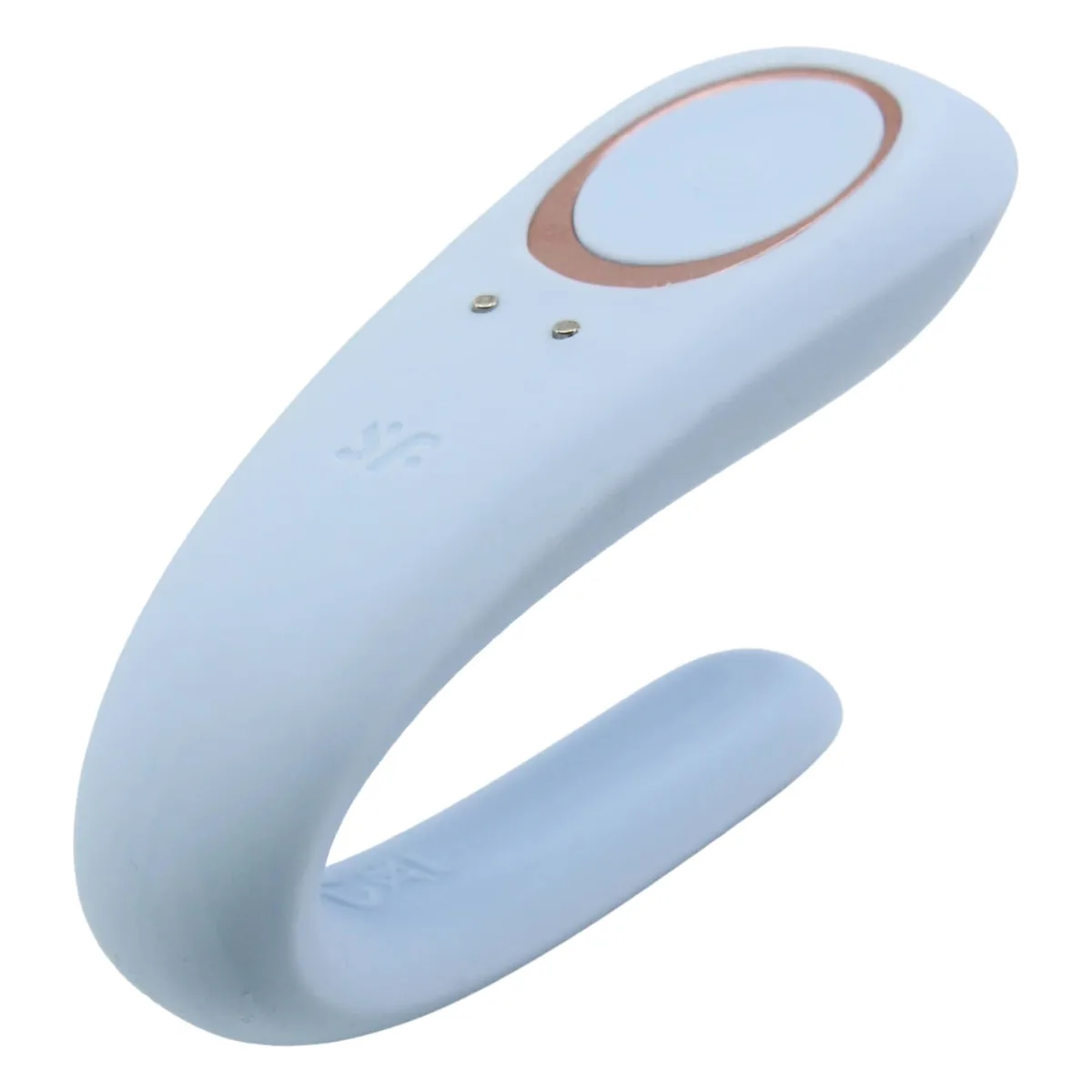
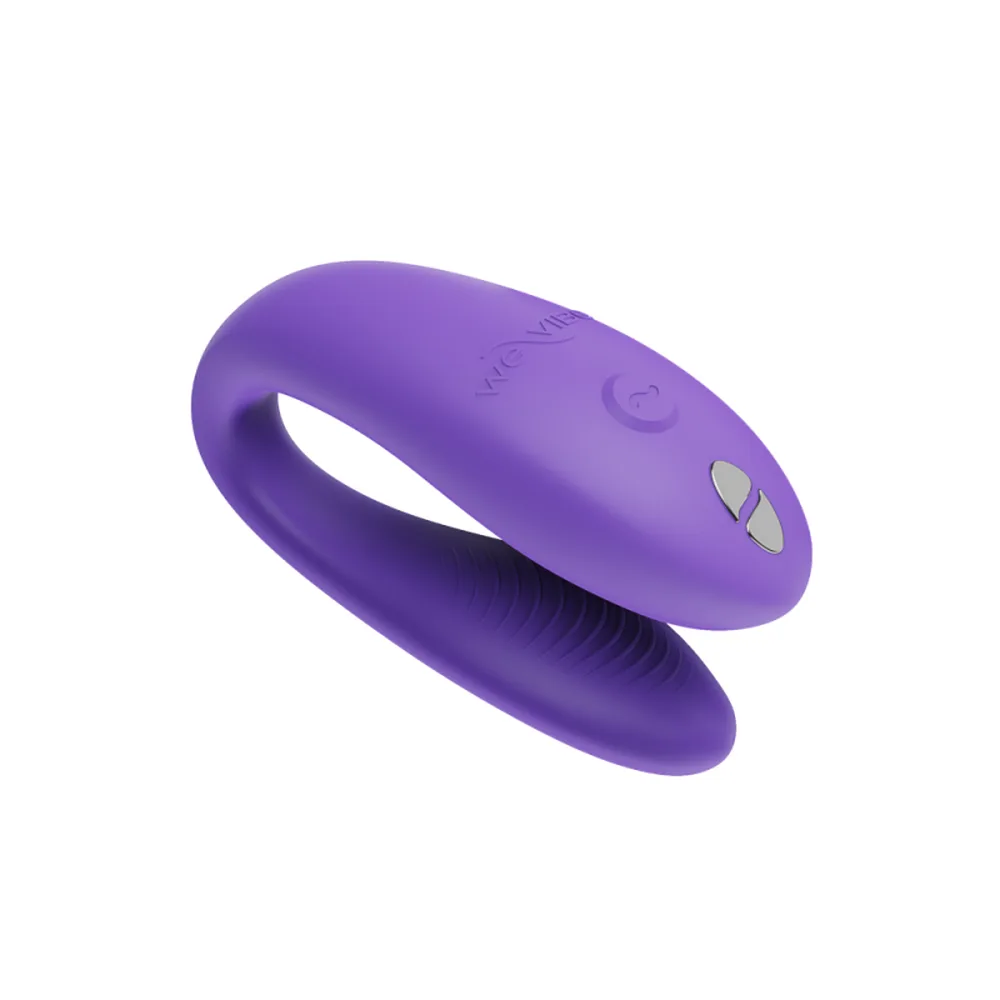
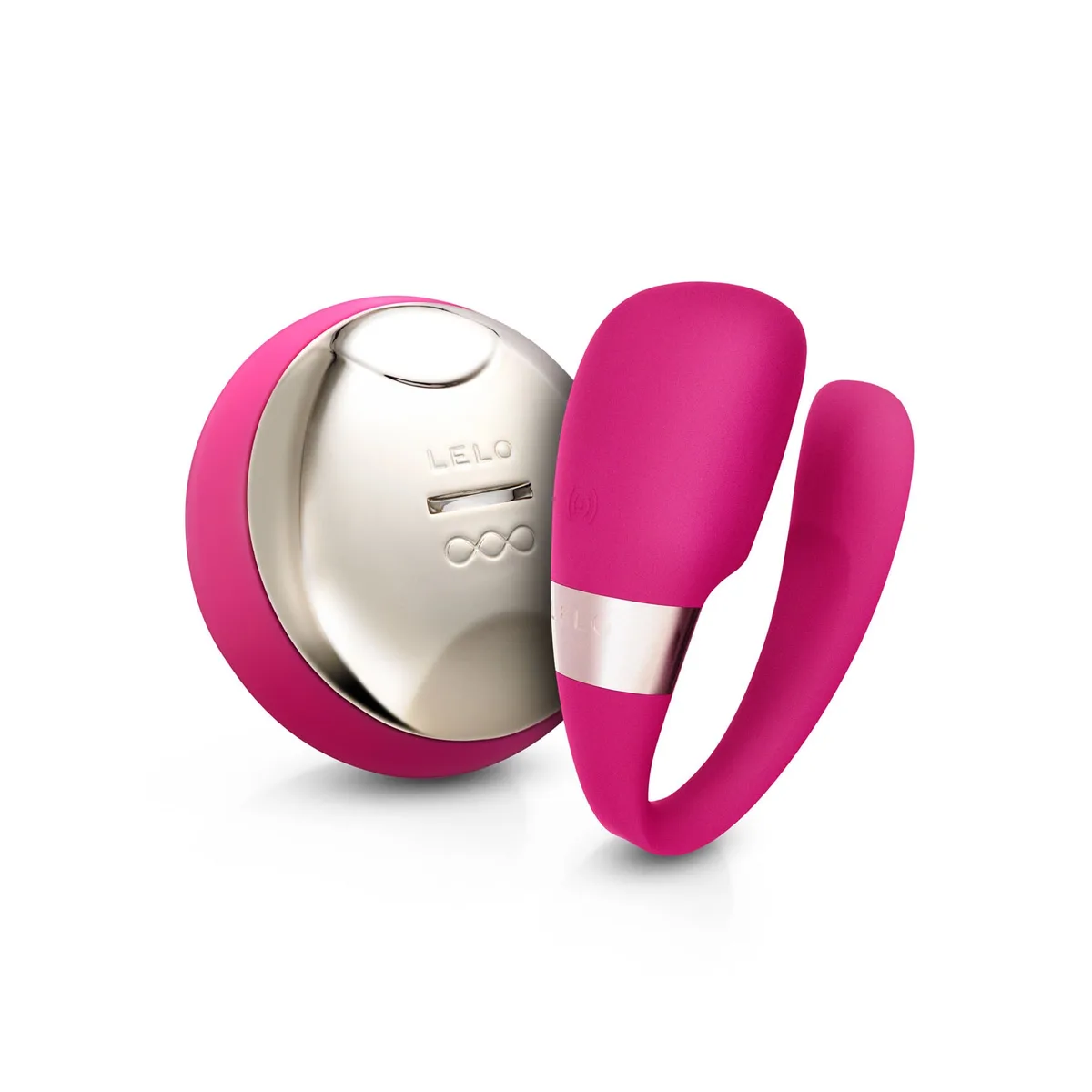
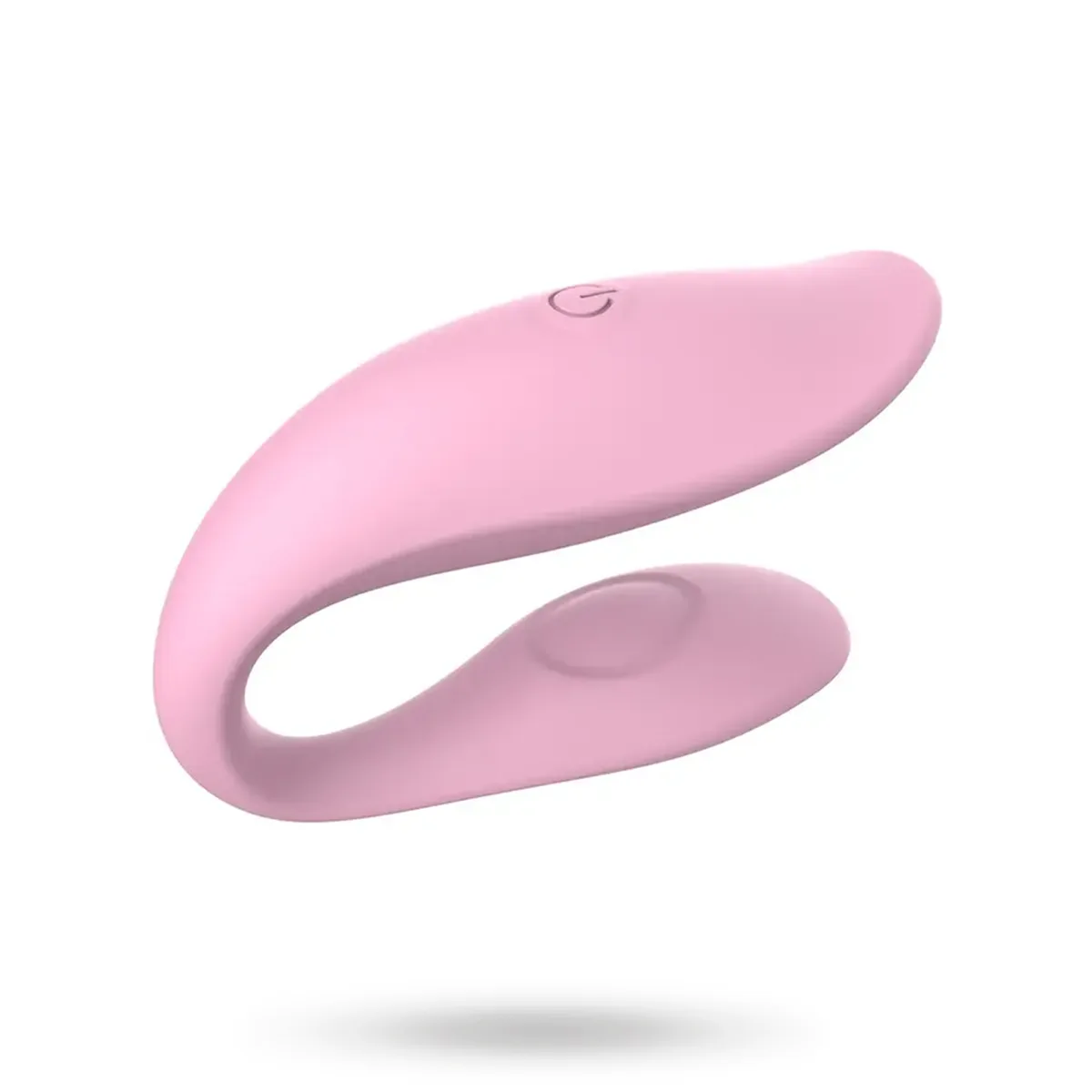
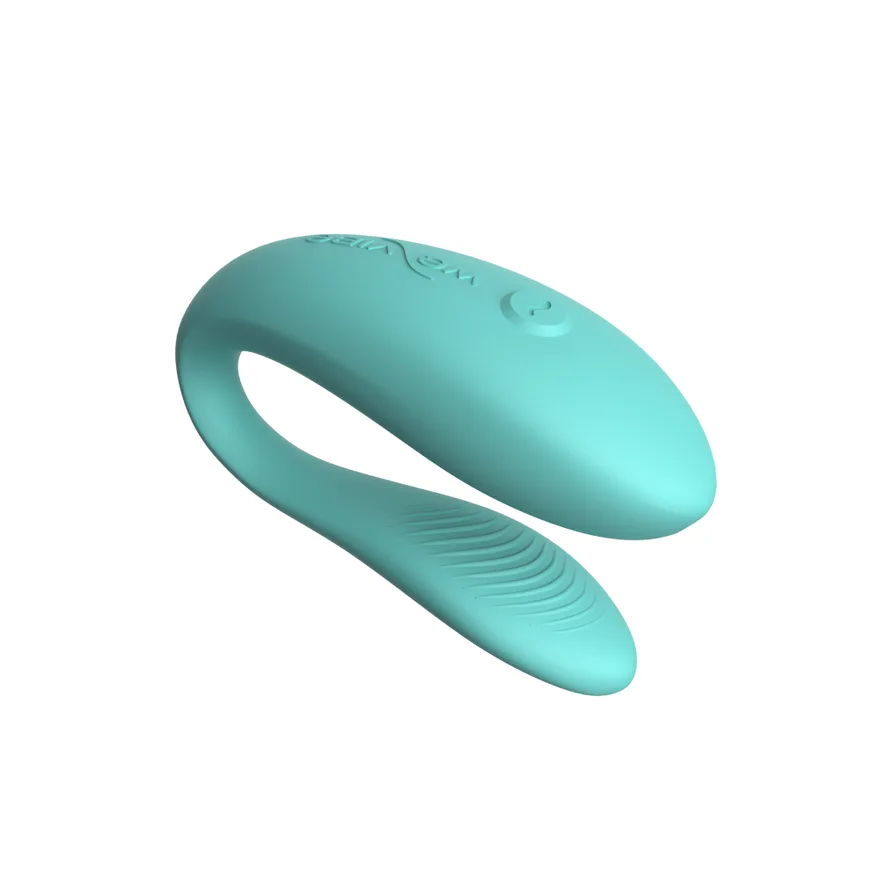
Nine of the fifteen are built to lie between two bodies. The most common variant is the C-shape: an inner arm that is inserted vaginally and an outer one that lies outside against the clitoris, connected by a bend. Six of the nine are C-shaped — We-Vibe Sync Go, Sync Lite and Chorus Pro, Lelo Tiani 3, Satisfyer Partner and Erospace C-type.
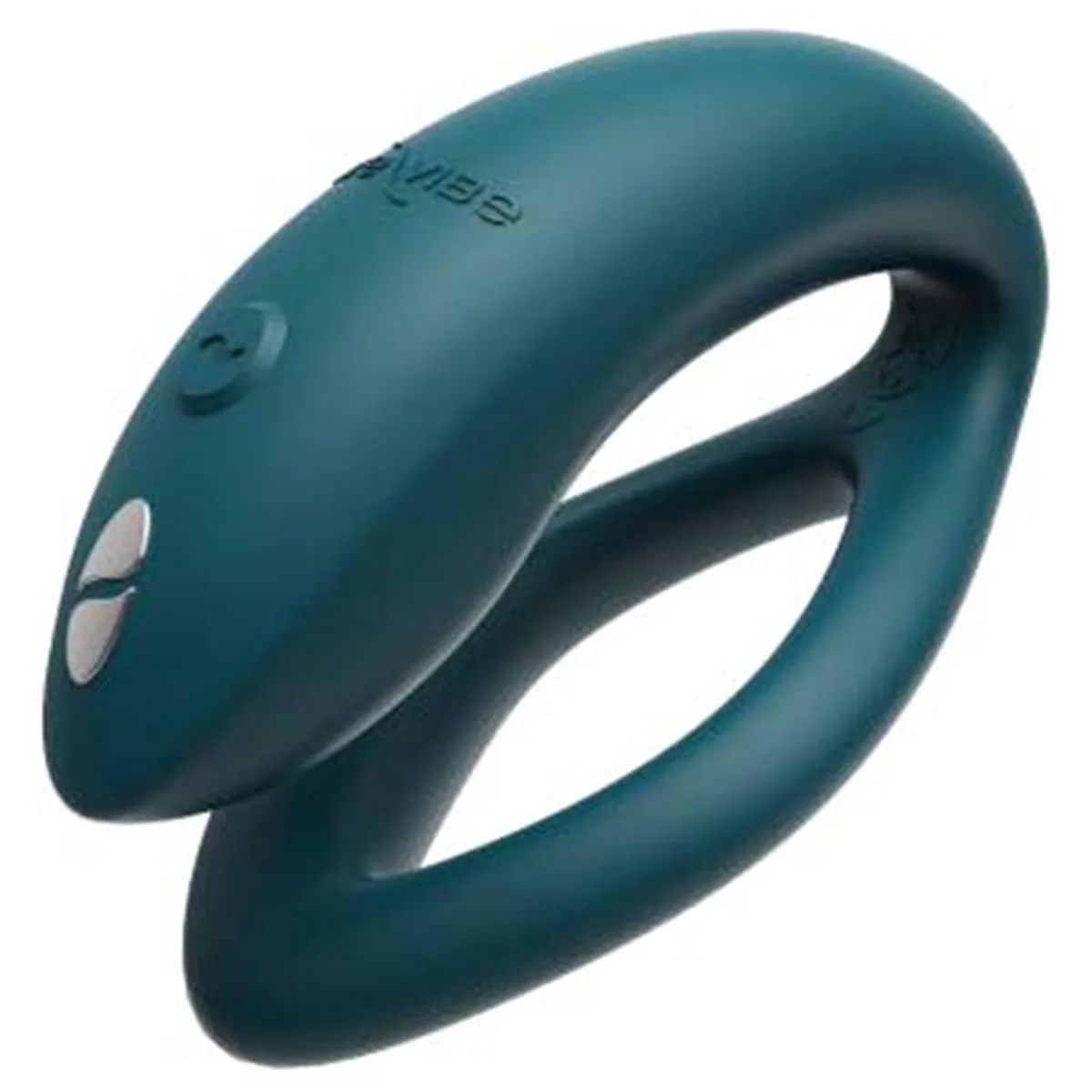
Two deviations are found in the group. We-Vibe Sync O instead has a closed O-shaped loop as the inner arm. The manufacturer describes it as a loop that is folded together during insertion and unfolded inside, and the mechanical difference versus a C-shape is that a closed loop does not need to pinch around anything in order to stay where it has been placed. That is the whole reason the model exists as its own product next to Sync 2 — the full review of Sync O goes through what We-Vibe writes about the shape.
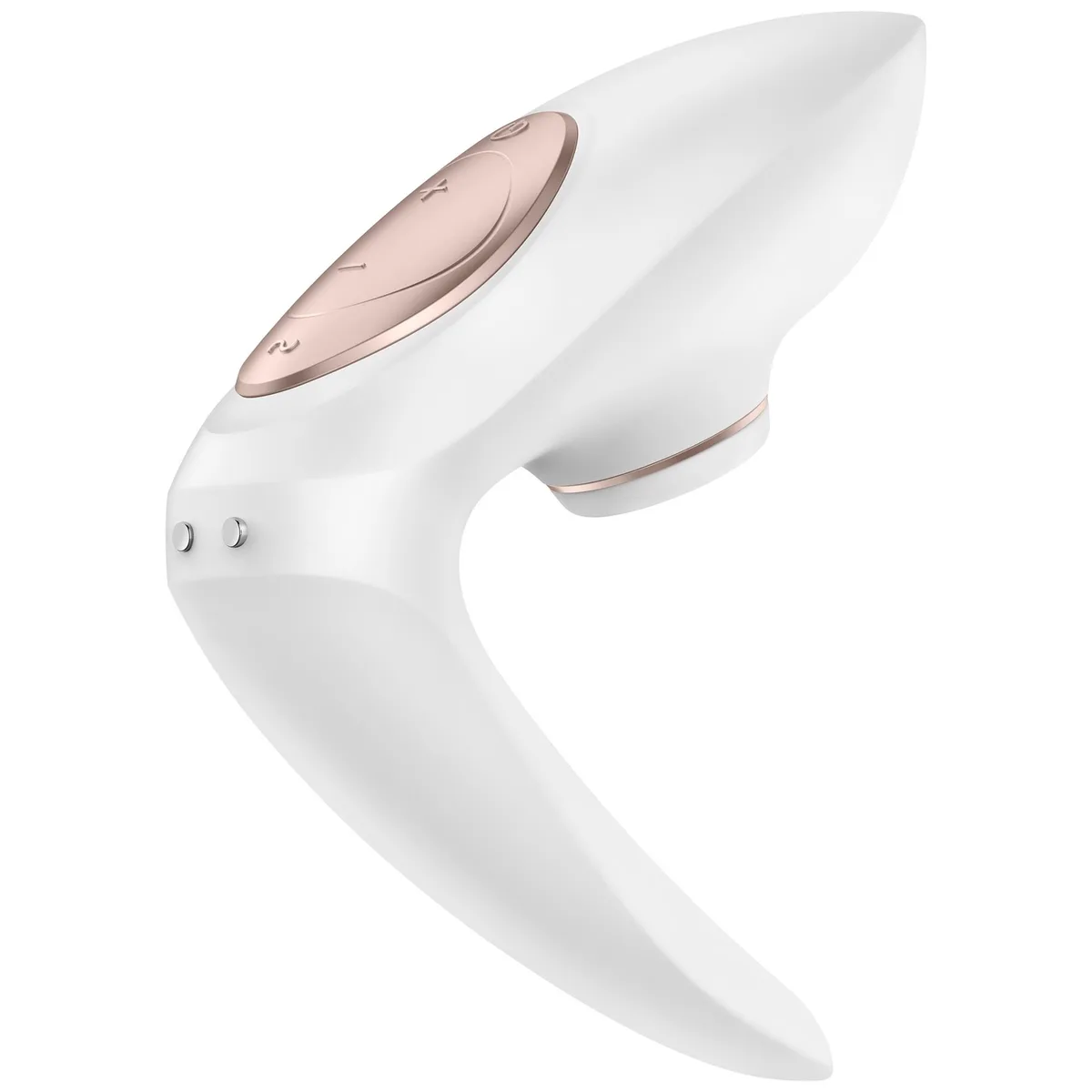
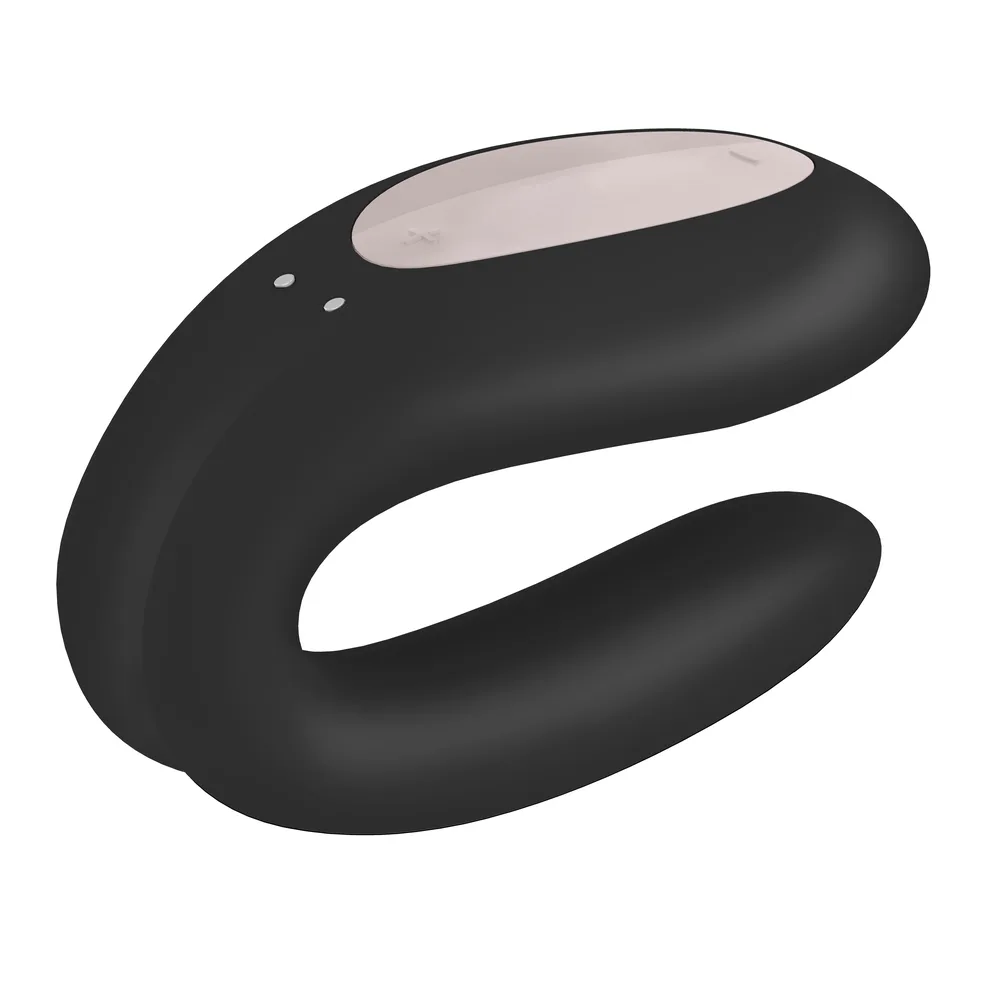
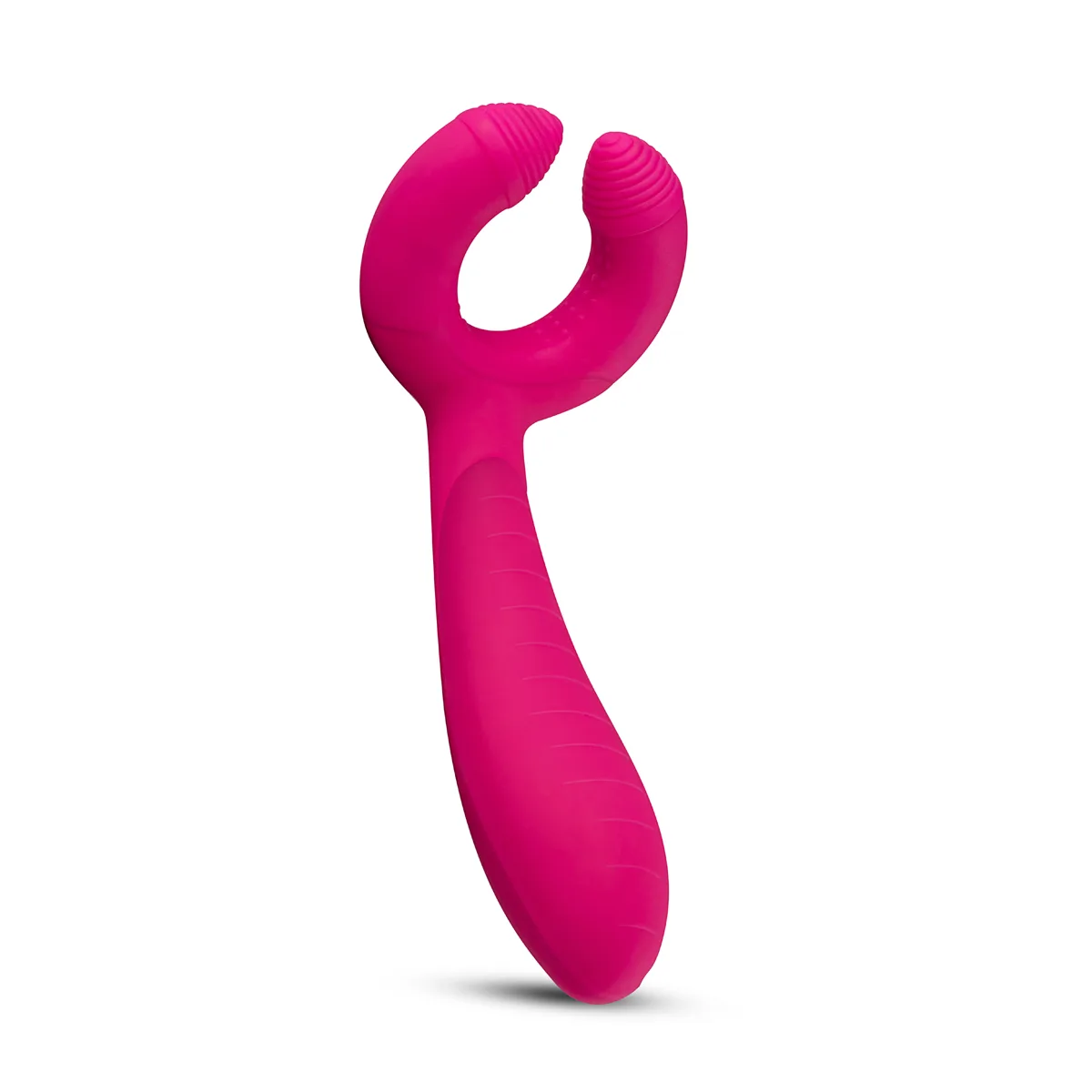
Satisfyer Double Joy and Satisfyer Pro 4 Couples are U-shaped, meaning they are built around two prongs instead of a bend. Satisfyer lists 91.4 × 41.8 × 57.4 millimeters for Double Joy and 117.6 × 38.3 × 97.3 for Pro 4 Couples, where the height measurement in practice describes the distance between the prongs. Pro 4 Couples is also the only wearable model in the entire review that has an air-pressure chamber next to the vibration motor.
Rings: the shape where the inner measurement decides everything
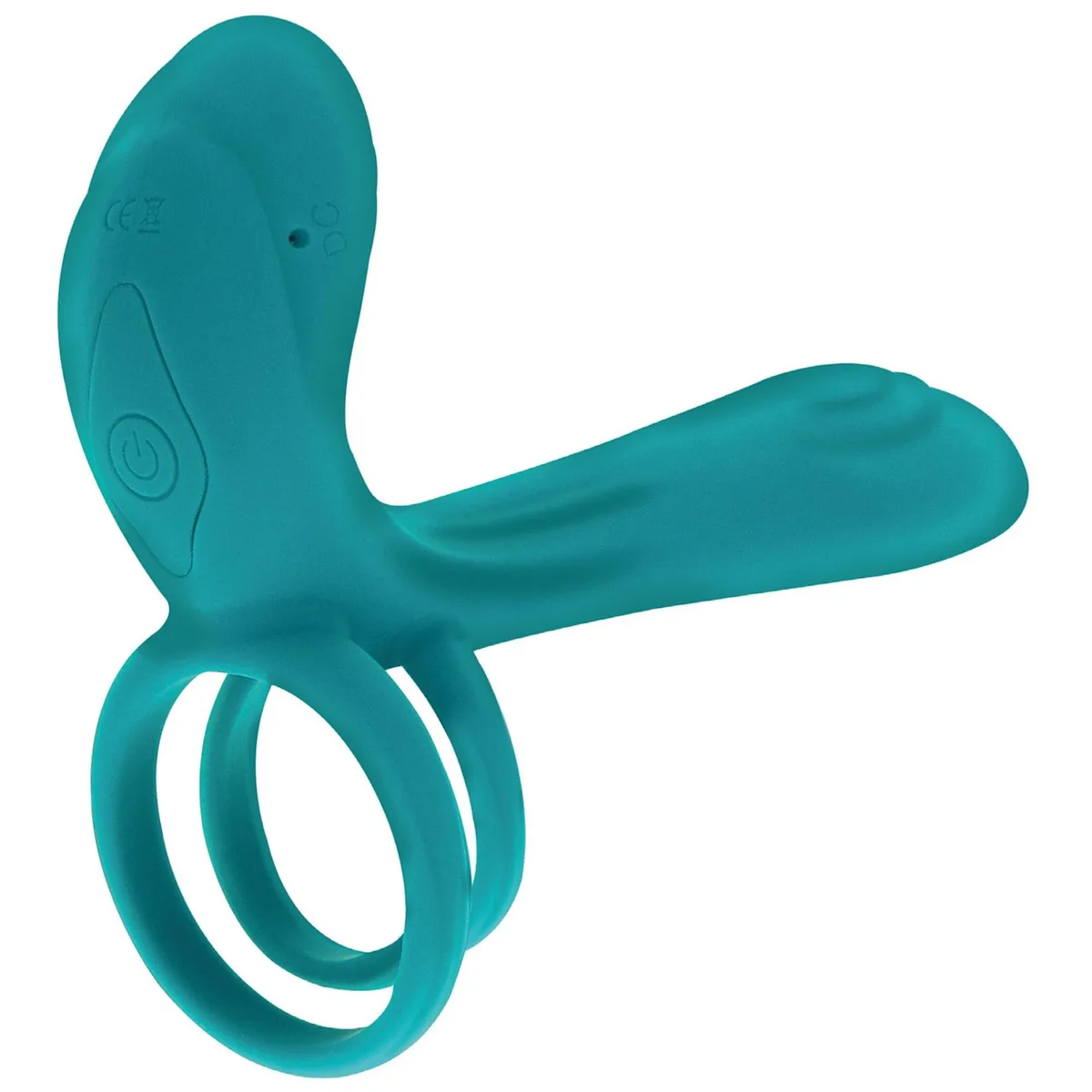
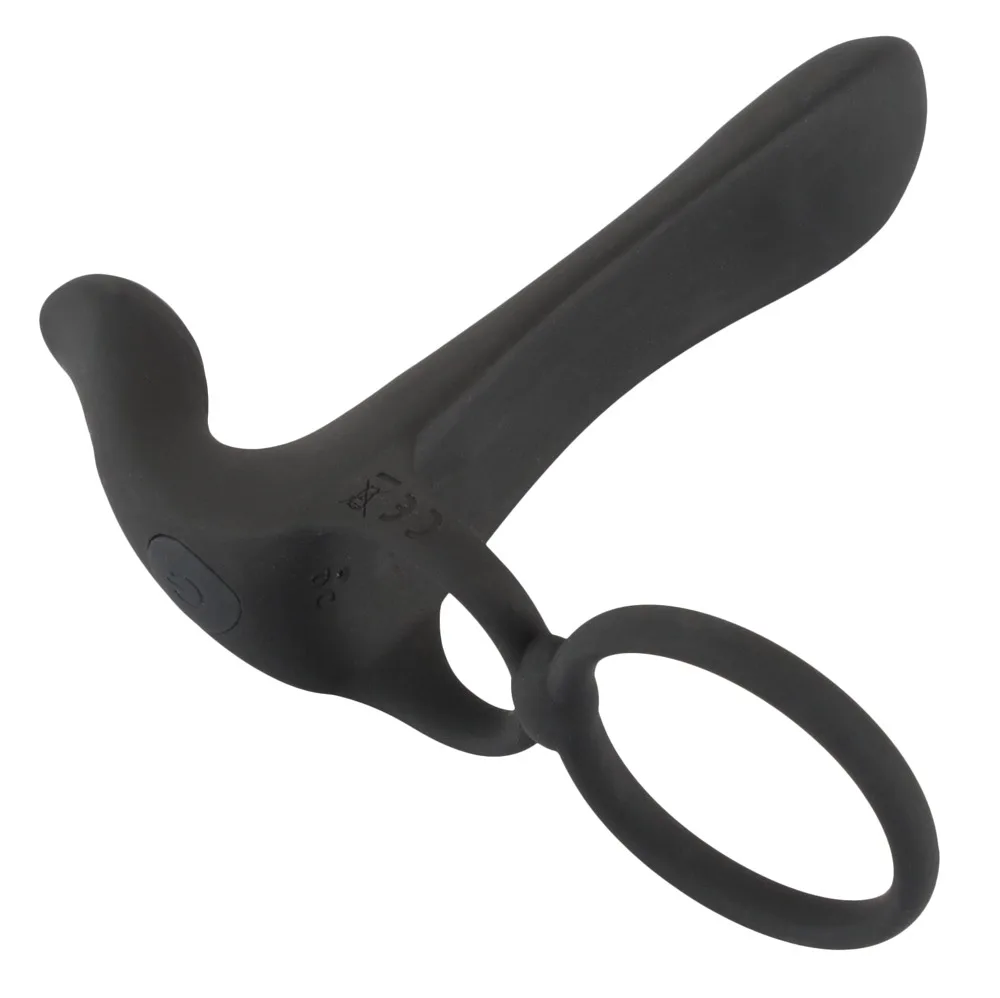
Three of the fifteen are held in place by a grip around the penis instead of by pressure between the bodies: Xocoon Couples Vibrator Ring, Black Velvet’s Couples Vibrator and Teazers Pair Vibrator. The first two are double rings that grip both the penis and the scrotum; the third is a ring that, according to the manufacturer, can also be used as a two-point stimulator or an insertable part — Teazers three ways of using it are the only ones in the review where a manufacturer lists them separately.
For this shape, the ring’s inner measurement is what determines whether the product can be used at all, and only one of the three publishes it. Xocoons’ own dimension sketch shows openings of 3 and 2 centimeters in an unflexed position, with outer diameters of 4.5 and 3 centimeters. Teazers states a maximum diameter of 3.5 centimeters, Black Velvet’s a shaft that varies between 1.3 and 3.2 centimeters. None of the manufacturers states how much the material gives.
The flexible one, the two-zone one, and the double-ended one
The last three formats each have their own representative. IntoYou Lovit has a fully flexible body — instead of choosing the right fixed angle, you shape the product yourself, which is the only answer in the entire set as to why two couples don’t have the same anatomy.
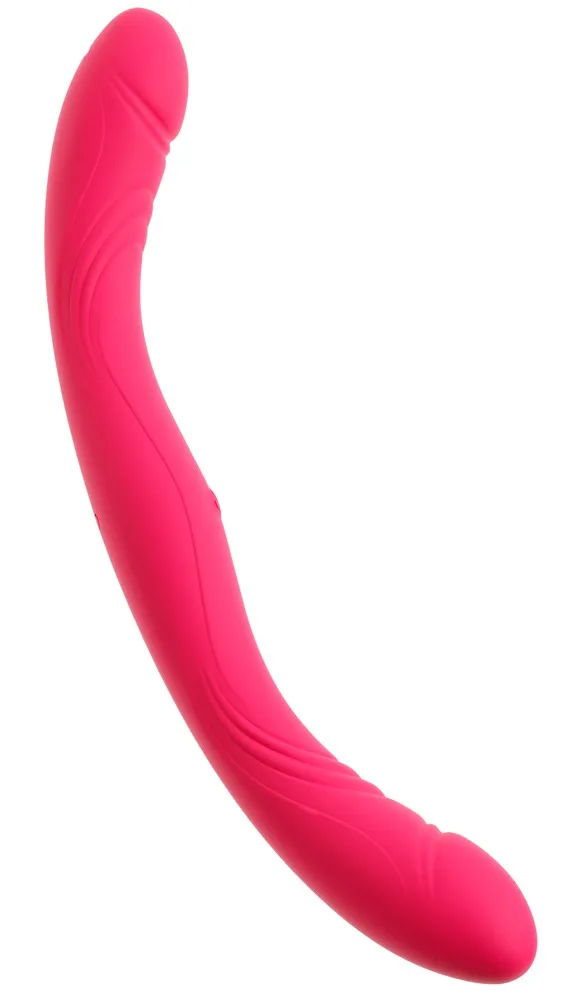
Rocks-Off Cocktail is the only model with an anal and a vaginal part that are each stimulated by their own independent motor.Couples Choice Double Vibrator is not a wand vibrator at all, but a double-ended shaft that is 31,2 centimeters long with a 15,5-centimeter insertable length at each end, intended for shared penetration.
And one of the eighteen is not a vibrator at all. You2Toys Inflatable Love Cushion is an inflatable position cushion without a motor and without electronics. It was included in the desk review because the shops sell it on the same shelf, but it sits outside the ranking — see the section about the three without placement.
Who holds the control — and where is that person standing?
The second question matters more than the shape, and it’s the category’s single biggest misunderstanding. Three technically completely different solutions are sold under the same term — remote control — and the person who buys the wrong one has bought a product that can’t do what it was bought for. A Bluetooth remote control doesn’t save a long-distance relationship, and an app doesn’t work without a phone being close to the toy.
The breakdown among the fifteen ranked looks like this: five have only one button on the product itself, six have a wireless remote control in the package, six have app control, and two of them — We-Vibe Sync O and Chorus Pro — have both a remote control and an app. Below is what each of the three actually means.
The button on the product: it always works, but someone has to be able to reach it
Satisfyer Pro 4 Couples, Satisfyer Partner point by point, Teazers Pair Vibrator, Black Velvets with all measurementsand Couples Choice are controlled only from the product. It’s the only solution that can’t stop working: no pairing, no account, no service at the other end that can be shut down.
The number of buttons determines how much can be changed. Teazers has two buttons, one per motor, and can therefore run its two motors differently — seven settings each. Couples Choice has a single button in the middle of the body that controls both motors together. Black Velvets has twenty modes and one button. Satisfyer Partner has one button and one motor.
This is also worth knowing for the person who buys an app-controlled model, because the button is what remains when everything else fails. On We-Vibe Sync O and Sync Go, the single button steps between the patterns but doesn’t change the intensity — it’s only adjusted in the app or on the remote control. On Lelo Tiani 3when the product’s own button is set to two of eight modes.
The remote control: radio, not internet
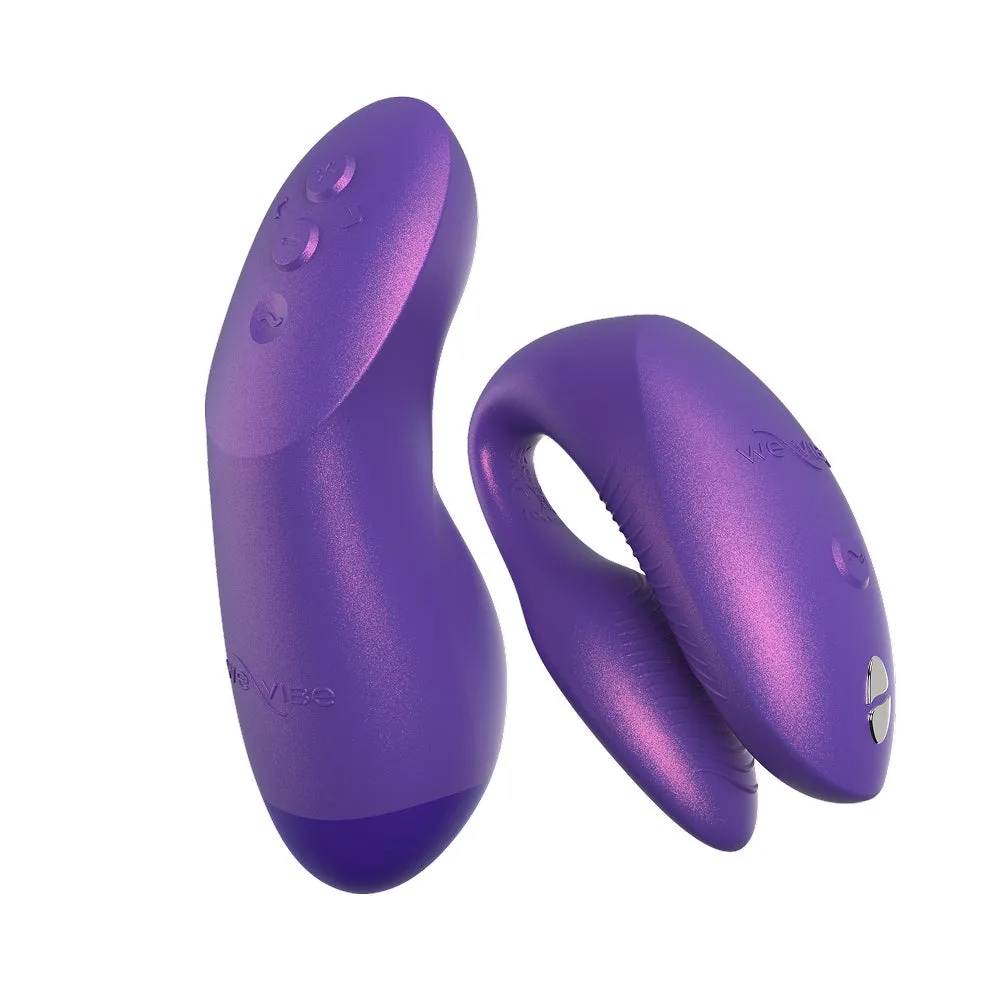
Six models have a physical remote control in the box: We-Vibe Sync O and Chorus Pro, Lelo Tiani 3, IntoYou Lovit, Rocks-Off Cocktail, and Xocoon Couples Vibrator Ring. It works via radio over short distances, which in practice means the same room. You don’t need to take a phone out, you don’t need to create an account, and nothing in the solution can cease to exist.
Two details that the store descriptions never mention. The remote control isn’t always as water-resistant as the toy—the We-Vibe states explicitly that Sync O’s remote control must not be submerged in water, while Lelo says that Tiani 3’s remote is intended to withstand water when the cover is sealed.
And the remote control has its own power supply that isn’t charged with the product. Lelo runs on AAA batteries that are replaced using an included plastic key, and We-Vibe uses the coin cells CR2032 and 4LR44. For Rocks-Off, IntoYou, and Xocoon, neither the battery type nor the range is published by any source at all.
The app: the only one that works over unlimited distance
Six models have app control: We-Vibe Sync O, Sync Go, Sync Lite and Chorus Pro via We-Vibe’s own app, Satisfyer Double Joy via Satisfyer Connect, and Erospace C-type via an app that the manufacturer never names.
It’s the only one of the three solutions that works when the partner is in another city—but it doesn’t work wirelessly all the way, and that’s exactly what gets misunderstood. The toy connects via Bluetooth to a phone that’s within range, and that phone is the one that then talks to the service. If there’s no phone near the toy, there’s no distance control, no matter how close the partner sits with their own phone.
Two limitations are stated in the manufacturers’ own material. We-Vibe says that a product can only be paired with a remote control or an app-connected device one at a time. And the fact that there’s an app says nothing about how it works: Erospace doesn’t name its app, which makes it impossible to check in advance how it’s rated or when it was last updated—unlike Satisfyer Connect and the We-Vibe app, which are both named by their manufacturers.
Range: the number that almost nobody publishes
Every model with a remote control or an app is radio equipment and is covered by the Radio Equipment Directive 2014/53/EU. That means the manufacturer must have an EU declaration of conformity where the frequency bands and the maximum transmitter power are stated, and several of them are published. We-Vibe states for Sync Go the band 2402 to 2480 MHz and a maximum output power of −0,81 dBm, and Satisfyer publishes a declaration for Double Joy with model number and standards.
Range in meters is something completely different, and that’s where the field goes quiet. Lelo is alone with one straight figure: up to twelve meters for Tiani 3. We-Vibe states in its manuals up to 30 feet in line of sight — just under nine meters — and about 20 feet, just over six, in 360 degrees around the product, which applies to Sync O, Sync Go, and Sync Lite. Satisfyer does not state a range for Double Joy. Erospace states neither the Bluetooth version nor the range. Rocks-Off, IntoYou, and Xocoon do not publish their remote control range at all.
So if there are ten meters in a store text, then in most cases it’s the store’s number and not the manufacturer’s. It’s information worth checking before it can determine a purchase, because the range is the entire difference between a partner being able to sit on the couch and a partner having to sit next to you.
That’s how the assessment of eighteen couple vibrators was done
This is not testing, but a desk review: eighteen couple vibrators read against the manufacturers’ own specifications, manuals, packaging texts, and EU declarations, with prices taken from all the Swedish stores that sell each item. Every figure in the table above has a source link in the product’s "review.
Fifteen of the eighteen are ranked. Three are kept out, and the reason is written further down: two of them are the same model as the ninth, in a different color, and the third has no motor. It may sound like a minor detail, but it’s the difference between a list of fifteen options and a list that looks like it has fifteen options.
The five criteria — and why one of them is called something else here
Material and hygiene, water resistance, battery and charging, function and control, and price for performance. Each criterion is scored 0–10, and the rating is the average of the five, which therefore weighs equally. The ranking follows from the rating, not the other way around. Where the points are set is on the "page about the method.
The fourth criterion is called function and controls in the site’s other guides. Here it’s called function and control, and the name change isn’t cosmetic. For a product that two people use at the same time, it’s crucial whether there’s a second path into the control and how many motors that path reaches. Two motors that can only be run together aren’t the same product as two motors with their own button, and it’s that difference that separates a couple vibrator from a regular vibrator.
Sound level is not included. Two of the eighteen manufacturers publish a dB figure — Lelo states at most 50 dB for Tiani 3 and Teazers under 60 dB — and both state a ceiling without saying at what distance it is measured. You can’t compare two such figures against each other, and ranking by quietness would have required measurements that haven’t been done.
When the store says something other than the manufacturer
The category has a problem here that’s worse than in any other review the site has done: the stores fill in the manufacturers’ gaps, and they fill them differently. The rule that’s been applied is simple. The manufacturer’s own information applies. Information that exists only at one store is marked as a store detail. And when two sources contradict each other, both numbers are written out with their sources, instead of silently choosing one of them.
That has consequences in the ranking, and the biggest one applies to number nine. We-Vibe publishes no enclosure rating at all for Chorus Pro. IPX7 for this model comes from the stores, while the manufacturer’s own material says that the charging unit must never be submerged. The information is therefore rejected, and the waterproofness score stays at 4.2—that’s the single biggest effect of the calibration, and the reason why the field’s best guidance still ends up in ninth place.
More examples from the same pile: Erospace C-typeIt lists IPX7 on the function graphic and IPX6 on the box, so IPX6 is the one that can be safely considered to apply. Teazers markets it as waterproof without a rating class. Couples Choice publishes no class, while one store writes IPx5 and another 100 percent waterproof. Black Velvet is marketed as waterproof, and one store adds IPX5 without any coverage from the manufacturer. Xocoon’s material is the stores’ information, not the manufacturer’s. And Teazers’ own runtime of about two hours is contradicted by Joyland, which lists up to one hour.
Why the winner stopped at 7.9 — and why We-Vibe takes four spots
No product in this category gets everything right, and that’s what should be said instead of being hidden. The winner got 7.9 out of 10. Of the fifteen ranked, five publish no enclosure rating, three publish neither runtime nor charging time, none except Lelo publishes a range in meters, and not a single one of the fifteen is charged with a standard USB-C cable. The field is weaker than it looks on the store shelf.
We-Vibe takes four of the fifteen spots, and that deserves an explanation before anyone reads the page as advertising. The brand publishes more technical data than any other manufacturer in the field—manuals with frequency bands, output power, and electrical labeling. But the amount of documentation doesn’t earn points by itself: thin documentation doesn’t pull the rating down, and where a value is missing the product simply can’t earn points on that point. The reason We-Vibe still takes four spots has to do with the material and the enclosure rating, not the amount of paper. That this is true is clearest in that the brand’s own Sync Lite is in 13th out of 15, and that Chorus Pro for 1 795 SEK is in ninth place.
This list also deviates from both of the Swedish sides that rank highest for best-in-test clitoral vibrators. One names a Satisfyer model that isn’t included in this range; the other names the We-Vibe Chorus. Here, Sync O comes first, and Chorus Pro comes next, and the difference is easy to point out with one finger: one model has an enclosure rating from the manufacturer, the other doesn’t.
Prices: matched by EAN, checked against stock status
The price in the table is the lowest price at a store that actually had the item at home.14 September 2026. The stores are matched by EAN, meaning the same article number, because the same model is sold under different names at different retailers. In this review, one store sells a Chorus Pro under the predecessor’s name—name matching would have produced the wrong price for the wrong product.
The price spread is larger here than in any other category this site has worked on. For Xocoon, it’s 52 percent between the cheapest and the most expensive store on the same day; for Rocks-Off, 37 percent; and for Couples Choice, 17. Lelo Tiani 3 costs 1 095 SEK in cerise and 949 in black at the same store, for an otherwise identical product. So checking the price at more than one store isn’t a minor detail—when it comes to a clitoral vibrator, it’s hundreds of SEK.
How you choose a couple’s vibrator
Four questions decide, and they should preferably be answered by both people before anything is ordered: which shape works for two bodies, who should handle the control, how long it should last without charging, and how it should be possible to clean it afterward. The price is just as poor as the four—number two on the list costs 299 SEK and number nine 1 795.
What sets this category apart from all the others on the site is that the product has to work for two anatomies at the same time. That makes the measurements more important than anywhere else, and the manufacturers’ silence about them is costly. That’s why the buying guide starts there.
The measurements that determine whether it can be used—and which ones publish them
The question that really gets asked about a couple vibrator is: does it fit us? It can’t be answered in a text that hasn’t had the product in hand, but it can be answered with the manufacturers’ own measurement drawings—for those who publish some. Sorted by how much is actually provided, the lineup looks like this.
Most complete: Lelo Tiani 3, with 78 × 44.5 × 32 millimeters, insertion depth of 78.2 millimeters, and 42 grams. It’s the only model in the review where both the outer dimensions, the insertion depth, and the weight come from the manufacturer.
Satisfyer publishes the full list for its three: Partner 95 × 67 × 35 millimeters with a 70-millimeter shaft length and 52 grams, Double Joy 91.4 × 41.8 × 57.4 millimeters and 78 grams, Pro 4 Couples 117.6 × 38.3 × 97.3 millimeters and 97 grams. Insertion depth, however, is not stated for Double Joy—in that case, seven centimeters is a store figure from two sides.
Teazers Pair Vibrator, the cheapest in the list, publishes more than most of the more expensive ones: 188 × 83 × 38 millimeters, 150 grams, 14 centimeters insertable length out of a total of 18.8 centimeters, and a largest diameter of 3.5 centimeters.
Couples Choice states 31.2 centimeters total, 15.5 centimeters insertable length per end, a diameter between 2.5 and 3.5 centimeters, and 280 grams. Black Velvets states 14 centimeters total, 11 centimeters insertable length, and a shaft between 1.3 and 3.2 centimeters—but two different weights on the same side: 92 and 160 grams.
Xocoon publishes what actually matters for a ring: openings of 3 and 2 centimeters in an uncompressed position, 13 centimeters total, and an extended arm of 10.5. Erospace states total length of 98 millimeters, 23 millimeters above the outer arm, and 19 above the inner.
We-Vibe states the outer dimensions but never the weight: Sync O 80 × 44 × 44.5 millimeters, Sync Go 77.4 × 29.7 × 45.2, and Sync Lite 75 × 51 × 30.
And then the three that don’t publish enough to be assessed in advance. IntoYou Lovit lists two figures: 40 millimeters above the head and 115 millimeters along the curved outer contour. Rocks-Off lists outer dimensions and weight but explicitly states that circumference and insertable length are not given on the specification sheet.We-Vibe Chorus Pro publishes nothing at all— neither length, width, height, nor weight—making the review’s most expensive product the one with the least detailed dimensional reporting.
Two things to do with this list. Compare a published figure to something you already have, not to a product photo, because photos in this category are almost always cropped. And keep the manufacturer’s dimensions separate from the store’s: when a store fills in an insertion depth that the manufacturer omitted, the figure is a guess that looks like a specification.
One, two, or three motors—and whether they can be controlled separately
The number of motors is documented and can be compared. How they feel doesn’t, and no figure in this guide says anything about strength.
One motor only has Satisfyer Partner. Three motors only have We-Vibe Chorus Pro, with two in the outer arm and one for the G-spot. The other thirteen have two.
The deciding factor is therefore not the number of motors, but how many of them reach their own independent control. Rocks-Off Cocktail has two completely independent motors, each with its own button in the base, Teazers likewise with seven settings per motor, and Satisfyer Pro 4 Couples controls air pressure and vibration separately. On the other end: Couples Choice has two motors and a single button that controls both, and Black Velvets has two motors, twenty settings, and one button. The difference doesn’t show up in a product headline that says two motors.
Chorus Pro also requires the app for both separate motor control and the Touch Sense mode. The functions are there, but not in the hands of the person who only has the remote control — and it’s worth knowing before you pay for three motors.
Run time: 45 minutes to 150, and the charging time that determines how often
Among those who publish a run time, the range is 45 minutes to 150, meaning more than three times. We-Vibe Sync O is at the top with 150 minutes. Chorus Pro and Teazers state about 120, Sync Go 90, and the largest group around 60 minutes is: Satisfyer Pro 4 Couples, Double Joy, and Partner, Rocks-Off Cocktail and Couples Choice. Last is We-Vibe Sync Lite with 45.
Charging time determines how the product works in everyday life, and it’s reported worse. Sync O is alone in the field for going longer on a charge than it takes to top up: 90 minutes in, 150 minutes out. On the other end is Satisfyer Double Joy with about four and a half hours of charging for about an hour of operation, and Couples Choice with 180 minutes for 60.
Three of the fifteen publish nothing at all about the battery: IntoYou Lovit, Erospace C-type, and Black Velvets. According to the site’s rule, that gives a neutral score and not a deduction — a product doesn’t become worse because the manufacturer’s website is sparse. But it also means that no one can say how long it lasts, and for a couple’s vibrator used during sex, that’s exactly the figure you want.
None of the fifteen charges with a standard USB-C cable
This is the most unambiguous result of the review, and it applies across the entire field regardless of price. All fifteen ranked couple’s vibrators have a product-specific charging solution: magnetic pins for We-Vibe, Satisfyer, Rocks-Off, IntoYou, and Couples Choice; a round DC power connector for Lelo; a DC pin for Teazers and Erospace; and a thin pin connector for Black Velvets. USB-C is on the other end of the cable, toward the outlet — never in the product.
The consequence is practical and expensive. If you lose the cable, the product can’t be charged until you order a new one from the manufacturer, and several brands explicitly exclude the cable from the warranty. We-Vibe Chorus Pro is the extreme case: there the charging dock is the only documented charging route, and the case is not covered by the warranty.
The advice is disappointing, but it’s what determines whether a product for 1 795 SEK is still used after two years: store the cable together with the product, not in the box with all the other cords.
Material and hygiene when two people share the same product
All fifteen ranked couple vibrators have silicone against the skin. The difference lies in whether there is a seam, and in what the manufacturer dares to print.
Three levels of material declaration are used. Rocks-Off Cocktail is the only one that expressly excludes all four—phthalates, TPE, latex, and nickel. We-Vibe states that the silicone is free from phthalates and BPA and is made without latex for Sync O, Sync Go, Sync Lite, and Chorus Pro, and Lelo indicates phthalate-free for Tiani 3. The rest say silicone and nothing more: Satisfyer publishes no phthalate-, BPA-, or latex declaration for any of its three, IntoYou doesn’t either, and Xocoon’s material information is only available at the stores.
The seam matters more than the brand. We-Vibe Sync Go, IntoYou Lovit, and Erospace C-type are molded in one piece without a material transition. Satisfyer Double Joy has a visible seam around the control panel, Satisfyer Partner has silicone over an ABS core, and Black Velvet’s has a polyurethane coating that the manufacturer itself warns may wear down with rough cleaning. A seam isn’t dangerous, but it’s the place where a product that two people share actually becomes difficult to get clean.
One rule applies without exception: a part that’s been used anally should not be used vaginally without cleaning in between. This applies especially to Rocks-Off Cocktail, which is the only one on the list with a part intended for each of the two. We-Vibe also expressly advises in its manuals against anal use of the Sync models—a piece of guidance that rarely makes it onto the store pages.
Lukewarm water and mild soap are enough for cleaning, and the glossaryexplains the terms. Use a water-based lubricant: We-Vibe advises in the manual against silicone-based, fragranced, and alcohol-based lubricants, and silicone-based lubricant on a silicone surface makes the surface sticky over time and harder to clean.
IPX7, IPX6, and the word waterproof without a rating
The enclosure rating is stated according to the standard IEC 60529. IPX7 means the product can handle a one-meter submersion for thirty minutes—in practice, the whole product can be rinsed under the faucet, not just wiped off. IPX6 handles powerful water jets but not submersion. The word waterproof without a rating means nothing that can be verified.
Nine of the fifteen have IPX7 from the manufacturer: We-Vibe Sync O and Sync Go, Satisfyer Pro 4 Couples, Double Joy and Partner, Lelo Tiani 3, IntoYou Lovit, Xocoon, and Rocks-Off Cocktail—though the information there applies to the range and isn’t stated on the product sheet for that specific model. Erospace has IPX6 according to the box. Five publish no rating at all: We-Vibe Chorus Pro and Sync Lite, Teazers, Black Velvets, and Couples Choice.
Two exceptions are listed in the manufacturers’ own material and are easy to miss. The category often applies only to the toy and not the remote control — We-Vibe states that Sync O’s remote control must not be submerged. And Sync Lite’s manual expressly advises against submersion, which is the only time in the review that a manufacturer actively warns about water in a product that costs 764 SEK.
Always check the information with the manufacturer and not with the store. In this review, the shops list three different water-tightness classes for the same EAN for Satisfyer Partner, and two different ones for We-Vibe Sync Lite.
Warranty periods do not mean what they seem to mean.
Fifteen years, ten years, three years, two years, none at all: the range is wide, and the terms matter more than the numbers.
Satisfyer’s fifteen-year warranty is the longest in the category. For Double Joy, it does not apply in Sweden according to the terms, and for Partner and Pro 4 Couples the battery is expressly excluded — it’s built in and can’t be replaced, which in practice makes it the part that determines the product’s service life.
Lelo’s ten-year warranty is not really a warranty; it’s fifty percent off a new purchase from the manufacturer. The actual manufacturer’s warranty for Tiani 3 is two years.
Rocks-Off’s two years apply only to purchases in the manufacturer’s own web shop, so not in the Swedish shops where the product is actually bought. We-Vibe’s two years are counted from delivery and at most two years after manufacture. IntoYou states three years, Erospace two without published terms, and Teazers, Xocoon, and Black Velvet publish no manufacturer warranty at all.
No matter what the manufacturer promises, in Sweden the consumer purchase act (konsumentköplagen) applies against the store. The counterparty in case of a defect is the shop that sold the item, not the brand — and it’s also the shop that should be contacted first.
What the price actually buys between 299 and 1,795 SEK
The spread between the cheapest and the most expensive clitoral vibrator in the list is six times. Further up, more motors follow, a second path into the control system, longer operating time, and a manufacturer that publishes more. Further up, you don’t get an ingress protection rating, silicone against the skin, or a charging cable that can be replaced — these three things cost the same amount at both ends of the list, and when it comes to the ingress protection rating, the most expensive option is worse than the cheapest one.
The connection between price and rating is weaker here than anywhere else on the site. Two costs 299 SEK. Nine costs 1,795. The 13th place costs 764 and is below two products that cost 299.
Calculated per SEK is Satisfyer Pro 4 Couplesthe field’s clearest buy: one tenth down from the winner to a fifth of the price, with the same ingress protection rating and an air-pressure chamber that no other handheld model in the review has. If you want a second option in the room, IntoYou Lovit is the cheapest way to get there at 349 SEK, and if you want the ring shape with a remote control, Xocoon is 395.
Six mistakes that are easy to make
Buying a Bluetooth remote control for a long-distance relationship. A remote control works over a few meters. Only the six app-controlled models work when your partner is in another city, and they also require a phone to be kept close to the toy.
Reading IPX7 in a store text and thinking that the manufacturer has said it. For We-Vibe Chorus Pro, the manufacturer has not published any rating at all, and for Rocks-Off Cocktail, the claim is about the range rather than the specific model.
Comparing two motors with two motors. The question is whether they can be controlled separately, and for several of the models in the list they do not.
Choosing based on number of modes. Twenty modes from one button that only steps forward are not any more useful than seven modes per motor with a separate button—and no manufacturer publishes how finely the steps are spaced in the lower part of the scale.
Buying a color. Three of the eighteen posters in the review are the same model in three colors at the same price and with identical specifications. One color is not a reason to pay more or to wait for stock status.
Forgetting that it’s two people who are going to use it. The measurement that matters is rarely the product’s length, but the width across the part that has to share space—and that is exactly the measurement most manufacturers omit.
If the app is discontinued: what’s left of the product
An app is a service, and services end. The question belongs in a purchase decision of around 1 795 SEK, and none of the manufacturers in the review addresses it. What can be said, though, is exactly what remains in your hand when the app doesn’t—because it’s stated in the manuals.
All app-controlled models have a physical button on the product, and that’s what remains. On We-Vibe Sync O, Sync Go, and Sync Lite, it steps between ten pattern modes. On Satisfyer Double Joy and Erospace C-type, there are ten modes on the product. What disappears with the app is intensity control on We-Vibe models, the Chorus Pro’s Touch Sense mode and separate motor control, all app patterns, as well as music and long-distance modes.
Four models are immune to the question because they never required any app: Lelo Tiani 3, Rocks-Off Cocktail, IntoYou Lovit, and Xocoon are all controlled via a physical remote control without an account. Five more models have never had more than the button—Satisfyer Pro 4 Couples, Satisfyer Partner, Teazers, Black Velvets, and Couples Choice.
The conclusion isn’t that app control should be avoided, but that it should be priced correctly. Distance control is the only feature of a couple’s vibrator that sits outside the product itself, and therefore the only one someone else can take away from you.

 1
1