What a penis sleeve actually does—three things, and two it doesn’t do
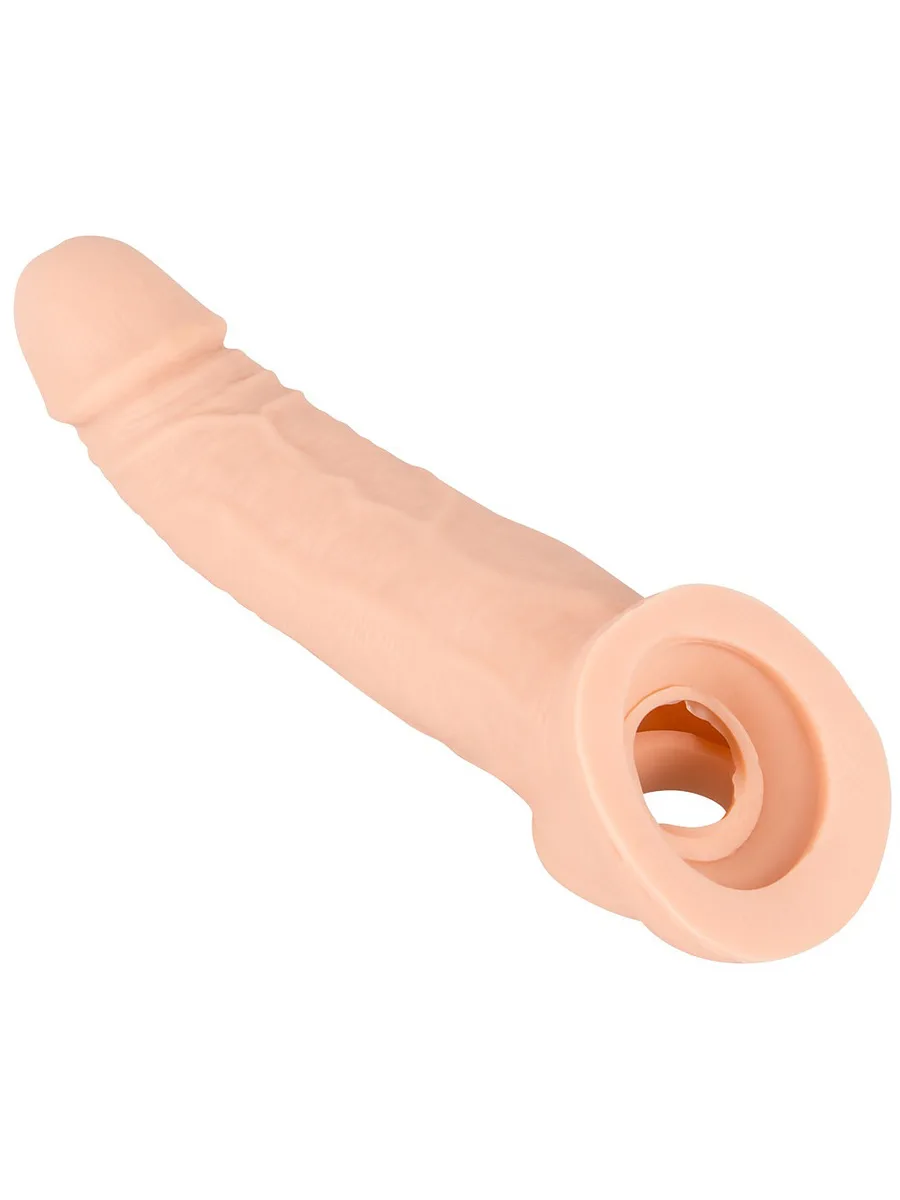
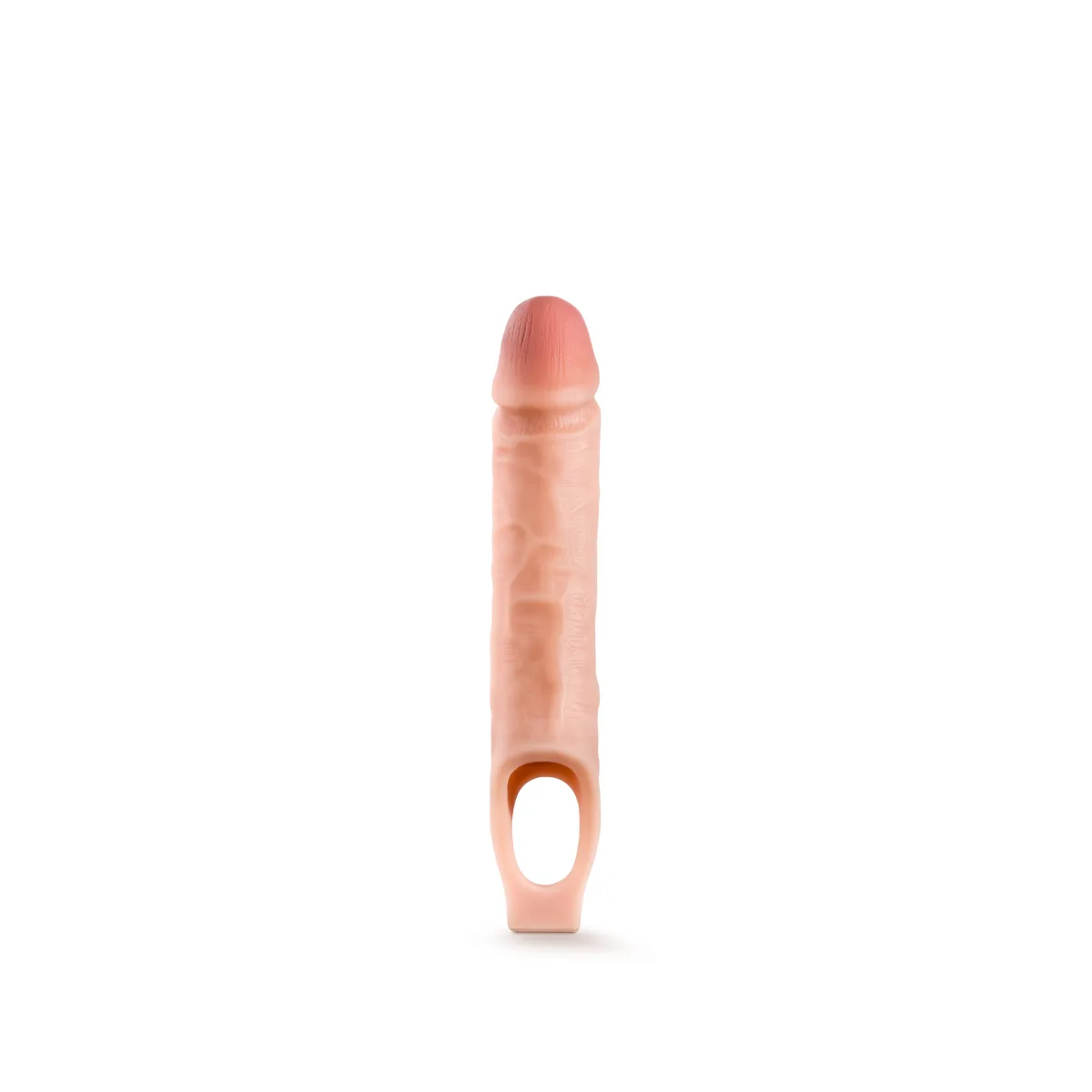
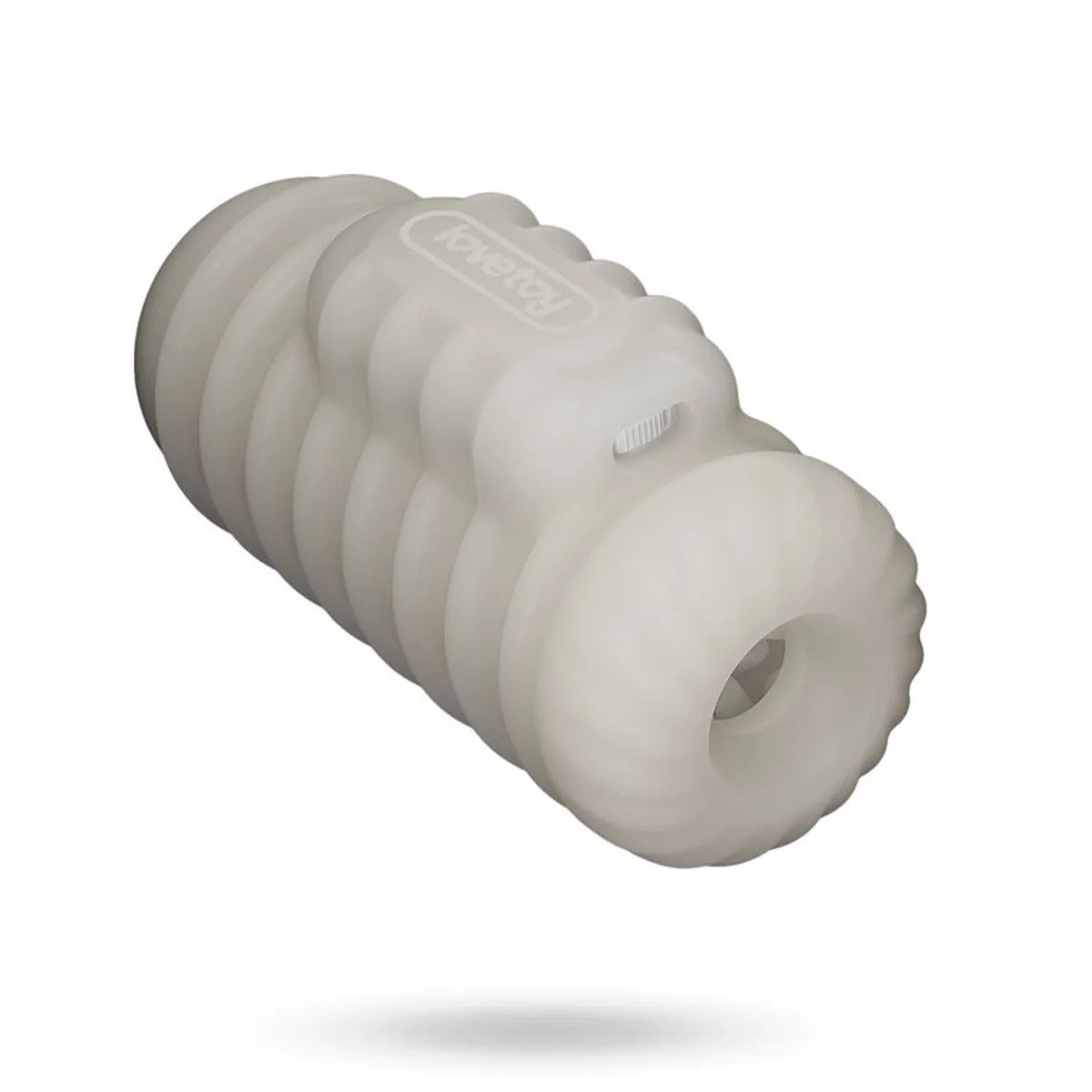
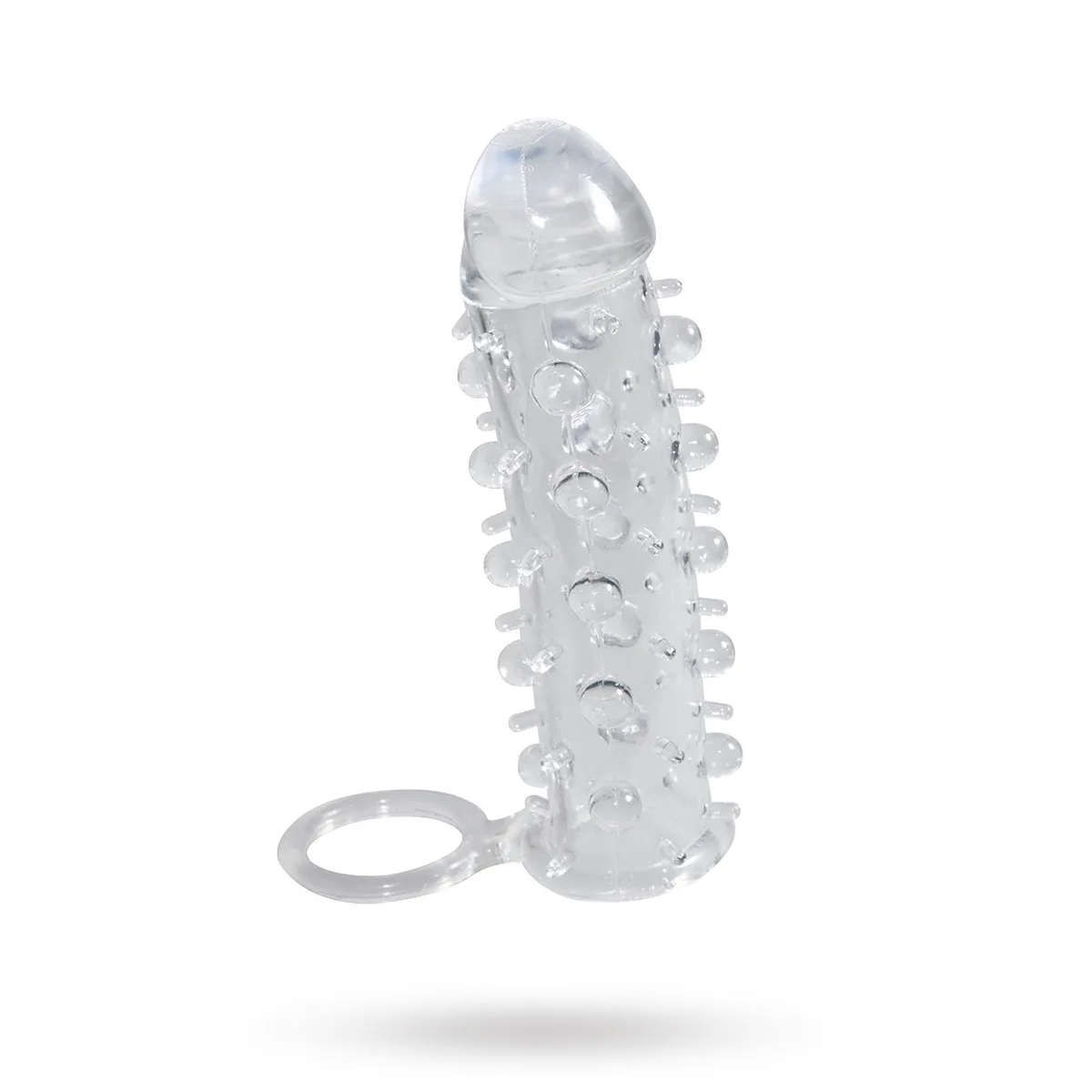
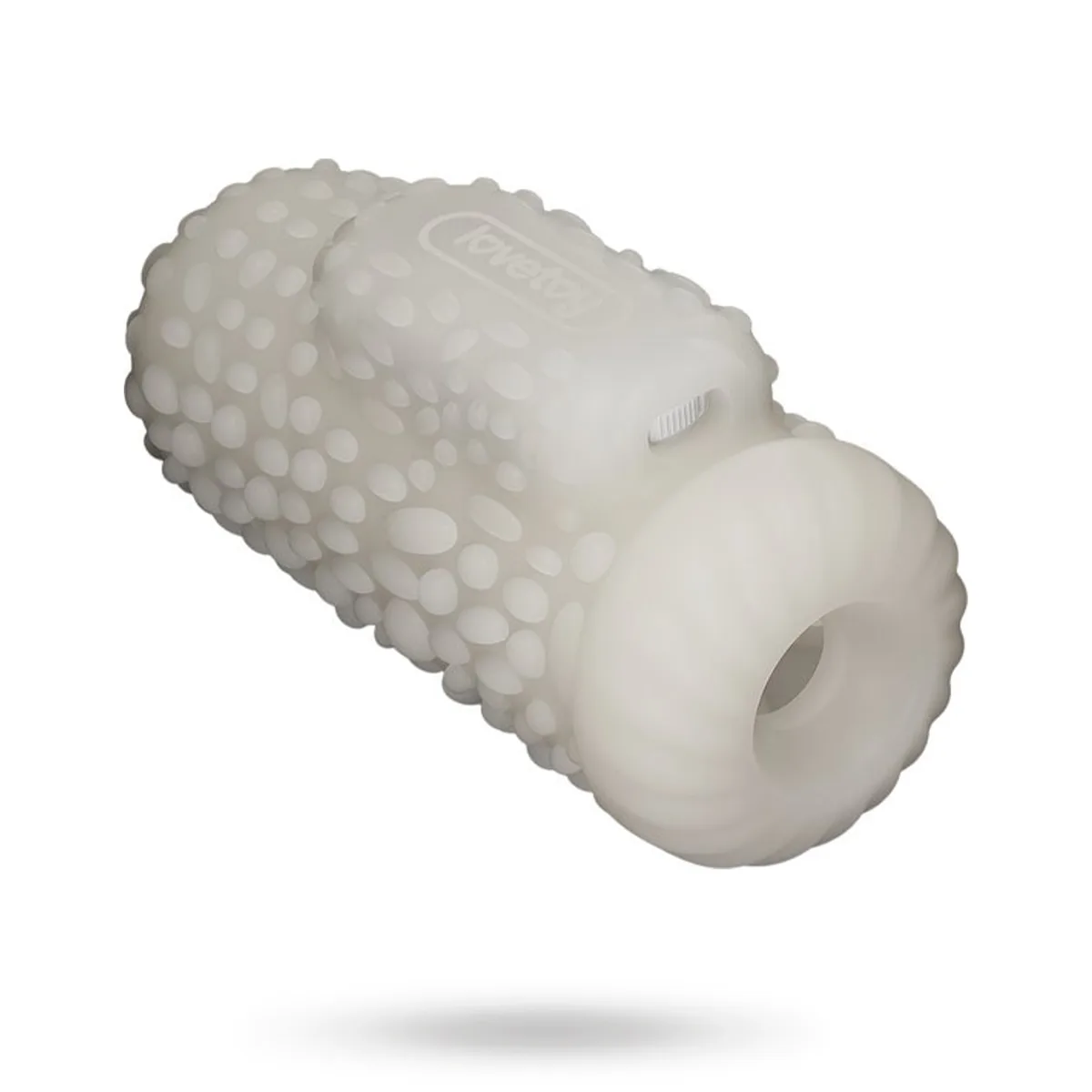
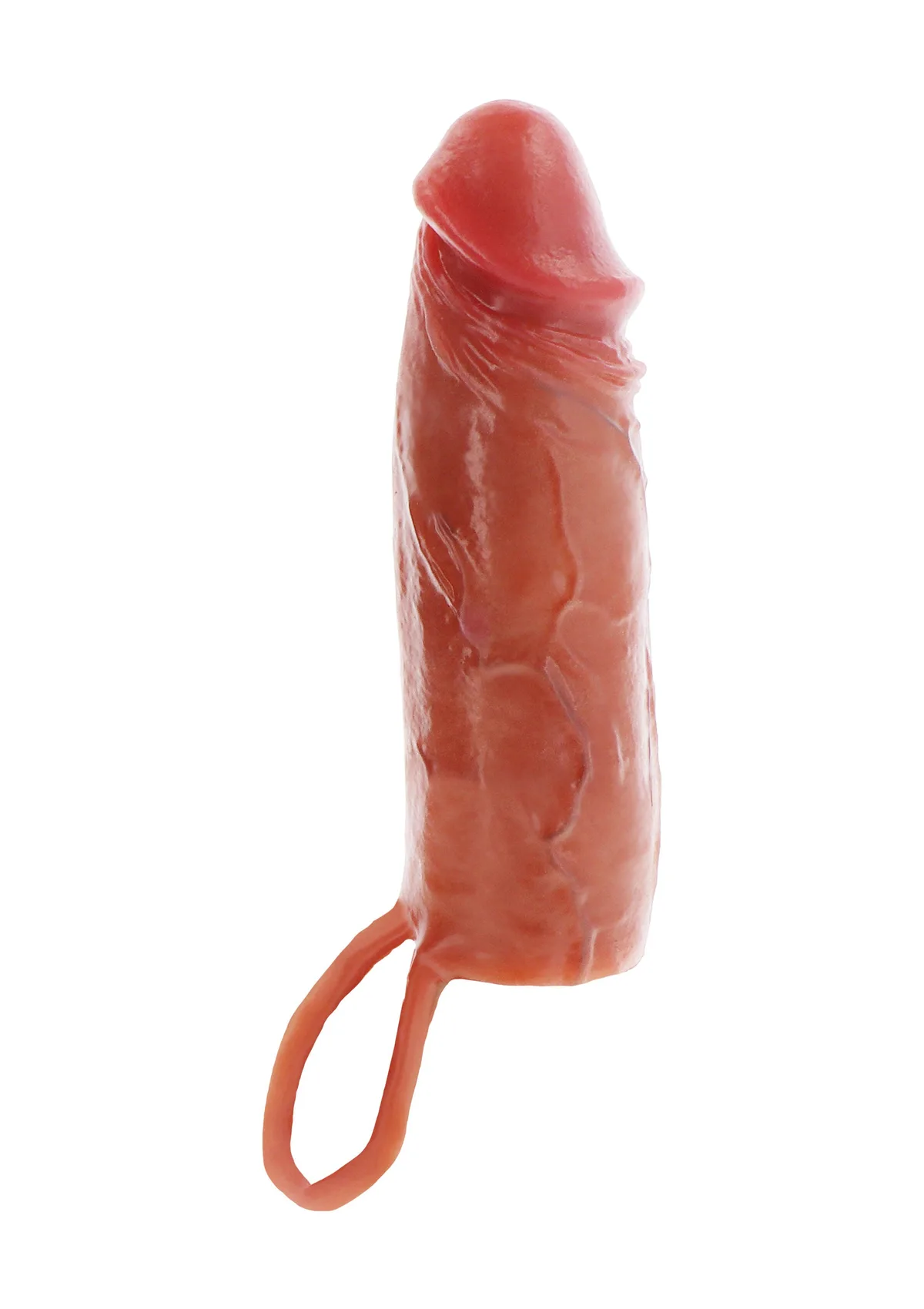
A penis sleeve is a hollow sheath that you slide over an erect penis. It does three things at the same time, and it’s worth keeping them separate, because only one of them could be the reason for the purchase. It increases circumference, because the sheath’s walls sit over the outside. It increases length, but only if the sheath has a solid section beyond the cavity. And it replaces the surface that touches your partner—from skin to a molded pattern—veins, bumps, ridges, or a spiral depending on the model.
The third effect is rarely mentioned in the texts in the stores, but it follows from the first two: the material between the skin and the partner dulls the wearer’s sensation. For some, that is the whole point, and for others, it is a reason to abstain. No manufacturer in the field quantifies the damping, and neither does the wall thickness — Nature Skinis the only one where a wall measurement is published at all, and then as a store statement from Joyland at 0,5 centimeters.
Two things, however, the product is not, and both are printed in the manufacturers’ own material. They are treated separately below because, in practice, they are the most important details in the entire specification — and because none of the Swedish stores carry them further.
It is not a condom, and three manufacturers say it outright
A penis sleeve covers the penis and looks in the packaging like protection. It isn’t. It does not protect against either pregnancy or sexually transmitted infections, and three of the products in the review state the information explicitly in the manufacturer’s own material: Toy Joy in the instructions for use, Orion in the customer information to both Nature Skin and You2Toys Crystal Skin.
The wording is worth noting because a store in the review describes a sleeve as something that is "applied in a condom-like way (but does not replace a condom)". That parenthetical is the entire difference, and it is easy to skim past. If you want both size and protection, you need a condom together with the sleeve — and then the condom’s own instructions apply for which lubricant may be used, not the sleeve’s.
Thirty minutes is the limit — a piece of information no store prints
Orion sets an absolute limit of 30 minutes of use in the customer information for its two sleeves. The reason given is that the product appears to cause blood to pool, meaning that it holds onto blood, and that longer use can cause tissue damage and bruising. The instruction applies to Nature Skin Penis Sleeve with Extension and Crystal Skin with scrotal ring. None of the total of ten Swedish store listings for the two items mentions the limit.
So two out of ten manufacturers publish a time limit, and that is a problem — not because they do it, but because the other eight do not. The effect they describe does not depend on the brand but on the design: a tight sleeve or a scrotal ring that encloses the scrotum keeps blood in place in the same way regardless of who cast it. Toy Joy gives no limit but is unambiguous on the next point — stop immediately at pain, discomfort, numbness, or irritation.
A practical detail from the same document that deserves to be here: Orion recommends having scissors on hand, because the scrotal opening on the models that have one cannot be opened. It sounds dramatic and is simply sensible — a molded ring can’t be unfastened.
The sleeve and the traction device: two products under the same search term
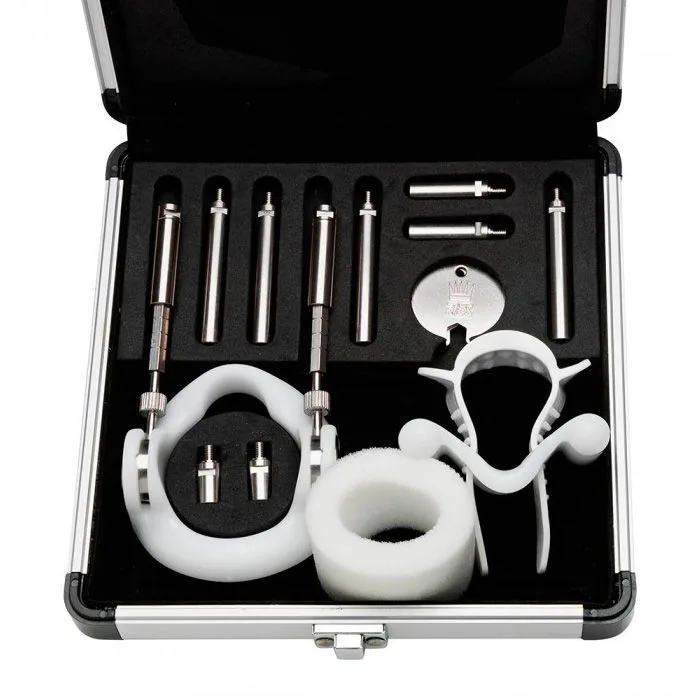
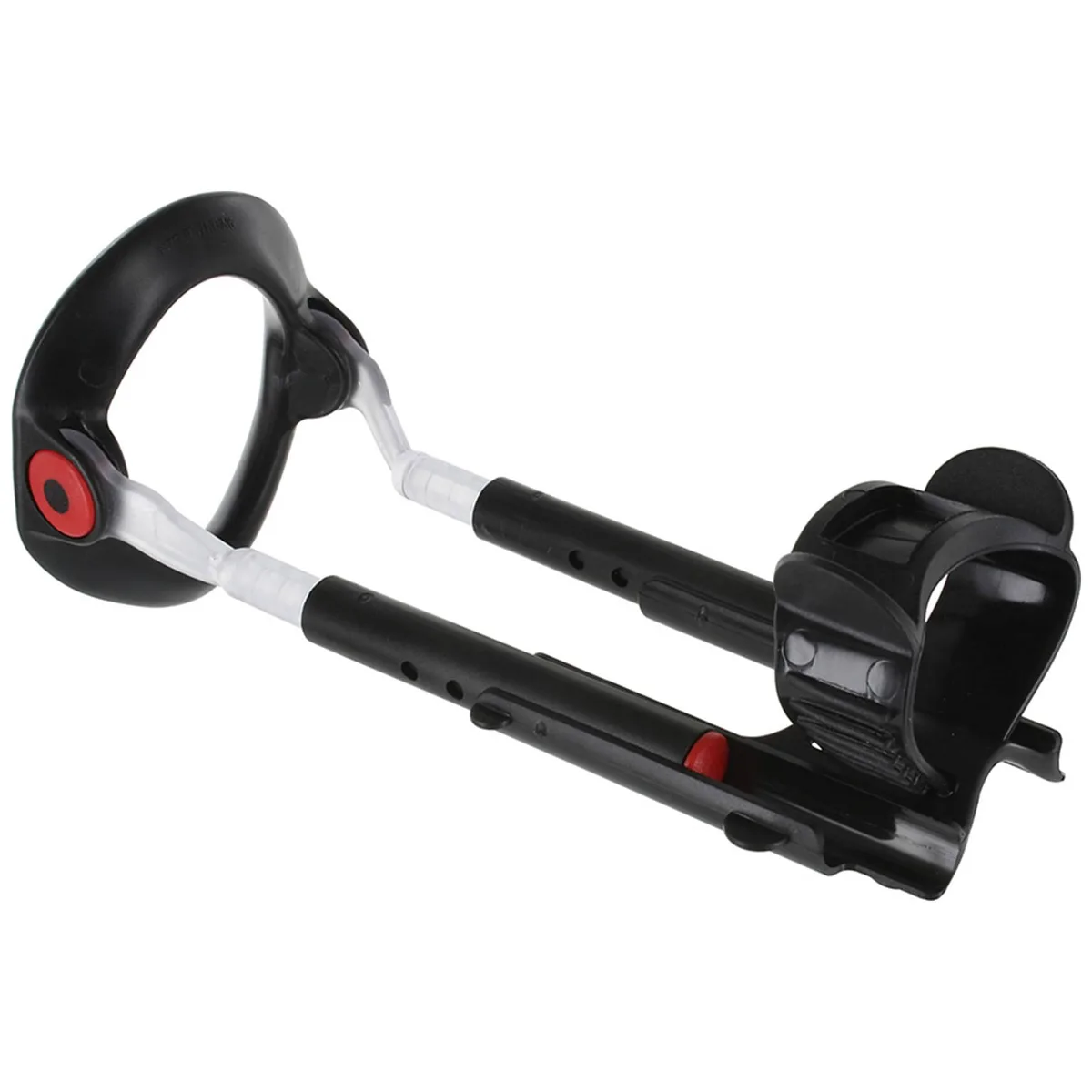
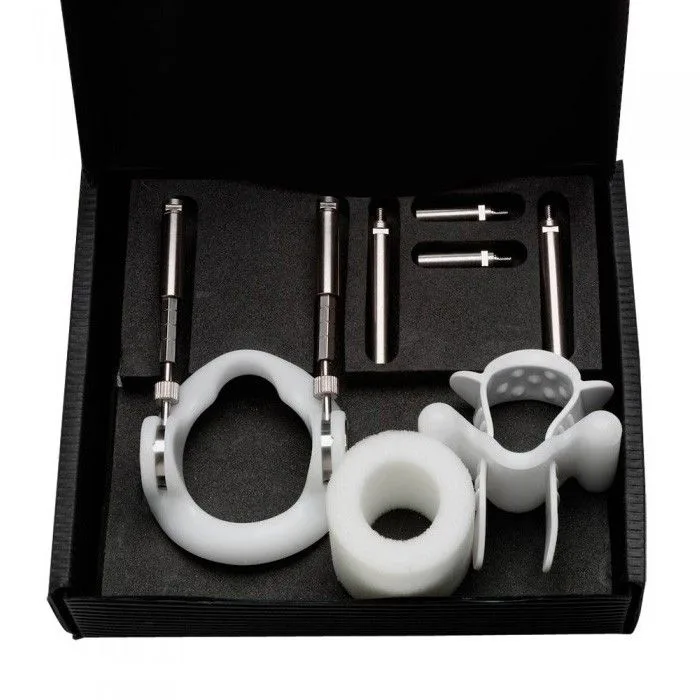
Seven of the ten ranked are cast sleeves in TPE or silicone that cost 199 to 349 SEK and are used on the spot. The other three — Jes-Extender Titanium, MaleEdge Pro and Jes-Extender Light Standard — are mechanical traction devices that cost 1,495 to 1,611 SEK and are worn for several hours a day for months. Nothing other than the search term unites them.
Even so, they are in the same list for one simple reason: the shops place them there. Vuxenkul has a single category called Penisöverdrag (penis sleeves) and Penisförlängare (penis extenders), Sexleksaker365 puts its Penisförlängare section under the Penisöverdrag section, and the person searching for Penisöverdrag (penis sleeves) gets them in the same result. Sorting them out would make the list cleaner and worse — the person who has to choose needs to know that they exist, what they require, and why the price tag differs by a factor of five.
The difference in plain text: a sleeve provides an effect for the minutes it is worn and for zero minutes afterward. A traction device does nothing on the spot and is marketed based on what is supposed to happen after four to six months with five to six hours of daily wear time. Which of the two questions you actually ask determines whether you should look at the top of the list or at places two and three. Traction devices get their own section further down.
So this is how the ten were ranked — and why battery life and water resistance aren’t included
Five criteria with the same weight: material and hygiene, dimensions and fit, construction and durability, function and adjustability, and price versus performance. Each criterion is scored 0–10, and the rating is the average of the five. The ranking follows the score, never the other way around.
The criteria that carry most of the guides on this site can’t be used here. Only three out of ten products have a battery at all, and the three are powered by a coin cell and not by a rechargeable lithium battery. Not a single manufacturer in the field publishes an ingress protection rating, so water resistance can’t be compared between models — only that it’s absent everywhere can be stated. Sound level is not included either: seven out of ten are missing a motor, and for the three that have one, no manufacturer publishes a decibel value.
What’s left is what can actually be read from the published information for all ten: what the product is made of and how it can be cleaned. What dimensions are available, and who they fit. How it’s built, and whether it can be repaired. What it does, and how much it can be adjusted. What it costs compared with the rest of the field.
Where a value is missing, the product has been given the field’s average value instead of a low score. A product doesn’t get worse because the manufacturer’s website is thin on information — the lack of information is our problem, not the product’s. However, each such gap is filled in, and in this category there are enough of them to be a news item of their own.
Prices: two islands with an empty space in between
The price range is 199 to 1,611 SEK, so a factor of eight. But the range isn’t evenly populated. Seven sleeves fall between 199 and 349 SEK, three devices between 1,495 and 1,611 SEK, and in between there’s nothing. If you have a budget of 700 SEK, there’s practically nothing you can buy for it—the money only covers three sleeves or half of a device.
The price in the table is the lowest price at a shop that actually had the item in stock.15 September 2026, and the shops are matched by EAN and not by name. This isn’t a formality in this category: of the four shops that sell Blush Performancedoesn’t use a single one of the manufacturer’s own model names; two sell it without a model name such as "Penis Sleeve 26 cm"; and one also lists the wrong brand in its product feed.
The spread between shops for the same article number is the biggest I’ve seen in any category I went through: 41 percent on Blush, 66 percent on the winner, and 86 percent on Jes-Extender Titanium. Eighty-six percent on a product that costs 1,611 SEK is closer to a difference of about fifteen hundred SEK for the same box. Here, the choice of shop is a bigger amount of money than the choice of model.
Two measurements decide the purchase—and the one that almost never appears on the packaging
In almost every other category on this site, the purchase is decided by battery, material, or number of positions. Here, it’s decided by two measurements. The depth of the cavity determines how much of the extension you actually get, and the inner diameter determines whether the sleeve can be worn at all. If either of the two is wrong, it doesn’t matter how good the rest is.
The problem is that shops almost never list them. The number that’s biggest in the product name is the total length — 16 cm, 21 cm, 26 cm — and it’s the measurement that says the least about the product. Total length is the cavity plus the massive top, and it’s only the other half you have any use for.
Inner diameter: 2,6 to 4 centimeter, and then you figure out your own
Six of the seven sleeves publish an inner diameter, and the range is narrower than you think: 2,6 centimeters for You2Toys Crystal Skin, 2,7 for Nature Skin, 3,0 for the three Lovetoy sleeves and 4,0 for the winner. Blush publishes none at all — the field for circumference is blank on the manufacturer’s archived page.
So this is how you translate your own body to that scale: measure your erect circumference with a measuring tape and divide by 3,14. If you get 3,5 centimeters, Toy Joy’s four are roomy, Lovetoys three are tight, and Crystal Skin’s 2,6 is very tight. All of them are listed as stretchable, and that’s true — but stretchable means the material gives, not that the pressure disappears. It’s the pressure that provides the grip, and it’s also the pressure that’s why there’s a thirty-minute limit.
No manufacturer in this category publishes an upper limit for how much the sleeve can be stretched. It’s the single biggest gap in the category: the one that lies clearly above the range has no way of knowing whether the sleeve will crack, sit too tightly, or simply not go on — and a molded cock ring or cock strap can’t be opened once it’s on.
Cavity: 10 to 16,5 centimeters, and what happens when you bottom out
The cavity is how far into the sleeve you actually get. Four of the seven sleeves publish the measurement, and the range is wide: 10 centimeters for Toy Joy, 12,5 for Crystal Skin, 13,5 for Nature Skin, and 16,5 for Blush Performance. The three Lovetoy models only publish the total length of 13,5 centimeters and no insertion depth at all.
The mechanism is simple and rarely explained. If you’re shorter than the cavity, you get the entire extension, and the sleeve sticks out empty in front of you. If you’re longer, you bottom out: you push out the massive top forward, the extension shrinks accordingly, and the base of the sleeve slides farther away from the body so the grip gets worse. Toy Joy’s 10 centimeters are therefore not only the most shallow cavity in the category, but also what limits the most buyers — and Blush’s 16,5 is the whole reason it’s included on the list despite its contradictory length measurements.
A practical consequence worth calculating before you buy: at Toy Joy, the difference between total length and the cavity length is six centimeters. If you’re exactly ten centimeters erect, you’ll get the full six. If you’re fifteen centimeters, you’ll get one—and pay 349 SEK for each centimeter plus the circumference.
What you actually gain: two, 3.8, or five centimeters—and a number that doesn’t exist
Three out of seven sleeves publish a length-extension figure. Nature Skin lists five centimeters, Blush lists 3.8 centimeters in its marketing line, and Crystal Skin lists two centimeters. That’s the entire basis. The three Lovetoy models publish no length increase at all; instead, they state at least a 55 percent increased circumference, which is another measure of another thing.
The winner also publishes no length-extension figure—but the difference between its two published measurements, 16 minus 10, is six centimeters. It’s more than any other sleeve in the list promises. And yet that number isn’t stated anywhere by the manufacturer, which is typical for this category: the number that’s easiest to market is omitted by the one with the best value, while those with two centimeters print them.
Here’s how the numbers should be read regardless of model. The published extension is a maximum value that applies to the one that just fills the cavity. None of the manufacturers state it, and none of the shops do either. Calculate it yourself: published total length minus published cavity length is the solid top, and your actual gain is that top minus what you bottom out with.
Four ways to keep the sleeve in place—and three models that rely only on friction
The sleeve slipping off is the category’s most common practical problem, and the manufacturers solve it in four different ways. It’s worth comparing before comparing patterns and colors.
Toy Joy has a flexible base loop with a diameter of 4.5 centimeters, providing a second attachment point at the base. Nature Skin has a molded scrotum opening of about 2.5 centimeters through which the entire scrotum is pulled. You2Toys has an integrated scrotal ring of three centimeters in the same molding, and the manufacturer also states that the ring appears to support erections. Blush has a molded scrotum strap that is therefore not adjustable.
The three Lovetoy sleeves have none of that. They’re held in place by the friction between TPE and skin, and it’s the only solution in the field that has no mechanical component at all. That makes them easiest to take off—which is a real advantage given the blood stasis effect—and most dependent on the inner diameter matching.
One thing applies to all four solutions: a molded ring or opening can’t be unfastened. That’s why Orion’s recommendation to have scissors at hand is sensible and not alarmist—and it’s another reason to take the inner diameter seriously before buying, instead of after.
TPE or silicone: nine to one—and what the difference means in practice
Of the ten ranked, exactly one is full silicone. Six are TPE and three—the mechanical devices—have no material declaration at all from the manufacturer. That makes the material question easier to answer than in most categories: if you want non-porous, there is an alternative.
Silicone is non-porous and can be cleaned completely. TPE has a softer structure that can absorb residues and that cannot be disinfected with the same level of safety, and the material ages as plasticizers migrate out toward the surface so that it becomes sticky over time. The process can be slowed down with cleaning, drying, talc, and cool storage, but not stopped. In return, TPE is significantly more stretchable, which is a real advantage on a sleeve with a 2.6-centimeter inner diameter, and it is also substantially cheaper.
The phthalate question is harder than the store texts make it sound. Blush is alone in explicitly excluding perfume, phthalates, paraffins, and latex—this is the manufacturer’s own declaration and not a reported testing report. For Nature Skin, phthalate-free comes from the stores and not from Orion. For the three Lovetoy sleeves, no declaration is published at all, even though the same manufacturer provides one for the ring model in the same series. Kemikalieinspektionen describes phthalates as plasticizers that can affect the hormone system, and the category has been subject to supervision—the authority has inspected sixteen companies and chemically analyzed forty-four sex toys.
One last material detail that’s easy to miss: Blush sells the same sleeve in platinum-cured silicone as a more expensive model in the same series. If you want Blush’s cavity of 16.5 centimeters but not its TPE, then that’s the way to get there—it goes via a different item number and not via a different store.
Cleaning: neither boiling nor a dishwasher—with one exception
Two rules apply to almost the entire field. Toy Joy states that the product must not be heated, frozen, or exposed to temperatures above 45 degrees, which rules out both boiling and the dishwasher despite the fact that the material is silicone. For its two sleeves, Orion states that they neither tolerate boiling nor freezing, and recommends cleaning the toy followed by drying and talcum powder.
The exception is MaleEdge Pro, where the manufacturer’s manual expressly allows the dishwasher. The fact that the only product in the review that can be dish-washed is the one where the manufacturer does not publish what material it’s made of says something about the documentation situation in the category.
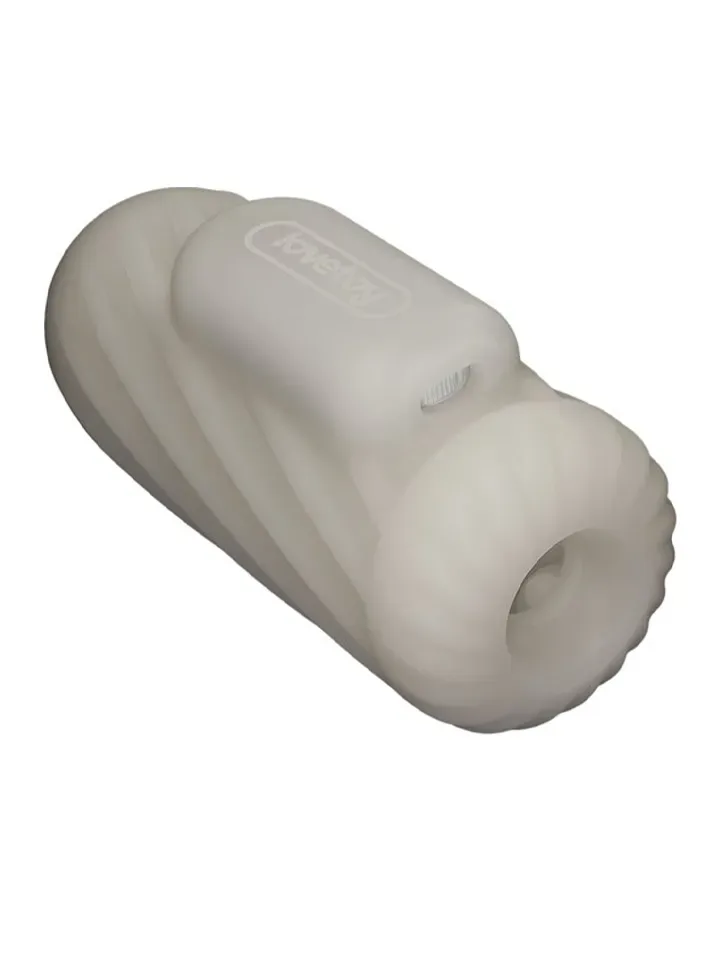
For the three vibrating sleeves, the electronics set a stricter limit than the material. Lovetoy explicitly writes that the mini vibrator may not be submerged in water, and no IP rating is published for any of them. Where the bullet says it is detachable—Wavy—the sleeve can be rinsed separately when the electronics are out. Where it is listed as built-in, as on Drip, can only be wiped off. That is the difference that separates place seven from place ten in the list.
Practical: lukewarm water and mild soap or toy cleaner before and after each use, thorough drying, talc on TPE, and storage where the product does not rest against other materials. Different plastics that rest against each other can react and make both surfaces sticky.
The vibrator in the sleeve: what it adds, and what it costs in terms of cleaning
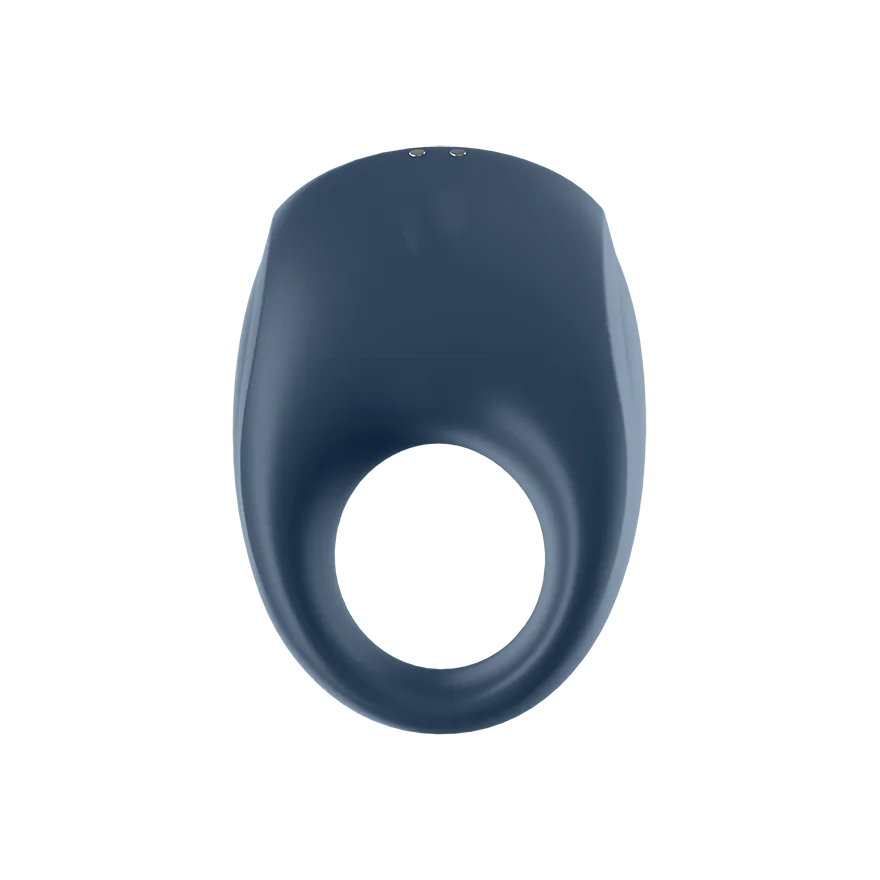
Three out of ten products have electronics, and all three are Lovetoys Knights Ring sleeves. They are powered by a CR2032 button cell included in the package—not a rechargeable battery, and therefore without a charging cable to lose track of. That is unusually practical in a category where the rest have no power supply at all.
What you get is limited, and the manufacturer is honest about it: a single vibration mode, described as Single Speed, with no steps and no controls. There is therefore nothing to adjust. Runtime and sound level are not published for any of the three.
The cost is in hygiene. Electronics in a sleeve means that the sleeve cannot be lowered in water as long as the electronics are still in place, and that is exactly the opposite of what a product used in this way needs. Three solutions exist in the same series, and the difference between them is the whole reason for their internal order: Wavyis said to have a removable vibrator, Spiral publishes the cell’s data and that it is replaced, and Drip lists the bullet as built-in, with no information about an outlet/removal.
If you’re considering a traction device: the hours, the strength, and the 600 hours
The three expensive products in the list are not sleeves but mechanical traction devices, and they are sold on results that are four to six months away. Before you discuss the price tag of 1,495 to 1,611 SEK, the real cost should be made clear: the manufacturers state that most people wear the device five to six hours per day after an initial start-up period.
The traction force is what sets the models apart on paper. Jes-Extender Titanium publishes three defined levels—1,200, 2,000, and 2,800 grams—read from markings on the cylinder. Jes-Extender Light indicates 800 to 2,000 grams in a six-week schedule with hours and grams week by week. MaleEdge Pro states no maximum force in grams at all, but allows the force to be read from the cylinder without publishing what that reading corresponds to. That is a real difference for anyone who needs to follow a schedule.
The claims about results are what deserve the most thought. Both MaleEdge and Jes-Extender state a 28 percent increase in the erect length and 19 percent in circumference after four to six months. Neither of them links to a published study for those exact figures, and one store presents them as "studies show" without naming which study. We do not take a position on the medical question — but we can note that the basis for the numbers is not published by the person who publishes them.
The money-back guarantee is, in practice, the most honest description of what the product demands. MaleEdge conditions it with 600 hours of training at an average of 2,000 grams of pulling force within no more than six months, with weekly measurement logs in the manufacturer’s own journal, as well as before-and-after pictures. Six hundred hours over six months is a little over three hours a day, every day. Anyone who does not intend to do that should read the guarantee for what it is: a condition, not a promise.
What, however, can be checked and is genuinely strong for two of the three is repairability.Jes-Extender LightSells each individual part as a spare part — silicone tube seven dollars, spring pair twenty, complete arm forty-nine — and MaleEdge sells a front section for 24 dollars and a protective pad for seven. An entirely mechanical product with a spare-parts inventory is the only product type in the entire review that can reasonably be expected to last for ten years. Weigh that against the fact that none of the three manufacturers publishes any material declaration at all for the unit itself.
Lubricant: water-based, and this also applies to the winning sleeve
Toy Joy’s instructions are unambiguous: only water-based lubricant, because oil- and silicone-based preparations, according to the same document, can damage certain product materials. Orion states the same for its two sleeves. The reason is material chemistry and applies to all silicone — silicone-based lubricants break down a silicone surface over time and make it porous, and a porous surface can no longer be cleaned properly.
A detail that is easy to miss about the winner: the liquid that is sealed between the two silicone layers does not replace lubricant during use. It affects how the outer layer moves relative to the inner layer, not how the surface glides against skin — and one of the stores explicitly states that lubricant is not included in the delivery.
If you use the sleeve together with a condom, it is the condom’s instructions that govern, not the sleeve’s. And lubricant is needed in two places, not one: on the inside so the sleeve can go on, and on the outside for the partner.
What the price buys — and why the store choice is more expensive than the model choice
Between the sleeves, you pay 150 SEK and up in the range — from 199 to 349 — and in practice it comes down to three things: silicone instead of TPE, more published measurements, and a larger inner diameter. It doesn’t buy you any guarantee, because none of the seven sleeves has any manufacturer warranty beyond the one required by law. It also doesn’t buy you waterproofing, because no manufacturer across the entire field publishes an enclosure rating.
The link between price and rating is weaker than the price tags suggest. The most expensive product in the list comes in second, the next cheapest comes in seventh, and the difference between the winner at 349 SEK and fourth place at 251 is five tenths.
What actually costs money is where you shop. The same EAN differs by 41 percent between the cheapest and the most expensive store for Blush, by 66 percent for the winner, and by 86 percent for Jes-Extender Titanium. Always check the barcode and not the name: Blush Me sells two Blush sleeves with almost identically named labels for exactly the same price, and three shops list three different lengths for the same You2Toys article.
If it doesn’t fit: sealed item and what actually applies.
This category has a problem that doesn’t exist in any other on the site. The purchase is determined by two measurements; the manufacturers rarely publish them in full, and in practice the product can’t be returned once the packaging has been opened. Konsumentverket provides guidance on the exception for sealed items that, for health or hygiene reasons, are not suitable to be returned once the seal has been broken, and a penis cover falls within exactly that description.
The right to complain about defects in the product, on the other hand, always applies. A casting defect, a hole in the sleeve wall, a pouch opening that cracks during first use, or a sleeve that is sticky straight out of the package is a defect in the product’s sense and not remorse. The difference is worth knowing, because it’s the only route back that actually exists.
The conclusion is practical. Measure before you buy, convert the circumference to diameter, compare against the cavity space and the inner diameter, and buy the cheapest model that matches both measurements if you’re unsure whether the principle works for you. That’s the whole reason a 251 SEK sleeve with six published measurements earned the beginners’ award in this list, and not the one that wins.

 1
1