

Review
Review: LELO Sona 3 Cruise Plum
Next generation with app and Cruise Control — from 1 513 SEK.
29 July 2026
 Premium pick
Review · Clitoral stimulator · Sonic waves
LELO’s sonic clitoral stimulator reviewed against the manufacturer’s own specifications and price data from five Swedish stores. Twelve modes, a lithium-ion battery of 520 mAh, a 63 hertz operating frequency, under 60 decibels, IPX7 and a 23 millimeter mouth width — with a published specification that is identical to the twice-as-expensive Sona 3 Cruise on every line except app control.
The most openly documented product in the comparison: LELO publishes battery capacity, voltage, frequency, sound level, and mouth width, which neither Womanizer nor Satisfyer does. The key discovery is that the published specification is identical with the Sona 2 Cruise and, in all essential respects, the same as the Sona 3 Cruise — the same 520 mAh, the same 63 hertz, the same two hours of operating time. What you pay extra for in the more expensive models is Cruise Control and the app, not performance. What you pay with here is two hours of operating time, a DC connection instead of USB-C, an automatic shut-off already after 20 minutes, and only a two-year warranty.
LELO Sona 2 is the second generation of the clitoral stimulator that made the Swedish brand LELO relevant in a product category otherwise dominated by the German Womanizer and Satisfyer. It doesn’t use vibration in the usual sense, nor does it use the air-pressure technology that Womanizer calls Pleasure Air. LELO calls its technology SenSonic, and the manufacturer describes it as sonic pulses that resonate into the clitoris’ internal structure instead of conventional vibrations.
The specification looks like this: twelve modes, three buttons, body-friendly silicone and ABS plastic, a lithium-ion battery of 520 mAh and 3.7 volts, two hours of operating time, two hours of charging time, 90 days of standby, a working frequency of 63 hertz, a maximum sound level during operation of 60 decibels, and 100 percent water resistance. The dimensions are 112 × 55 × 51 millimeters, and the weight is 125 grams. In Sweden, the item is sold by five stores at prices between 729 and 989 SEK, and two of them have it in stock.
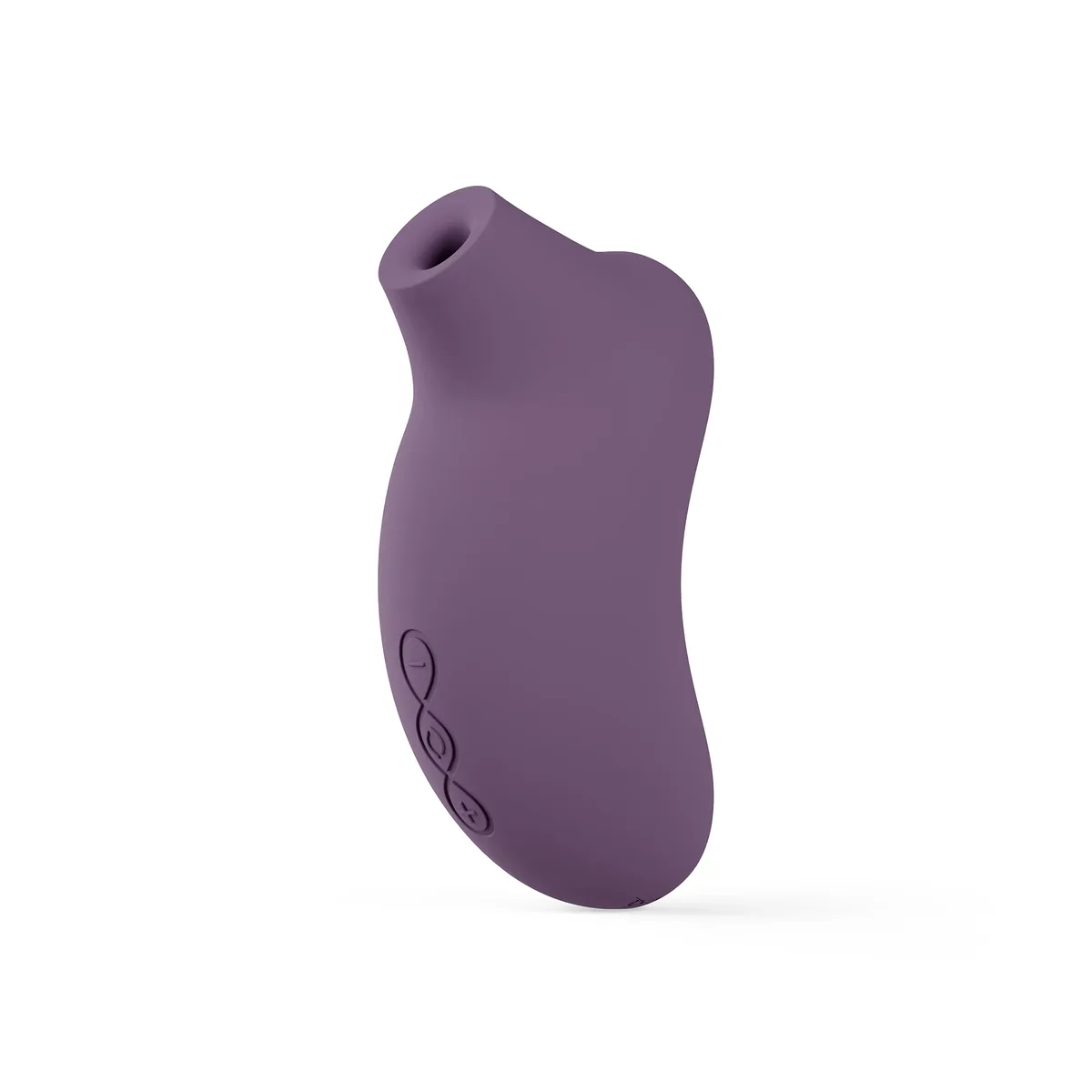
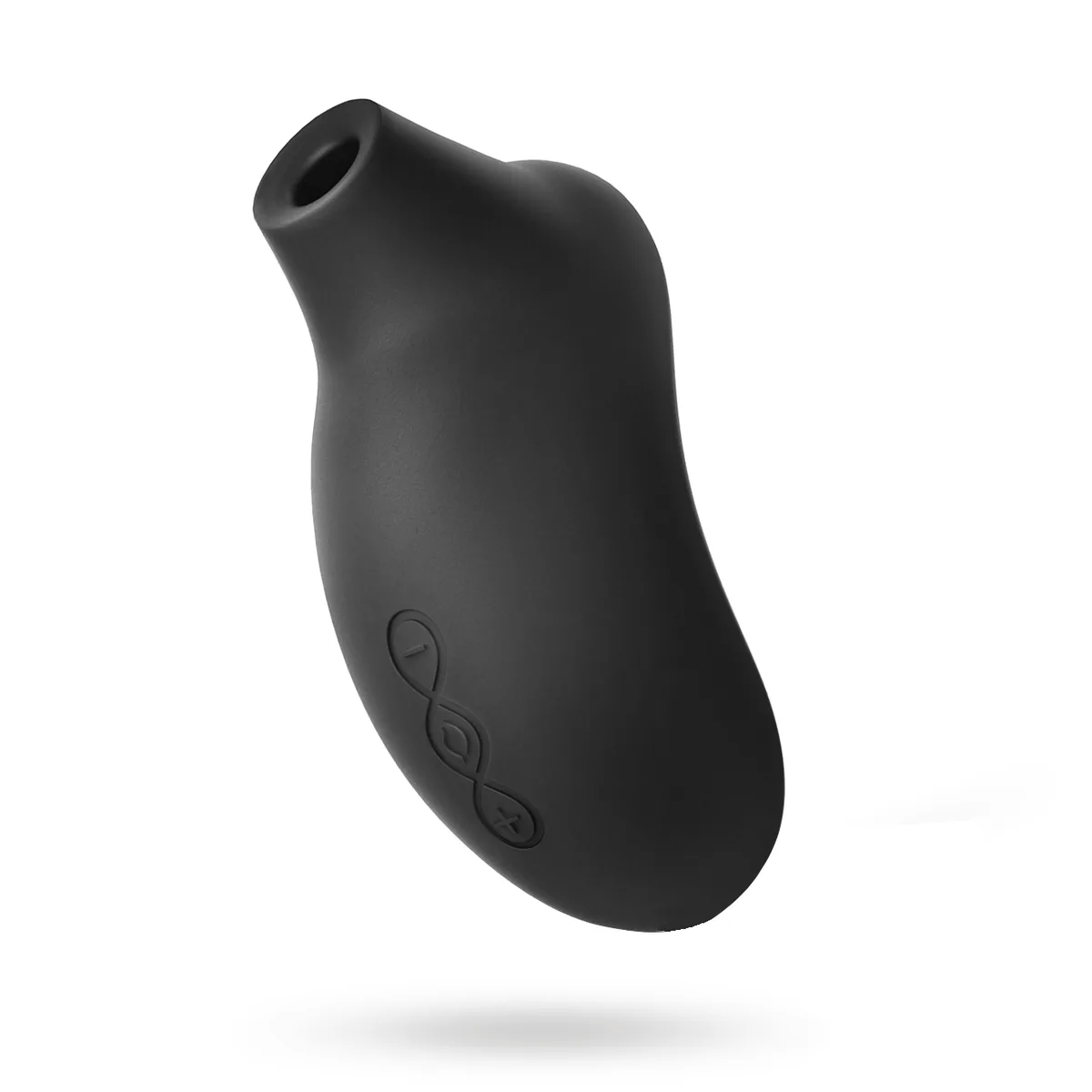
This review covers exclusively the black variant with EAN 7350075027901. LELO also sells Sona 2 in cerise, which has EAN 7350075027802, and in purple, which has EAN 7350075027895. Functionally, the colors are identical, but the numbers differ, and stores often mix up the variants on the same product page. Also note that Sona 2 Travel is a separate model with its own EAN numbers (7350075029233 and 7350075029240) and therefore not the same product in a different box.
The most important technical difference between the Sona 2 and a Womanizer or Satisfyer is the principle behind the stimulation, and that difference explains most of how the two product types behave in the specifications.
A classic air pressure product is based on a pump that creates alternating under-pressure and over-pressure in a sealed chamber placed over the clitoris. The chamber never touches the clitoris, and stimulation happens through pressure changes in the air inside the head. A typical vibrator does the exact opposite: a motor with an unbalanced weight transfers mechanical motion through material to the skin.
SenSonic sits between the two. The manufacturer states that the technology uses sonic waves that resonate deep into the clitoris’s internal structure, meaning the tissue area that lies under the skin and that is significantly larger than the visible nub. That LELO publishes a frekvens — 63 hertz — is in itself a sign that it’s a resonating pulse source rather than a pump. What can be established is that 63 hertz is low in the audible spectrum, in the same range as a deep bass tone’s fundamental, and that low frequencies propagate through tissue better than high ones. That is the technical prerequisite for the claim of deeper stimulation.
The frequency information is also worth highlighting for an entirely different reason: it’s rare. Neither Womanizer nor Satisfyer publishes an operating frequency for their air pressure models. That LELO does so means there is a technical parameter you can use to compare the Sona series internally, even though it can’t be compared with competitors’ products because they simply don’t provide the corresponding value.
LELO’s naming in the Sona series is the most common source of confusion in Swedish stores, and the differences are smaller than the prices suggest.
This is the single most important observation in the entire desk review. Sona 2 and Sona 2 Cruise have identical published specifications on every line except for Cruise Control, and Sona 3 Cruise shares the battery, frequency, operating time, and number of buttons with both of them. So what you pay extra for as you move up the range is two specific functions—constant pressure compensation and app control—not a more powerful motor, a larger battery, or a quieter operation. If neither of the two functions interests you, then Sona 2 has the same hardware for half the price.
The material issue is the only property of an intimate product that can’t be compensated for with habits or care, and it determines whether the product is still hygienic after five years. LELO lists two materials for Sona 2: skin-friendly silicone and ABS plastic. The surface finish is stated as smooth.
Silicone is a non-porous material. A non-porous surface can be cleaned because there are no microscopic cavities where residue can get trapped. That is the single most important property of a material that is meant to rest against the mucous membrane, and that’s why the material declaration carries more weight than almost all other lines in a specification.
Including ABS plastic in the material list, on the other hand, is a trade-off. On Sona 2, there’s a glossy panel in a roségold color on the back of the housing, and that surface is reasonably the ABS. At the same time, the manufacturer points out in its own product description that the product is molded in a single piece of silicone, and that it’s exactly that which makes it waterproof. The wording can be reconciled: the silicone shell is unbroken all the way around the entire stimulation section and the grip, while the decorative panel is a hard plastic detail embedded into the back.
What you can take with you in practical terms is that the seam between the silicone and the panel is the only point on the product where two materials meet, and therefore the only point where residue can collect. Always rinse around the edge of the panel, not just over the silicone. Compared with a model like Womanizer Premium 2, where the manufacturer specifies silicone across the entire housing, it’s a step down in construction—but compared with a cheap air-pressure product, where only the small contact area is silicone and the entire shaft is hard plastic, Sona 2 is clearly better.
Phthalates are a group of plasticizers used to make plastic—above all soft PVC—flexible. The Swedish Chemicals Agency describes them as substances that can affect the hormone system and make reproduction more difficult, and several of them are therefore restricted or banned within the EU in a large number of products. This particular product category is a recurring subject of oversight because it contains soft plastic against the skin.
Silicone doesn’t require phthalate plasticizers to become soft—the softness comes from the polymer’s own structure—and therefore silicone, as a material specification, is in itself a better indication than almost any other entry in a product specification. Designations like "TPE" or "jelly rubber" say nothing at all about which plasticizers are included, on the other hand.
LELO adds a step that is unusual in the category: the company states that the products meet ISO 3533, the international standard for sex toy safety, and publishes its own certificate section about it. What the standard guarantees is that the product is safe under reasonable and foreseeable use and that the materials are safe for contact with genitalia. It’s a more specific commitment than a general "body-friendly" claim, because it points to a document that can be looked up instead of relying on a marketing term. What should also be said is that an ISO reference on the manufacturer’s own site is the manufacturer’s responsibility, not a decision by an authority, and that it does not in itself replace a material declaration, substance by substance.
LELO lists the length as 112 millimeters, the width as 55 millimeters, and the height as 51 millimeters, with a weight of 125 grams. Both the product page and the printed manual state the same figures, which is worth mentioning because it’s far from a given in this category.
Size class is the small one. Womanizer Premium 2 measures 155 × 50 × 35 millimeters and weighs 141.4 grams—so it’s 43 millimeters longer and 16 grams heavier. Sona 3 Cruise is 112 × 51 × 55 millimeters and 128 grams, meaning, in practice, the same product in terms of handling. 125 grams is roughly the weight of a small mobile phone, and the shape is a rounded drop that rests in your palm rather than a handle-like form that you hold between your fingers.
Based on the measurements, it’s clear that Sona 2 is short enough to fit in a toiletry bag without taking up space, and that it lacks the protruding grip that makes longer models easier to angle. The angle toward the body is controlled with your wrist and by how you rotate your palm, not with a handle. It’s a design principle, not a drawback, but it differs noticeably from Womanizer’s shape and is worth knowing about before you buy.
Of all the numbers on LELO’s specification sheet, mouth width is the most underestimated. The manufacturer states the opening as 23 millimeters, and highlights in its own marketing that Sona 2 has a larger contact area than its predecessor.
Why does it matter? Because the stimulation is based on the opening closing around the clitoris. If the opening is too small, the pressure ends up on a single point instead of around the entire area; if it’s too large, the contact is lost and therefore so is the effect. Anatomy varies, and that is the single most common reason why the same product is described as amazing by one person and ineffective by another. When LELO publishes the measurement, it makes it possible to address the question in advance—which is more than you can do with most competitors, who completely omit the information.
A practical consequence follows as well. Since the mouth is molded as one piece with the rest of the housing, there are no interchangeable tips in different sizes, unlike Womanizer models, which are delivered with two. If 23 millimeters doesn’t fit you, there’s nothing to adjust, and that is a real limitation to factor in.
The interface consists of three buttons on the front of the housing, molded as recessed areas in the silicone. The manual names them: a position button in the middle, marked with a symbol for sonic waves, plus and minus for intensity. The manual also specifies the entire operating schedule: press and hold the position button to start, briefly press the same button to step between the twelve positions, use plus and minus to increase or decrease the intensity, and press and hold the position button to turn it off.
Three buttons are fewer than the four that the Womanizer Next has, and the difference is fundamental. On Sona 2 there is no automatic function and no separate depth control—you choose the position and the strength, period. What can be said is that the interface is therefore faster to learn and slower to fine-tune. Which of the two is an advantage depends entirely on what you’re looking for.
There’s a contradiction here that’s worth clearing up, because it affects how the product is compared with the competitors.
The manufacturer is unequivocal. The product page states "12 settings" under functions and "3 button interface, 12 modes" in the specification table, and the manual repeats that the position button switches between twelve modes. LELO’s point is therefore twelve positions and separate intensity control.
Swedish shops describe the product differently. Mshop’s own product graphics state "8x Vibration Modes" and "12x Intensity Levels", and the same wording shows up in store texts in several places. It’s not the manufacturer’s job, and it differs in two ways at the same time: it moves the twelve from the modes to the intensity and adds a number of patterns that LELO doesn’t indicate. Stick to the manufacturer’s numbers when you compare.
There is still a gap that needs to be acknowledged. LELO does not publish how many intensity levels its plus and minus buttons offer, either on the product page, in the English or in the Swedish user manual, or in the EC declaration of conformity. None of the five Swedish shops fills the gap with anything other than Mshop’s own graphics. That means the number of possible combinations of position and strength cannot be worked out from the manufacturer’s materials, and that a comparison with, for example, Womanizer Premium 2, which states fourteen discrete intensity levels, is incomplete in that specific respect. It is a genuine lack of information, and nothing that should be filled in with a guess.
Two details from the manual deserve space, because they explain the most common misunderstandings about this model.
First: the product is delivered locked for transport. The manual states this already on the first content page. So a Sona 2 that doesn’t respond when you press the buttons out of the box is likely not broken—it’s locked. The lock releases when you connect the charger, and the interface can also be unlocked by holding down plus and minus at the same time for three seconds. That’s the same command you use if the product locks itself again during use.
Second: Sona 2 switches itself off automatically after 20 minutes. LELO states this both in the specification and in the manual, and also spells out the reason—that the motor should not overheat if the product is used incorrectly. This is a significantly shorter time than the corresponding protection time from competitors; Womanizer, for example, indicates a 30-minute standby mode on its Next. Practically, that means a longer session is interrupted when the product switches itself off and must be started again. It’s not a defect, but it is a real limitation that the shop text or the marketing usually doesn’t mention.
Unlike Womanizer, which does not publish any decibel value at all for its models, LELO states a maximum sound level. The product page writes 60 dB and the manual specifies it as less than 60 dB.
That’s a task that’s worth both praise and a warning. The praise first: a published number is always better than a marketing graphic that places the product "between a whisper and light rain" without any measurement data. The warning next: 60 decibels is a limit, not a typical value. It indicates the level at maximum power, and the manufacturer publishes neither measurement distance, measurement method, nor weighting. A value without a distance can’t be compared with any other value—the same product can be measured to very different figures at ten and thirty centimeters.
For context: 60 decibels are in the same order of magnitude as a conversation in normal conversation. So it’s not a silent product in absolute terms, but it’s hardly audible through a closed door, and it uses a resonating pulse source rather than an unbalanced eccentric motor, which as a product category gives it a more muted sound than a classic vibrator. Sona 3 Cruise is stated to the same level, at less than 60 dB, which indicates that LELO hasn’t made its later models quieter.
A practical tip that applies regardless of model: place the product on a soft surface between uses. A hard tabletop works like a resonance box and noticeably amplifies the sound—and this applies in particular to a product whose entire operating principle is based on resonance at 63 hertz.
LELO markets Sona 2 as 100 percent waterproof and says that it is cast in a single piece of silicone specifically to keep water out. Perfect for the bath, shower, and hot tub, as the product page puts it.
The question is what “100 percent waterproof” technically means, since the wording isn’t a classification but a marketing claim. And here is a detail that few shops reproduce: the manufacturer’s specification table contains no IPX information at all, but the IPX7 rating is formally declared by LELO in two other places. One is the symbol page in the PDF manual, where the product is labeled IPX 7. The other carries more weight: LELO’s EC declaration of conformity for Sona 2, which the company publishes via its compliance site, lists “IEC 60529 — Degrees of protection provided by enclosures (IPX7)” among the directives and standards the product is declared to meet, and it repeats this in the document list as “Declaration to IPX7” with edition 2013. The declaration is signed by the company’s Engineering Director on December 19, 2022, and it expressly refers to Model No: Sona 2.
It matters for how much weight that information can carry. A symbol on a manual page is a marking; an EU declaration is the document the manufacturer is legally responsible for when the product is CE-marked. So IPX7 isn’t a detail we’ve read into an image—it’s the manufacturer’s own declared enclosure class. The same declaration also states that the cell has been tested according to UN38.3 for air transport, with all eight sub-tests T.1–T.8, and that the product complies with the Low Voltage Directive, the EMC Directive, RoHS, and WEEE.
Be careful, though, with the stores’ versions of the same product description. Taboo lists IPX5 for the item in its feature list — a class that only covers water jets and not submersion, in other words the direct opposite of what the manufacturer states. The same product page also lists the dimensions 99 × 87 × 56 millimeters, the weight at approx. 116 grams, and the operating time up to 60 minutes, which doesn’t match any item in LELO’s specifications. These are the store’s claims, not the manufacturer’s, and they should not be used.
The rating comes from the international standard IEC 60529, which defines enclosure classes for electrical equipment. The number 7 in the second position means the product has been tested for submersion in water to a depth of one meter for 30 minutes. The letter X in the first position means protection against solid objects has not been tested, which is normal and completely unproblematic for a product of this kind.
The difference vs a splash-proof product is greater than the wording suggests. Splash protection covers water droplets and, at best, water jets, but not submersion. Such a product can handle a damp cloth and possibly a shower, but not a bathtub. With IPX7, the entire product can be rinsed off without being careful, and it can be used in the bath. If a product is missing an IPX rating altogether, it should be treated as not waterproof — the absence of a rating is never a sign that the product would be approved.
One thing to be aware of specifically in the bathtub, and which LELO themselves actually point out: water counteracts the body’s natural lubrication and makes the skin drier and the clitoris more sensitive. The manufacturer therefore explicitly recommends using a water-based lubricant instead of using it in water. Water resistance is thus primarily a cleaning benefit and secondarily a usage environment.
LELO’s instructions are detailed and partly stricter than what store texts usually convey. Wash the silicone with warm water and antibacterial soap, rinse with clean warm water, and dry with a lint-free cloth. Clean before and after each use.
Three prohibitions are explicitly stated in the manual and are worth taking seriously. First: never use cleaning agents that contain alcohol, gasoline, or acetone. Second: hand creams and silicone-based lubricants can make the silicone permanently sticky — that’s the manufacturer’s own formulation, and a sticky silicone surface can’t be restored. Use a water-based lubricant. Third: never expose the product to extreme heat and don’t leave it in direct sunlight. Boiling and the dishwasher are therefore out of the question despite the waterproofness.
The manual adds that the product should be stored dust-free and separately from products made of other materials, and that it should not be placed on absorbent surfaces since that can cause stains. A satin storage bag comes with the package—also included are the USB charging cable, a warranty registration card, and a printed manual.
LELO publishes the entire battery chain, which is unusual enough to deserve a comment. The battery is stated as lithium-ion at 520 mAh and 3.7 volts. Charging time is up to two hours at 5.0 volts and 500 milliamps. Operating time is up to two hours and standby time is up to 90 days. The manual also lists input power: 5 volts and 2.5 watts in, 3.7 volts and 1 watt out.
Charging is done via a DC connector in the product’s base, which is connected to a USB port with the included cable. The manual describes the process: the LED pulses while charging and stays steadily lit when the battery is full, and it blinks white when the battery starts to run out. The manufacturer also states that only original chargers from LELO should be used, and that the product should be charged for two hours before the first use.
That the charging contact is a DC plug and not USB-C is the clearest weakness in the design when viewed through 2026 eyes. If you lose the cable, no ordinary phone charger works, and you have to get a replacement from the manufacturer. Here is Satisfyer Pro 2 Next Generation, which charges with any USB-C cable—practically superior. And that also applies compared with Womanizer’s magnetic charging, which is also product-specific but at least doesn’t require inserting a contact into an opening in the housing. A DC port is a hole in a product that otherwise is molded as one piece, and it is the spot you should wipe dry before putting it away.
With the published capacity, you can actually calculate it. 520 milliampere-hours at 3.7 volts corresponds to about 1.9 watt-hours of stored energy. Discharged over the two hours the manufacturer states as operating time gives an average power of around 1 watt—exactly the output power the manual states. So the specification is internally consistent, and there are more manufacturers’ specifications than you might think that don’t contradict each other.
Two hours of operating time is simultaneously short compared with the air-pressure side. Womanizer states 240 minutes for the Premium 2, so twice as long. The difference isn’t strange: a resonant motor that works against the body consumes more power than a small air pump. But it means that Sona 2 is a product you charge more often, and that the two-hour charging time is as long as the operating time.
90-day standby, on the other hand, is a useful feature that few people publish. It says that a fully charged Sona 2 that sits untouched in a box still has power left after about three months. What generally applies to lithium-ion cells also applies here: capacity drops with the number of charge cycles, and the product does best when it is charged regularly rather than stored completely discharged. LELO does not publish whether the battery can be replaced — the question is not addressed on the product page, in the manual, or in the EU declaration of conformity, and none of the five Swedish retailers brings it up either. The closest the manufacturer gets is that the declaration documents that the cell has been tested to UN38.3 for air transport, which says something about safety but nothing about replaceability. The manual also states that any attempt to open or take apart the product voids the warranty. With use a couple of times per week, it is in practice the battery, not the silicone, that sets the limit for how long the product lasts.
We do not have price data from shops in your market yet.
Sona 2 and Sona 2 Cruise have identical published specifications on every line except for one function. So the difference in price is not a difference in hardware.
Four comparisons are relevant: two within LELO’s own Sona series and two against the German air-pressure brands. All the information below comes from the respective manufacturers’ own specifications, and all prices come from the retailers’ product feeds on 29 July 2026.
This is the comparison that explains the whole model lineup. If you put LELO’s two specification sheets side by side, they are identical, row for row: silicone and ABS material, dimensions 112 × 55 × 51 millimeters, weight 125 grams, battery 520 mAh and 3.7 volts, charging two hours at 5.0 volts and 500 milliampere, operating time up to two hours, standby 90 days, frequency 63 hertz, sound level 60 decibels, three buttons with twelve modes and mouth width 23 millimeters.
The only difference the manufacturer lists is Cruise Control, which according to LELO keeps the pulses constant during use and releases extra power when the product is pressed harder against the body. The function solves a real problem — most products in the category noticeably lose power when pressed against tissue — but it is also the only thing you pay for.
The conclusion is unusually simple for a product comparison: buy Sona 2 if you don’t specifically want pressure compensation, and Sona 2 Cruise if you know that you press hard. Everything else is the same product.
Sona 3 Cruise starts at 1,513 SEK compared with Sona 2’s 729 SEK, so it’s 784 SEK more — more than twice as much. For that difference, it’s reasonable to expect a generational hardware shift, but the specifications show something else.
The dimensions are 112 × 51 × 55 millimeters versus 112 × 55 × 51, meaning the same three numbers in a different order because the measuring axes are defined differently. The weight is 128 grams versus 125. The battery is the same 520 mAh and 3.7 volts. The operating time is the same up to two hours, the standby time the same 90 days, the frequency the same 63 hertz, the sound level the same under 60 decibels, the interface the same three buttons. The material is stated the same way: body-friendly silicone and ABS plastic.
What the Sona 3 Cruise adds is therefore functions, not performance: Cruise Control and app control, which provide ten built-in modes plus two extra via the app. Note that the number of built-in modes is therefore lower than Sona 2’s twelve, and that you need a phone to get over ten. If you want to control the product from an app, or hand over control to someone else remotely, Sona 3 Cruise is the only option of the two. If you don’t want that, you get the same motor, the same battery, and two more modes for 784 SEK less.
Womanizer Premium 2 costs from 1,164 SEK, i.e. 435 SEK more than Sona 2. It’s an air-pressure product and not a sonic one, which makes the comparison more interesting than a pure price comparison.
Premium 2 measures 155 × 50 × 35 millimeters and weighs 141.4 grams—longer and slimmer than Sona 2, but in the same weight class. Womanizer states fourteen discreet intensity steps versus LELO’s twelve modes, with an unpublicized number of intensity steps. The operating time is 240 minutes versus LELO’s 120, i.e. twice as long. The charging time is 120 minutes for both. Womanizer states IPX7 directly in the specification, silicone over the entire housing, and two replaceable top sizes, and provides five years of manufacturer warranty versus LELO’s two.
LELO responds with a lower price, a published battery capacity, a published frequency, a published sound level, and a published mouth width—four technical details that Womanizer completely omits. If you choose based on the presented data, LELO wins. If you choose based on operating time, material, replaceable tops, and warranty period, Womanizer wins. And if you choose based on technology, you should know that it’s two different sensations: pressure waves in a sealed air chamber versus resonating sonic pulses.
Satisfyer Pro 2 Next Generation costs from 219 SEK, i.e. 510 SEK less than Sona 2. It’s also an air-pressure product, with eleven pressure-wave intensities, a lithium-ion battery of 220 mAh and 3.7 volts, charging via standard USB-C, IPX7, and a full 15-year manufacturer warranty—seven times as long as LELO’s two years. If you want an affordable entry in the same category with vibration included, Satisfyer Pro 2 Generation 3 is 298 SEK, and Womanizer Starlet 3 is 489 SEK.
What you pay the extra 510 SEK for is, in practice, three things: a different stimulation technique, a battery that’s twice as large, and a completely different level of openness in the specifications. Satisfyer publishes neither frequency, mouth width, nor sound level for its model. On the other hand, Satisfyer has USB-C and a warranty that’s hard to beat across the entire category.
If you’re unsure whether touch-free clitoral stimulation will work for you at all, Satisfyer is a hard-to-beat way to find out for under 250 SEK. If you already know the technology suits you, and you want a larger battery, a published material declaration against ISO 3533, and a sonically resonating motor instead of a pump, the price difference is reasonable—but it should be a deliberate choice.
Five Swedish stores sell the item with EAN 7350075027901. Cheapest is Vuxen at 729 SEK, most expensive is Mshop at 989 SEK. That’s a 260 SEK difference, or 36 percent, for exactly the same item number, same color, and same packaging.
The stock situation is at least as important as the price spread. Only two of the five stores had the product in stock at the price check: Vuxen at 729 SEK and Mshop at 989 SEK. The three stores in between—Lekosmek at 809 SEK, Taboo at 899 SEK, and Sexonic at 975.80 SEK—were all sold out. That means the actual difference between the cheapest and the most expensive available examples is the full 260 SEK, in other words the whole price range, and not the smaller step the table gives the impression of at a quick glance.
Stores that list a product as sold out may also have an old price in the feed, and that price is rarely what you actually end up paying when the item is back in stock again. Always check the final price at checkout, and factor in shipping costs at most stores under a certain order value—in this price level, several stores sit just under the free-shipping threshold, which can eat up part of the price difference.
One last thing about price comparisons for this specific model: check that the store lists the correct EAN. Cerise (7350075027802) and purple (7350075027895) are the same product in a different color and are often priced differently, and Sona 2 Travel is a completely different model. Several of the stores in the table above use a shared product image for all colors, which makes it easy to order the wrong one if you go by the picture only.
It’s for you if you want LELO’s sonic technology without paying for app control or pressure compensation. It’s the clearest recommendation throughout the whole review: according to the manufacturer’s own specifications, the hardware is the same as in Sona 2 Cruise and, in all essential respects, the same as in Sona 3 Cruise—at between half and just over half the price.
It’s for you if you want a small, rounded product that rests in your palm rather than a longer handle, if you want to be able to rinse off the entire product under running water, and if you value the fact that the manufacturer actually publishes battery capacity, frequency, sound level, and mouth width instead of hiding behind marketing wording. That openness is unusual in the category and makes it possible to assess the product in advance.
It’s not for you if you want maximum run time — two hours is half of what Womanizer Premium 2 states. It’s not for you if you want to charge with the same cable as your phone, because the DC connector requires the included cable. It’s not for you if you need sessions longer than 20 minutes in a row without interruptions, because the product automatically turns itself off. It’s not for you if you need to be able to change the size of the opening, since the mouth is molded as one piece with the housing and measures 23 millimeters, period. And it’s not for you if you prioritize a long warranty — two years versus Womanizer’s five and Satisfyer’s fifteen is the weakest in the comparison.
LELO provides a two-year manufacturer warranty from the date of purchase against defects in materials or workmanship, with a replacement product as the remedy. The warranty covers functional parts that affect the product’s function. It does not cover cosmetic wear from normal use or damage caused by an accident, misuse, or neglect, and any attempt to open or disassemble the product or its accessories voids it.
Two conditions are easy to miss and can cost you the warranty. First: the warranty must be registered. LELO requires that you create an account and register the serial number from the packaging, and that you save the receipt as proof of the purchase date. Second: the company’s free extended warranty, which provides an additional twelve months after the manufacturer warranty, requires that the registration be done within 30 days of the purchase. If you miss that deadline, you don’t get the add-on. Shipping costs are not refunded in any case.
The so-called ten-year quality warranty deserves a clarification, because it’s quoted frequently in store text and is easy to read as a ten-year warranty. It isn’t. According to LELO’s own terms and conditions, it provides 50 percent discount on a replacement product on one occasion if the product breaks after the two-year warranty has expired. It’s a loyalty discount, not a free replacement, and the difference versus Womanizer’s five-year warranty or Satisfyer’s fifteen-year warranty is therefore greater than the headlines suggest.
An observation about the manufacturer’s own material belongs here too. The printed manual that LELO publishes for Sona 2 is dated 2023 and states one year of warranty, while the product page and the applicable warranty terms state two years. The terms page is what applies, but it’s worth knowing whether you read the note in the box and feel unsure.
What always applies, however, is your statutory rights. Under konsumentköplagen, you have three years of right to complain about defects in the product, regardless of what the manufacturer promises—meaning longer than LELO’s own warranty. For distance purchases, you also have a right of withdrawal within fourteen days under lagen om distansavtal och avtal utanför affärslokaler. Be aware that in practice the right of withdrawal is limited for hygiene products that have been removed from a sealed package; the right to complain about defects, on the other hand, always applies. If you have questions about what applies in your case, Konsumentverket will guide you via Hallå konsument.
Finally, a detail that is rarely mentioned but has practical importance for Swedish buyers: LELO is a Swedish company. The manual states LELOi AB, Karlavägen 41 in Stockholm, as the manufacturer, and that the products are designed and developed in Sweden but manufactured in China. The fact that the other party in a warranty case is in Sweden is no guarantee of fast handling, but it makes both language and jurisdiction easier compared with most alternatives in the category.
LELO Sona 2 is ranked på plats 22 av 32 in clitoral stimulator best i test, where the entire category is compared against each other using five shared criteria. Guiden vinns av Womanizer Premium 2 Red Gold.
Every numerical piece of information in the text can be traced to one of the sources below. The links were checked manually on the specified date.
This page is machine-translated from Swedish. Read the Swedish original