

Review
Review: Satisfyer Pro 2 Next Generation
Cheapest among the widely sold — 219 SEK and 15 years of warranty.
29 July 2026
 Premium pick
Review · Clitoral stimulator · Sonic pressure waves
LELO’s sonic clitoral stimulator reviewed against the manufacturer’s own specifications and price data from four Swedish shops. One-piece, body-safe silicone, ten onboard modes plus two via the app, 520 mAh lithium-ion battery with two hours of operation, a published sound level limit under 60 dB, and IPX7 according to the manual — but a charging cable that only fits this product.
The best-documented product in the category: LELO publishes battery capacity, operating time, charging time, frequency, a sound level limit, and the IPX7 enclosure class, where competitors most often publish nothing. The build is silicone all over the body, the app provides two extra modes and remote control, and the travel lock makes it suitable for a toiletry case. What you don’t get is replaceable tips, a nozzle size to compare with, or a charging cable you can replace with the phone’s.
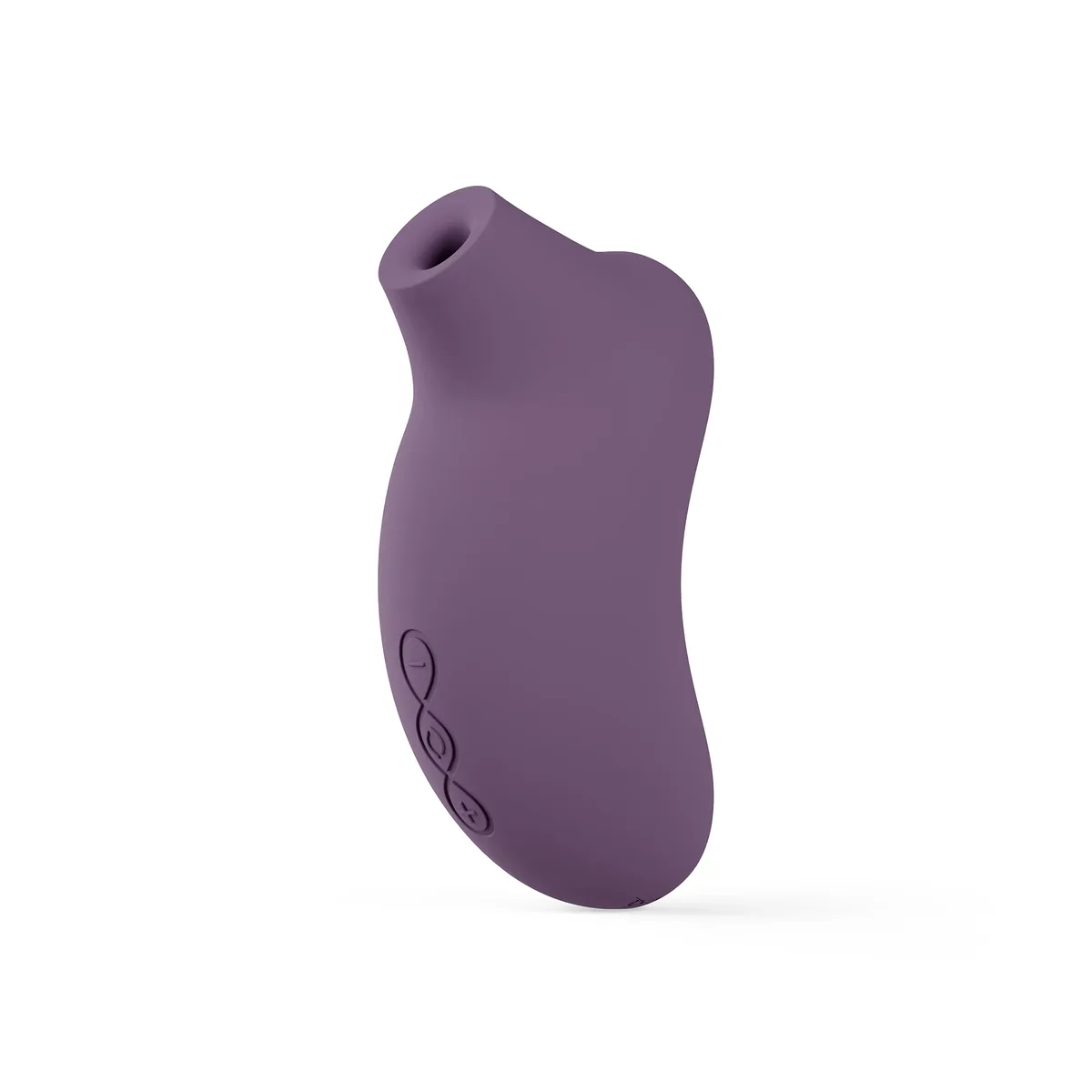
LELO Sona 3 Cruise is a clitoral stimulator that works with sonic pressure waves instead of classic vibration. The manufacturer calls the technology SenSonic and describes it as touch-free stimulation: the pulses travel through the air in a closed chamber rather than being transferred mechanically through the material onto the skin. The model is built from body-safe silicone and ABS plastic; it’s controlled with three buttons, has ten modes onboard, and two additional modes that are unlocked via LELO’s app. The manufacturer states that it is 100 percent waterproof.
This review exclusively covers the article with EAN 7350075029837 — SONA 3 Cruise in the color Plum. LELO also sells a parallel model that is only called SONA 3, without the Cruise add-on, and earlier generations under the names SONA and SONA 2 Cruise are still available in stores. The names differ by just one word, while the functions differ in several respects, so check the EAN number before you add anything to your cart. The shops in the price comparison on this page all sell exactly that same item.
Pricing is tight: four Swedish stores sell the model, and the range between the cheapest and the most expensive is 177 SEK, from 1,513 to 1,690 SEK. It’s a completely different situation than in the budget segment, where the same item can differ by several hundred percent between stores. That says something about how LELO manages its distribution—and it means you won’t find this product cheaply just by looking further.
The difference between a sonic stimulator and a vibrator is fundamental, not a matter of degree. A vibrator has an eccentric motor—an unbalanced weight on a shaft—that shakes the entire product body, and the movement is transferred through the material to the skin. A sonic clitoral stimulator instead has a membrane that displaces air in a chamber that sits over the clitoris. It’s the pressure changes in the air that do the job, not a surface that moves against the skin.
LELO describes SenSonic as a technology that sends mild sonic waves from the opening of the product into the inner parts of the clitoris, and claims that the sensation is therefore experienced as more spread out than point-by-point vibration. The manufacturer publishes a frequency specification that makes the description concrete: 63 hertz. It’s low compared with what people normally call ultrasound and falls within the range where mechanical pressure waves are perceived as deep pulses rather than as a buzzing.
Practically speaking, the technology means that the fit matters more than it does on a vibrator. The chamber must seal reasonably tightly around the clitoris for pressure to build up. Sona 3 Cruise has an opening in a fixed size, and LELO lists no interchangeable tips in the contents of the package. This is the single most important design constraint and what sets it apart from, for example, the Womanizer Premium 2, which, according to the retailers’ product texts, is delivered with two silicone heads in different sizes.
A detail worth noting for anyone considering the fit: LELO does inte publish the opening width for Sona 3 Cruise, either on the product page or in the user manual. On the product page for the predecessor SONA 2 Cruise, however, the information is included as its own line in the specifications — 23 millimeters. That measurement applies to that model and cannot be transferred to the “3,” which also has a different body. So the measurement has been included in LELO’s specifications previously but has been omitted in the new generation, and therefore it’s not possible to directly compare the opening size with competitors’.
Cruise Control is LELO’s name for an effect reserve. The manufacturer describes the function like this: the intensity increases automatically when the product is pressed firmly against the body. The point is that otherwise a sonic stimulator would lose power exactly when the user presses it harder, because the resistance in the chamber increases. Cruise Control is thus not an extra mode you select, but compensation that is on all the time. It’s also the only thing that distinguishes Sona 3 Cruise from the simpler Sona 3.
SmoothRise, on the other hand, is new for the third generation and is about something completely different: how the transition between intensity levels feels. LELO describes it as a soft transition between levels without sudden jumps. It sounds cosmetic, but it isn’t. On many products in this category, the steps between levels are so large that stepping up is too much and stepping down is too little, and that is a common objection to the entire product category.
What can be established is that LELO makes a point of highlighting SmoothRise as its own technology with its own name. What the manufacturer, on the other hand, does not publish is how many intensity steps there are within each mode — only that there are ten on-board modes with, in LELO’s own wording, different intensity levels.
The naming requires its own section, because retailers often list several generations on the same category page.
If you want app control and Love Bridge, you should buy a Three. If you want the reserve of power under pressure, it should say Cruise in the name. If you only want sonic pressure waves in the LELO version and can do without both parts, there are older generations that are cheaper — but then you get a product that LELO no longer develops.
Material is the only property of an intimate product that neither usage habits nor care can compensate for, and it determines whether the product is still hygienic after five years. LELO lists two materials for the Sona 3 Cruise: body-safe silicone and ABS plastic, with the surface finish described as smooth.
The manufacturer’s own product graphics describe the body as being molded from a single piece of silicone. This is a real design difference from cheaper models, where the silicone is only applied as a coating on the surface that touches the body, while the shaft and grip are hard plastic. On the Sona 3 Cruise, the entire area you hold and place against the body is silicone. The ABS plastic sits in the decorated panel on the back and in the internal construction.
The difference shows in two respects that can be established without measuring instruments. Seamlessness: a body cast in one piece has fewer areas where dirt can collect than a body where silicone and plastic meet along a seam. And hygiene: both medical-grade silicone and ABS are non-porous materials that can be cleaned, but a silicone surface over the entire product means there is no plastic part touching the skin at all.
The limitation is the same as in pretty much all sonic stimulators: the opening can’t be detached. The chamber can be rinsed out but not opened, and it’s the only part of the product where water and lubricant can end up staying. It’s worth knowing before you buy, because there are models in the category with a removable top that can be cleaned more thoroughly.
Phthalates are a group of plasticizers used to make plastic — above all softened PVC — flexible. The Swedish Chemicals Agency (Kemikalieinspektionen) describes them as substances that can affect the hormone system and make reproduction more difficult, and several of them are therefore restricted or banned within the EU in a large number of products. Products that come into contact with mucous membranes are one of the product groups where the issue comes up again and again in supervision.
Silicone and ABS are both materials that don’t require phthalate plasticizers to work, and that’s why the material declaration says more than the specification list otherwise does. A product that only states "TPE" or "jelly rubber" without further clarification doesn’t say anything about which plasticizers are included. "Silicone" and "ABS" are unambiguous statements.
LELO states that the company’s products comply with the international standard ISO 3533 for sex toys, and that it has its own page about the certification. The standard sets safety requirements for products intended to come into direct contact with the genitals, anus, or both: requirements for the construction to minimize the risk of injury, requirements for the production materials to be safe when in contact with the body, and requirements for the information the user is given.
It’s worth understanding what such a commitment is and isn’t. It is not a government approval, and there is no CE marking in the sense that many people believe. It is a technical standard that a manufacturer can choose to follow and have reviewed. That LELO does this, and publishes it, is still a reasonable argument in a product category where most of the selection does not show any standard at all.
LELO lists the length as 112 millimeters, the width as 51 millimeters, and the height as 55 millimeters. The weight is 128 grams. It’s a small product—shorter than most smartphones and light enough to hold steadily with three fingers for longer periods.
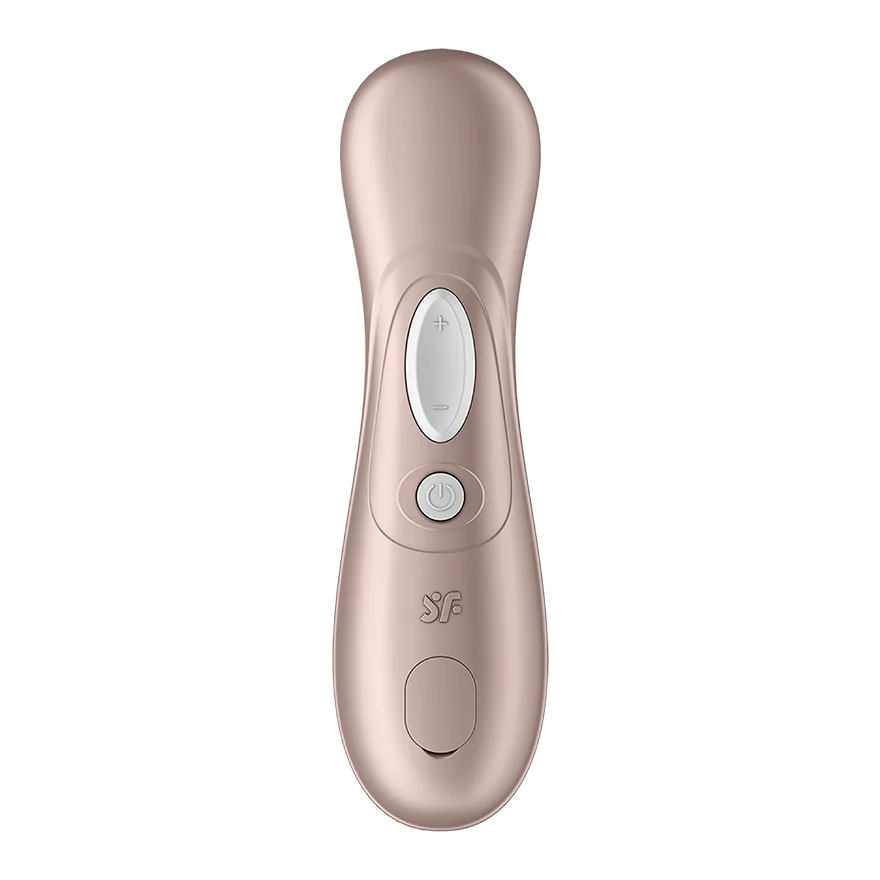
Comparing it with the budget reference in the category makes the numbers understandable. Satisfyer Pro 2 Next Generation is, according to its manufacturer, 165 millimeters long and weighs 174.7 grams. Sona 3 Cruise is therefore just over five centimeters shorter and about a quarter lighter. The shape is asymmetrical and curved, with the opening at the narrow end and the three buttons on the flat side.
In practice, that means this is a product that fits in a cosmetic bag without taking up any space of its own, and that doesn’t look like anything special when you leave it out. The angle between the opening and the body is fixed, which means you steer the direction toward the body with your wrist.
LELO specifies the interface for three buttons: plus, minus, and a central button. The manufacturer’s own instruction graphic describes the entire control in five steps. You start the product with the plus button or the central button. You change modes with a short press on the central button. You adjust the intensity with plus and minus. You turn it off with a long press on the central button.
Having mode changes and shutoff on the same button—separated only by how long you hold it in—is a design compromise that shows up on small products with few buttons. It works, but it requires that you learn the difference between a short and a long press. It’s a less elegant solution than Satisfyer’s rocker button with separate on/off, and it’s also the price you pay to be able to step through ten modes instead of just turning up and down a single intensity scale.
LELO markets the model as “twelve powerful pleasure settings” and specifies what that means: the product has ten modes with different intensity levels on board, and LELO’s app unlocks two additional modes. Ten plus two equals twelve.
It’s worth reading that wording carefully, because the number of modes and the number of intensity levels are two different things that are often mixed up in store texts. A mode is a pulse pattern — a rhythm. An intensity level is how hard that particular pattern is run. LELO publishes the number of modes but not how many intensity levels each mode has — either on the product page or in the user manual, which only says that the plus and minus button increases and decreases the intensity. Mshop, on the other hand, lists 16 intensity levels in its own product text. That’s a store-assignment; it refers to the product as a whole and not the number of steps per mode, and it can’t be found from the manufacturer or from any of the three other stores.
Practically speaking, the number matters less than the range. The pattern in this product category is that the lowest steps are clearly separated, while the top ones are closer together, because the pressure difference per step decreases as the membrane approaches its maximum effect. Expect that in practice you’ll return to a couple of modes and move up and down within them — and that’s exactly the scenario SmoothRise is built for.
App control happens via Bluetooth. LELO’s own Swedish user manual describes the connection step by step: charge the product for two hours before the first use, download the app to iOS or Android, press and hold the button for three seconds to start the device and enable Bluetooth, and confirm pairing with a tap on the product once the app has found it. All LEDs blink at the same time when the connection is complete.
In the app, there are three common modes — Manual, Screwing, and Shaking — as well as the two advanced modes that aren’t available on board: Finish Me Off, which is described as a slowly rising build-up, and Out Of Control, which is described as an unpredictable pattern. There’s also Love Bridge, a feature that sets up a private chat room where two people can take over control of each other’s app-connected LELO devices remotely.
Two details in the user manual are worth highlighting because they rarely appear in store descriptions. First, the app’s settings can be saved to the device and used offline, which means the app doesn’t need to be running for you to get use out of it. Second, the automatic shutdown time can be set between ten and twenty minutes in the app — a setting you can’t access from the product’s own buttons.
The counterargument against app control in this product category is the same as always: an app requires an account, updates, and a company that continues to maintain it. What can be stated is that the two extra modes are locked behind the app, and that the product works without it—with ten modes onboard.
The manufacturer’s packaging graphics show a quick-release latch that is activated by holding down the plus and minus buttons at the same time for three seconds. It’s a small function with great practical importance for a product that’s built to fit in a makeup bag: without a quick-release latch, it’s the buttons in the bag that determine whether the product is on when you open the bag.
The same graphics also state the standby time is 90 days, which is the figure that matters most for a product that’s used irregularly. So a fully charged battery should retain its charge for three months in standby.
Here, LELO has done something unusual in this product category: it has published a figure. The specification states maximum sound level under 60 dB. It’s a ceiling, not a value per mode, and LELO does not provide either the measurement distance or what weighting was used—not even in the instruction manual, where the specification table repeats the same line word for word. Without those details, the figure can’t be compared directly with a dB(A) value measured at 30 centimeters.
It still provides more information than most competitors. For example, Satisfyer publishes no dB value at all for Pro 2 Next Generation, and only markets a "Whisper Mode". Having a published ceiling to refer to is better than having no information at all, even if the ceiling is rather blunt.
A tip that applies regardless of the model and that doesn’t require any measurement values: when you’re not using the product, place it on a soft surface. A hard tabletop works as a resonance box and noticeably amplifies the sound, and in most cases it’s the surface rather than the product that determines how much you hear through a wall.
LELO states that Sona 3 Cruise is 100 percent waterproof and suitable for baths and showers. That claim is also shown in the specification table on the product page. The enclosure class is not there, though—it’s listed in the manufacturer’s instruction manual, on the symbol page at the very back where the trash-bin symbol and the CE information are collected. There, LELO states the class IPX 7, in both the English and the Swedish versions of the manual.
It is a manufacturer specification and not a store text, and that makes a difference. The ingress protection classes come from the international standard IEC 60529 and mean something very specific. IPX7 means that the product has been tested for submersion to a depth of one meter for 30 minutes. IPX6 covers powerful water jets but not submersion at all—an IPX6 product can handle a shower but not a bathtub. With IPX7 published, it is therefore established that the product is intended to withstand the use that LELO markets, and not just claimed in the running text.
The objection that remains is editorial rather than technical: the information belongs in the specification table, not hidden among the pictograms on the second-to-last page in the manual. Someone who only reads the product page gets “100 percent waterproof” and nothing more, and the same pattern repeats on LELO’s predecessor Sona 2. The shop Mshop also states IPX7 in its product text, which in this case matches the manufacturer’s own manual.
Rinse the product in lukewarm water after each use and use fragrance-free soap or a cleaning product intended for intimate products. Wipe it down and let it air-dry before putting it away. Make sure especially that the inside of the opening is dry, since the chamber is the only part where water can remain standing.
Use a water-based lubricant. A silicone-based lubricant breaks down silicone surfaces over time and makes them porous, and a porous surface can no longer be cleaned properly—only replaced. Oil-based products such as coconut oil leave a film that is difficult to remove. Avoid alcohol-based hand disinfectant on the silicone, and avoid chlorine and acetone completely.
Storage is one of the points where LELO actually delivers something concrete beyond the product: the packaging includes a satin pouch. It’s better than nothing but worse than a hard case, and a fabric pouch does not protect the opening from dust in the same way that a closed box would. Silicone also attracts lint, which is an argument for not storing the product loose in a bag.
LELO publishes complete battery data, which is unusual in this category. The battery is a lithium-ion battery of 3.7 volts and 520 mAh. Charging takes up to two hours at 5 volts and 520 milliamps. The stated rated power is 5 volts and 520 milliamps in, i.e. 2.6 watts, and 3.7 volts and 220 milliamps out, i.e. 0.8 watts. The operating time is stated as up to two hours and the standby time as 90 days.
Two hours of operation on 520 mAh is a reasonable and credible relationship. As a comparison, Satisfyer does not state any run time at all for Pro 2 Next Generation, and that model’s battery is 220 mAh—less than half. That LELO publishes both the capacity and the run time means the figures can be checked against each other, and that in itself is a quality sign in an industry where the information is often missing.
The general statements about lithium-ion cells also apply here: the capacity decreases with the number of charge cycles, the battery is not replaceable, and the cell does best when it’s not stored fully discharged for longer periods. With use a couple of times a week, it’s the battery—not the silicone—that sets the limit for the product’s service life—and that’s why the warranty length is such a relevant question for exactly this type of product.
Here is the model’s clearest practical weakness. The specification table on the product page only says "USB charging cable", but the user manual is clearer than that. LELO describes charging in two steps: insert the DC connector into the DC port at the base of the product, and insert the mains connector into a USB port. So the cable has USB on one end and a round DC connector on the other—not USB-C and not micro-USB. The manufacturer’s own packaging graphic, as shown by the shops, shows the same thing: a white cable with USB-A and a small round plug. The manual also adds that only original chargers from LELO should be used.
In practice, that means that the included cable is the only one you can use. If you lose it, no phone charger and no regular cable you already have at home will work—you have to order a replacement. That’s a genuine disadvantage compared with cheaper competitors: Satisfyer Pro 2 Next Generation is charged with standard USB-C, the same cable as for your phone.
The biggest impact is for a product that’s otherwise designed to be taken along. A toiletry-bag-friendly size and a travel lock lose some of their appeal if you also have to remember a specific cable. Count it as an ongoing little cost and a risk rather than as a defect, but count on it.
We do not have price data from shops in your market yet.
LELO publishes capacity, runtime, charging time, frequency, a maximum sound level, and IPX7. It’s more figures than the entire budget segment lists together — but the enclosure rating is hidden among the pictograms in the manual.
Three comparisons are relevant: against the two premium competitors that do roughly the same thing in the same price range, and against the budget alternative that does the same thing for a seventh of the money. All prices below come from the stores’ product feeds. The information about Satisfyer comes from the manufacturer’s own product page; the information about Womanizer Premium 2 and We-Vibe Melt 2 comes from shops that sell them, and is therefore the shops’ descriptions and not the manufacturers’ own specifications.
Womanizer Premium 2 costs from 1,164 SEK in the stores we follow, which is about 350 SEK less than Sona 3 Cruise at its cheapest. The decisive difference isn’t about price but about fit. Mshop, which sells both models, states that Premium 2 is delivered with a total of two silicone heads in different sizes, together with a charger and a satin pouch. Sona 3 Cruise has an opening in a fixed size, and LELO lists no extra tips in the packaging.
That’s the argument that weighs most heavily in the entire comparison, because the fit determines whether pressure-wave technology works for you at all. If you’re unsure whether the standard size will fit, a selectable head is worth more than every individual technology feature. The same shop also mentions 14 intensity levels, an autopilot function that varies the intensity on its own, and a shut-off function that switches the product off when you put it down.
What Sona 3 Cruise gives you is a body molded in one piece of silicone, a manufacturer that publishes battery capacity, operating time, charging time, frequency, and a sound level limit, as well as an app with two extra modes and remote control at a distance. If fit isn’t an issue for you, then it’s an even match where LELO wins on documentation and Womanizer on flexibility.
We-Vibe Melt 2 costs from 1,271 SEK and is therefore about 240 SEK below Sona 3 Cruise. Both are app-connected pressure-wave products for clitoral stimulation in the premium segment from established manufacturers, and both have silicone against the body. The difference lies in what they’re intended for. Joyland, which sells Melt 2, describes it as a clitoral stimulator designed for couples but just as usable solo, with 12 intensity levels, six preset suction modes, dual motors, and app control via We-Connect.
Sona 3 Cruise is instead shaped like a grip that you hold and actively control with three buttons. So when choosing between them, the question isn’t which is best, but what kind of use you have in mind. If the product is to be used alone and actively controlled, LELO’s grip and buttons speak for themselves. If it’s meant to stay in place between two bodies, Melt 2 is the one built for that.
Satisfyer Pro 2 Next Generation costs from 219 SEK. The difference compared to Sona 3 Cruise is therefore 1,294 SEK, or almost seven times the price. Both are clitoral stimulators that work with pressure waves in a closed chamber rather than mechanical vibration, and both work according to the same principle.
What you get for the price difference can be broken down point by point: silicone all over the body instead of silicone only on the contact surface, published battery and sound level data instead of no information at all, a Bluetooth app with two extra modes and remote control, an extra power reserve under pressure, a travel lock, a satin pouch, and a significantly smaller product body. What you lose is also concrete: Satisfyer comes with standard USB-C and provides a 15-year manufacturer’s warranty, compared to LELO’s two-year warranty.
If you’re unsure whether pressure-wave technology works for you at all, it’s hard to justify starting in this price range. If you already know that it does, and you value build quality, size, and the specifications that have been provided, the price difference is easier to defend.
Four Swedish stores sell the item under EAN 7350075029837. The cheapest is Sexonic at 1,513 SEK, and the most expensive is Vuxen and Mshop at 1,690 SEK. The spread is 177 SEK, i.e. 12 percent—remarkably narrow compared with the budget segment, where, for example, Satisfyer Pro 2 Next Generation in the same price data costs 219 SEK at the cheapest store and 599 SEK at the most expensive, a difference of 173 percent.
One detail worth noting before you click: the lowest price applies to a store that, during the price check, had the item out of stock. Three of the four stores had it in stock, and those three are between 1,649 and 1,690 SEK. Realistically, you’ll therefore pay around 1,650 SEK if you want the product delivered now, not 1,513.
The prices in the table are updated when the stores’ product feeds are updated, but always check the final price at checkout. Shipping is added at several stores under a certain order value, and in this price range most orders are above the threshold for free shipping—which means the ranking rarely changes due to shipping, unlike in the budget segment.
It’s for you if you already know that pressure-wave technology works for you and you want it in a well-built design. It’s for you if you value the fact that the manufacturer publishes battery data, runtime, frequency, and a sound level limit instead of only marketing features. It’s for you if you want a small product to take with you, with a travel lock and a satin pouch. And it’s for you if you want app control, either for the two extra modes or for the Love Bridge function remotely.
It’s not for you if you’re unsure whether the standard mouth size works for you—there, a model with interchangeable tips is a safer purchase—especially since LELO no longer publishes any mouth dimensions for this generation. It’s not for you if you want to charge it with the same cable as your phone. And it’s not for you if you want to try the category cheaply to see whether it’s something for you.
The warranty question requires that you read carefully, because LELO’s information is not entirely unambiguous. On the product page, a two-year warranty is stated, and in addition a ten-year quality warranty that is described as applying for ten years after the two-year warranty has expired. On LELO’s general warranty page, it is stated instead that all LELO products are covered by a two-year worldwide manufacturing warranty, which is extended where the law in a country requires a longer time. On the page about extended warranty, an additional twelve months are described as a voluntary extension, which must be activated within 30 days from the purchase through product registration.
So what can safely be said is this: a two-year manufacturing warranty is the basis, there is a voluntary extension of twelve months that requires registration within 30 days, and in addition LELO markets a ten-year quality warranty on the product page. Register the product and save the receipt — both are required according to LELO’s own terms and conditions for a warranty case to be processed.
The warranty is a voluntary commitment from the manufacturer and does not replace your statutory rights. Under the Swedish Sale of Consumer Goods Act (konsumentköplagen), you have a right to complain for three years in the event of defects in the item, regardless of what the manufacturer promises, and you direct that right to the store you purchased from — not to LELO. For distance purchases, you also have a right of withdrawal for fourteen days under the Act on Distance Contracts and Contracts Outside Business Premises (lagen om distansavtal och avtal utanför affärslokaler).
Be aware that the right of withdrawal in practice is limited for hygiene items that have been removed from their sealed packaging. The right to complain in the event of defects, on the other hand, always applies, and it is mandatory. If you have questions about what applies in your case, Konsumentverket guides you via Hallå konsument.
LELO Sona 3 Cruise Plum is ranked på plats 24 av 32 in clitoral stimulator best i test, where the entire category is compared against each other using five shared criteria. Guiden vinns av Womanizer Premium 2 Red Gold.
Every numerical piece of information in the text can be traced to one of the sources below. The links were checked manually on the specified date.
This page is machine-translated from Swedish. Read the Swedish original