

Review
Review: Arcwave Ion 2
Air pressure instead of vibration, with IPX7 and full specifications.
29 July 2026
Review · Masturbator · Vibration and heat
Fleshlights vibrating and self-heating masturbator reviewed against everything that can actually be verified — and that’s less than you’d think. Two motors, ten patterns, six intensity levels, USB-C, and a full-size SuperSkin sleeve of about 21 centimeters. But the manufacturer publishes neither a product page, a manual, an enclosure rating, nor warranty text for the model, and the stores list three different materials and two different weights for the same item number.
A full-size Fleshlight with two motors, ten patterns, six intensity levels, self-heating, and USB-C — a combination that isn’t found anywhere else in the lineup. What you pay for is the documentation: the manufacturer does not publish a product page, no manual, no ingress protection rating, no heating temperature, no battery capacity, and no warranty text for the model, and the shops contradict each other regarding both material, weight, and water resistance.
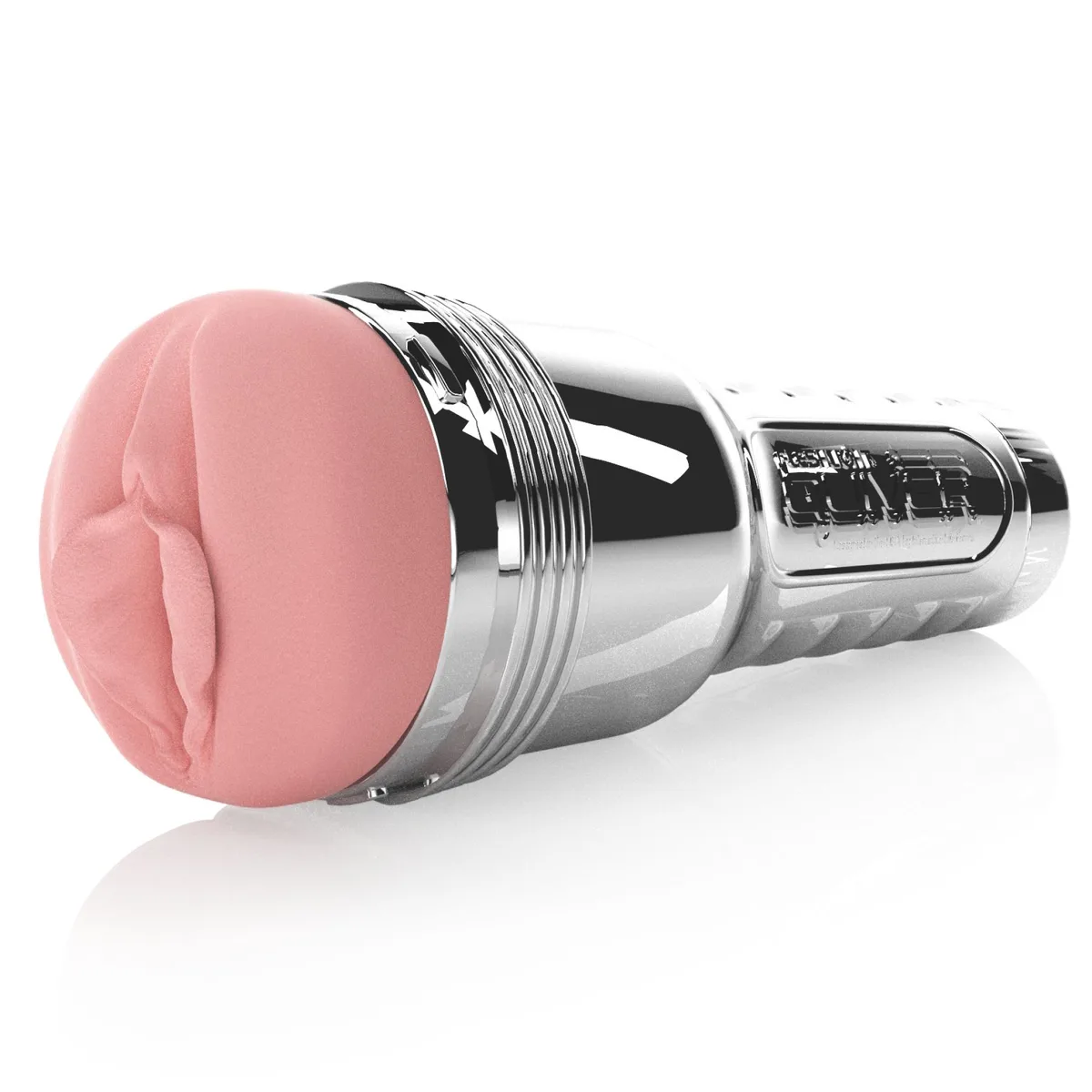
Fleshlight Quiver is Fleshlights attempt to make a classic masturbator electric without turning it into a machine. The shape is one you recognize — the cylindrical housing with screw caps at both ends, built like a flashlight — but the housing is chrome-colored instead of black, and on the side there’s a button panel with three buttons. Inside there are two motors and a heating element. That makes Quiver one of very few products in Fleshlights lineup that both vibrates and heats itself.
The specification looks like this according to the sources available: six intensity levels, ten double-motor patterns, self-heating that turns on with a short press on the power button, a pink inner sleeve in Fleshlights Real Feel SuperSkin, and charging via USB-C. The stores state the total length as about 25 centimeters and the insertable length as about 21 centimeters. No shop in our data sells the item in this market.
This walkthrough is about the item with EAN 850069779238. The stores that list Quiver under this EAN list that exact number, and two of them also tie it to the distributor’s item number 54089700000. So it’s the same product across the different listings — the differences aren’t because any store sells a different variant.
Before any single digit in this text is worth anything, one thing needs to be said plainly. Fleshlight doesn’t publish its own product page for Quiver, vhether on fleshlight.com or on fleshlight.eu. The manufacturer’s product sitemap on the American site contains 806 product URLs, and Quiver isn’t among them. The same check on the European site gives the same result, and the search function on both sites yields zero product results for the word.
It has two practical consequences for the person who is going to buy. The first is that there is no official specification that the store texts can be checked against. The second, which carries more weight, is that there is no published manual, no guarantee text for this specific model, and no manufacturer support page to go to if something breaks. Fleshlights general return policy still applies, of course, as do EU/EEA consumer rules for online purchases: generally a 14-day right of withdrawal starting when the goods are received (with an exemption for sealed goods that are not suitable for return for health or hygiene reasons once unsealed) and a legal guarantee under which the seller is liable for defects that exist at delivery and appear within at least 2 years—but model-specific documentation is missing.
What can, however, be verified with the manufacturer is everything that applies to the SuperSkin material, cleaning, and the choice of lubricant, since Fleshlight describes it for the entire range in its FAQ. And the manufacturer’s own functional graphics for Quiver — the graphics that explain the buttons — are still available in the image galleries of the stores. Where it says "tillverkaren anger" below, it refers to those sources. Where it says "butikerna anger" it is exactly that, and nothing more.
A regular Fleshlight is completely mechanical. A hard outer shell, a soft sleeve in SuperSkin inside, and a screw cap on the bottom that you tighten or loosen to change the suction power. No electronics at all. The manufacturer’s Fleshlight Classic costs 69.95 dollars and is described as a shell of just under ten inches with an insertable length of just under nine inches and a circumference of seven and a half inches.
Quiver retains that same construction and adds three things: two motors, a heating element, and a rechargeable battery. That is the only real difference, and that is what you pay for. The housing is still hard plastic, the sleeve is still SuperSkin, and the grip is still cylindrical.
So the difference between Vibro and Quiver is not that one vibrates and the other doesn’t. Both vibrate. The difference is that Quiver has the motors built in and controllable, whereas Vibro solves it with loose balls that you yourself poke into pockets in the housing. It’s two completely different answers to the same question, and that explains the price difference better than any marketing argument does.
The material question is the only property of an intimate product that can’t be compensated for with habit or care. It determines whether the product is still hygienic after two years. And it’s precisely here that the missing product-side information does the most harm, because the shops list three different materials for the same article number.
One shop writes SuperSkin. Another shop writes Fanta Flesh in its spec field but Supersoft Superskin in the body text on the same page. A third shop writes TPE, ABS. These are not three descriptions of the same thing—Fanta Flesh is a material designation from a completely different manufacturer, and the fact that it shows up in a spec field for a Fleshlight is most likely a mistake in the shop’s product template rather than information about the item.
What can be established is that the packaging and the manufacturer’s own images clearly state Fleshlight as the brand, and that Fleshlight uses a single sleeve material across its entire lineup. Count on Real Feel SuperSkin in the sleeve and hard plastic in the casing. However, no material declaration from the manufacturer specifically for Quiver has been published, and that’s a reasonable objection to paying that much.
In its FAQ, Fleshlight describes SuperSkin as a patented, mineral oil–based polymer made with white food-grade mineral oil. The manufacturer further states that the material is one hundred percent hypoallergenic and biodegradable. That’s an unusually concrete description for this product category, where most people are content with “body-friendly material.”
The properties that follow from that are dual-sided. The advantage is the feel: a mineral-oil-based elastomer is significantly softer and more yielding than silicone at the same hardness, and that’s the whole point of the material. The downside is that, unlike silicone, it isn’t non-porous in the same way. The material requires that you dry it thoroughly after every use, and it becomes sticky over time if you don’t. That’s exactly why Fleshlight sells its own Renewing Powder—an almost talc-like powder whose only job is to restore the surface feel.
Compared with a platinum silicone product, it’s a worse material purely from a hygiene standpoint and a better material purely from a tactile standpoint. Which one weighs more is a genuine trade-off question, not a question with a correct answer. But anyone buying Quiver should know that care isn’t optional in the same way as with a silicone product.
Phthalates are a group of plasticizers used to make plastic — especially flexible PVC. Kemikalieinspektionen describes them as substances that can affect the endocrine system and make reproduction more difficult, and several of them are therefore restricted or banned within the EU in a large number of products. Intimate products are a recurring subject of supervision just because the category includes a lot of soft, plasticized material against skin and mucous membranes.
Fleshlight answers the question clearly in its FAQ: the material does not contain phthalates. The technical explanation for why the softness instead comes from mineral oil in the polymer is what makes the commitment possible — the material simply does not need phthalate plasticizers to become soft.
Two things are worth noting in this context. The first is that the commitment applies to the Fleshlight material in general, not specifically to Quiver, because there is no product page for Quiver to read it on. The second is that it only applies to the sleeve. The outer casing, the button pad, the battery, and the cables are not covered by the material description, and in practice that is unproblematic because those parts do not lie against mucous membranes.
In this market, no shop in our data sells it. The stores are fairly consistent about the length. One listing states a total length of 25 centimeters and an insertion length of 21 centimeters. Another listing states about 25 centimeters and about 21 centimeters, respectively. A third listing states 25.50 centimeters in length and 10.00 centimeters in width and diameter. It’s the same product described with different measurement accuracy, and that picture is reasonable: a Quiver is roughly the same size as a standard full-size Fleshlight.
In this market, no shop in our data sells it. Weight is another matter. One listing states 930 grams. Another listing states 0.74 kilograms. That’s a 190-gram difference on the same item number, and both can’t be correct. The most likely explanation is that one figure is shipping weight including packaging and the other is product weight, but neither store states which, and the manufacturer publishes no weight at all. Assume the product weighs somewhere between seven hectograms and one kilogram, and treat exact figures with skepticism.
No matter which figure is correct, the conclusion is the same, and it’s important: Quiver is heavy. Seven to nine hectograms is significantly more than a regular Fleshlight without electronics, and it’s five times more than Satisfyer Men Heat Vibration, which states a weight of 193 grams. The weight comes from two motors, a heating element, a battery, and a chromed casing. In practice, that means the product is something you use lying down or supported rather than something you hold up in the air for twenty minutes.
The shape is completely cylindrical, with threaded sections at both ends, and the button panel sits in a raised section on the side of the upper section. The diameter of ten centimeters — if the retailer’s information is correct — is, in practice, the width of the housing’s thickest part. It’s too large to fit in a toiletry bag without it being noticeable, and it’s a deliberate choice from Fleshlights: the whole point of the flashlight-shaped housing is that it looks like something else on a shelf.
The interface is as simple as possible for a product with so many functions. The manufacturer’s own function graphic names three buttons: a power button at the top, a rocker switch with an up and down arrow in the middle, and an F-button at the bottom. No display, no mode indicators other than the button panel’s own lighting.
The distribution of functions is the interesting part. According to the graphic, a long press on the power button turns the whole product on and off, while a short press on the same button turns the heat on and off. The arrow buttons step up and down through six levels of vibration intensity. The F-button starts the vibration and switches between ten different patterns.
In practice, that means you control three independent things with three buttons: heat off or on, intensity in six steps, and patterns in ten variants. That gives 6 × 10 = 60 combinations of intensity and patterns, as stated in the product description. Counting it that way is, however, a little generous — the patterns are rhythms, not strengths, and the difference between pattern 6 and pattern 7 is less noticeable than the difference between intensity 2 and intensity 5.
The obvious downside of three buttons and no display is that you can’t see where you are. There’s nothing that shows which of the six levels is active or which of the ten patterns is being played. You have to count button presses or feel your way. For a product that sits around the body rather than in front of your eyes, it’s a reasonable design choice, but it makes it harder to get back to a setting that worked the last time.
The manufacturer’s graphic is unusually clear on this point, and it’s the single most informative piece of information that has been published about Quiver. The patterns are shown as two separate tracks: one blue track labeled Motor 1 and one black track labeled Motor 2, and for each of the ten patterns the two tracks are drawn out separately.
It’s not just an illustration. It says that the two motors can run different rhythms at the same time. Pattern 1 shows both motors with long, continuous pulses. Pattern 3 shows short pulses that alternate between the tracks. Pattern 9 shows Motor 1 with a long pulse while Motor 2 runs a fast, dense series. So it’s not ten versions of the same vibration in two motors, but ten different combinations of what the two motors do in relation to each other.
The difference versus a single-motor product is fundamental. With one motor, you can only vary the rhythm and strength at a single point. With two motors placed at different spots along the tunnel, you can vary where the stimulation feels strongest, and that is the only technical explanation for why ten patterns in the first place would make sense. Multiple product listings state that the product has dual motors, which matches the graphics.
What the manufacturer, however, does not publish is where the motors are located, how powerful they are, or what type of motor it is. No source states either the RPM, power, or whether it involves eccentric motors or linear motors. So you can’t compare the strength with any other product in any way other than by the number of steps.
The heat is activated with a short press on the power button according to the manufacturer’s graphics, and it’s turned off the same way. That it’s on the power button and not on a separate button is a deliberate choice—it keeps the number of buttons down, but it also means that a short press instead of a long one can turn on the heat when you meant to turn the product off.
In this market, no shop in our data sells it. What the heat actually does, on the other hand, is poorly documented. No source states what temperature Quiver heats up to, how long it takes, or whether the temperature can be adjusted. Retailers settle for wording like "self-heating" and "quickly reaches a comfortable temperature", which is not a factual statement but an assessment. For comparison, Satisfyer states that Men Heat Vibration heats up to 40 degrees—a number you can base things on.
What can be established is why the function exists. SuperSkin is at room temperature when it’s in the box, and the perceived difference between a room-temperature and a body-warm sleeve is significant. The classic solution is to put the sleeve in warm water for a few minutes before use. A built-in heating function removes that moment, and in practice that is Quiver’s biggest advantage over a regular Fleshlight—greater than the vibration—for many users.
In this market, no shop in our data sells it. A detail that only one retailer mentions, but which is worth its own heading: One retailer explicitly writes that the product contains a plastic rod in the tunnel that must be removed before use. It’s a transport safety feature that keeps the sleeve open and maintains its shape during shipping and storage, and it’s found in several Fleshlight products.
That six out of seven stores don’t mention it says something about the quality of the store texts in this category. Starting the product with the rod left in would be, at best, uncomfortable and, at worst, damage the sleeve. Check the tunnel before first use, no matter where you shop.
The question of how much a product makes noise is the most common after price, and the answer here has to be short and honest: neither Fleshlight nor any listing publish a decibel value for Quiver. There is no graphic, no comparison, and no measurement to refer to.
What you can reason about is the construction. The casing is hard plastic; it’s large and hollow around the sleeve. A hard, hollow cylinder is essentially a resonance box, and that suggests that Quiver makes more noise than a product with the same power in a smaller and softer housing. Two motors instead of one point in the same direction. It’s an argument, not a measurement, and it should be read as an argument.
A practical tip that applies regardless of model: put the product on a towel or another soft surface when it’s running and don’t hold it in your hand. A hard tabletop works as a sound box and noticeably amplifies the sound. All the numbers you find on other sites for this specific model lack a source from the manufacturer.
This is the area where Quiver does worst in the comparison, and it depends just as much on the information situation as on the product. A masturbator must be cleaned inside after every use. A masturbator with electronics, a USB-C connector, and a battery cannot simply be held under the tap. The two requirements directly conflict with each other, and Quiver provides no unambiguous information on how the conflict is resolved.
One store lists “Water-resistant IPx5: Yes”. Another store lists “Not waterproof”. Fleshlight states nothing at all, because there is no product page. The two store descriptions directly contradict each other, and there is no third source that can determine the question.
The ratings come from the international standard IEC 60529. IPX5 means the product is tested against water jets from all directions—so it can be rinsed off, but it hasn’t been tested for submersion. IPX7, which both Satisfyer Men Heat Vibration and Arcwave Ion 2 state, means submersion in one meter of depth for thirty minutes. Those are two completely different levels of freedom at the sink.
So the recommendation is the cautious one. Treat Quiver as splash-proof at best and not waterproof at worst. Keep the USB-C connector away from water, don’t submerge the product, and rinse the sleeve rather than the entire unit. If the sleeve can be removed from the casing for separate cleaning, that elegantly solves the problem — but whether the inner sleeve is removable on Quiver isn’t stated in any of the sources that exist, and it’s a question worth asking the store before buying.
Fleshlights own instructions for SuperSkin apply regardless of model and are easy to follow. Rinse in warm water and use Fleshwash, the manufacturer’s own antibacterial cleaning, every time. Then let the product dry in a cool, dry and ventilated area before putting it away. Fleshlight particularly points out that drying should be complete.
Renewing Powder is the manufacturer’s powder for restoring the skin feel and preventing the sleeve from feeling sticky. Fleshlight describes it as recommended but not a requirement. In practice, it’s the care item that determines whether the product feels the same after fifty uses as after five, and anyone who buys a SuperSkin product should expect it as an ongoing cost rather than an accessory.
Drying is the point where a product with built-in electronics is worse off than a regular Fleshlight. A regular Fleshlight can be completely disassembled: remove the sleeve from the housing, take both caps off, and let everything dry separately. On Quiver, the electronics sit in the housing, and how much of the product can actually be separated is not documented. That’s why this review gives water resistance and cleaning the lowest sub-score of the five.
Water-based, and nothing else. Fleshlight states plainly in its FAQ that the products should only ever be used with water-based lubricants, and that other types can damage the sleeve over time. This applies to the entire range, and therefore also Quiver.
The reason is material-related. Silicone-based lubricants break down elastomers over time and make the surface porous, and a porous surface can no longer be cleaned properly—only replaced. Oil-based products such as coconut oil also leave behind a film that’s very difficult to remove from a structured tunnel, and they swell the material. A one-time sample of Fleshlube Water is included according to the stores in the package, which is the manufacturer’s own water-based lubricant.
The upgrade from removable button-cell batteries to a built-in rechargeable battery is one of the more meaningful differences between Quiver and Fleshlight’s earlier vibrating models. Fleshlight Vibro Lady comes with three vibrating balls and a ten-pack of extra batteries, which says it all about how this solution works in practice.
With USB-C. Five of seven stores state it explicitly, and a USB-C cable is included in the package. It’s a noticeable advantage compared with most products in this price range: both Satisfyer Men Heat Vibration and Arcwave Ion 2 use magnetic, product-specific charging cables, and if you lose one you have to order a new one from the manufacturer. If you lose Quiver’s cable, you use your phone’s.
The downside of USB-C is that the connector requires an opening in the casing. That is the technical explanation for why the products that handle IPX7 are almost always charged magnetically—because a magnetic connection does not require an opening. So the fact that Quiver has USB-C is a reason to be careful with water, and the two features are connected.
The charging time is stated as about 120 minutes. It’s a store claim, not a manufacturer claim, and no other store confirms it. At the same time, a two-hour charging time is exactly what Arcwave says for Ion 2, so the figure is at least reasonable for the category.
No source states the battery capacity in mAh or its voltage for Quiver. This applies to both the manufacturer and all seven stores. Without the capacity, it’s not possible to convert operating time into power consumption, and it’s not possible to compare how heavily the cell is being loaded against another model.
Operating time is given by a single store. It’s listed as “Use time: ~ 60 to 90 minutes”. It’s a range, not a value, and the range is reasonable because the operating time for a product with two motors and a heating element varies a lot depending on how much you use at the same time. If you run both motors at level six with the heat on, you’re likely at the lower end. If you run a low intensity without heat, you’re in the upper end.
The comparison with Arcwave Ion 2, which states 90 minutes of operating time with 120 minutes of charging time, suggests that Quiver is in the same league as a premium product in the same price range. It’s not impressive, but it’s also not a problem for a product that’s used in twenty-minute sessions rather than in hours.
What generally applies to lithium-ion batteries also applies here: capacity drops with the number of charge cycles, the battery is very likely not replaceable, and the product is best off being charged regularly rather than being stored completely discharged. With use a couple of times per week, it’s probably the battery or the heating element—not the housing—that sets the limit for lifespan—and it’s a real objection to paying a premium for something that is, at its core, a Fleshlight.
We do not have price data from shops in your market yet.
Two motors, ten patterns and a heating function — but no product page, no manual and no enclosure rating. It’s an unusual combination.
Four comparisons are relevant: against Fleshlight's own mechanical base model, against Fleshlight's own earlier vibrating solution, against the cheapest product with the same feature set, and against a premium product at the same price level. All the information below comes from the respective manufacturers’ own specifications where available, and all prices come from the stores’ product listings on July 29, 2026.
Compared with Fleshlight Classic in the Pink Lady Original version, Quiver gives you two motors, ten patterns, six intensity levels, a heating function, and a rechargeable battery.
Everything else is basically the same. The manufacturer states the same sleeve material, the same cylindrical casing, and roughly the same size—Classic is described as just under ten inches total with just under nine inches insertable, which, when converted, is very close to the retailers’ 25 and 21 centimeters for Quiver. Both are delivered with a single-use sample of lubricant and instructions.
So the crucial question is simple to put: are the heat and vibration worth almost doubling the price, and are you willing to accept that a product with electronics is harder to clean and has a lifespan limited by a battery? If you say yes to both, Quiver is the right choice. If you hesitate about the second one, Classic is the more robust product, and you can put the difference toward Fleshwash and Renewing Powder for several years.
Fleshlight Vibro Lady is sold as Vibro Pink Lady Touch. It vibrates, just like Quiver, but in a completely different way: the manufacturer lists three vibrating beads with batteries, plus a ten-pack of spare batteries in the box.
The construction has a real advantage that shouldn’t be underestimated. The beads are removable, which means the outer casing and sleeve can be cleaned just like with a regular Fleshlight, and the electronics are never anywhere near water. It’s a smarter solution to the cleaning problem than Quiver, and it’s also cheaper.
The downsides are just as real. There is no intensity control—you choose how many of the three beads you use, and that’s the whole range. There are no patterns. There is no heating function. And there’s a ten-pack of spare batteries in the box, which is the manufacturer’s own indication of how often they run out. If you want adjustable vibration and heat, there’s no way there within the brand except Quiver.
On paper, Satisfyer Men Heat Vibration does the same thing: vibrates and heats.
Satisfyer lists eleven vibration programs versus Quiver’s ten patterns, heating up to 40 degrees—an announced figure, unlike Quiver’s—lithium-ion battery, a magnetic USB charging cable, an enclosure rating of IPX7, and fifteen years of manufacturer warranty. The dimensions are 82.6 × 78 × 140 millimeters and the weight is 193 grams. The material is listed as ABS plastic and silicone.
Where Quiver wins is on four points, and they are not small. It is full-size: 21 centimeters insertable length versus a compact product’s total height of 14 centimeters. It has Fleshlights SuperSkin sleeve with texture along the entire tunnel, not a silicone insert. It has two motors instead of one. And it’s charged with USB-C instead of a product-specific magnetic charging cable.
Where Satisfyer wins is on three points that weigh heavily in this review: a published enclosure rating class, a published heating temperature, and fifteen years of warranty against Quiver’s documented nothing. If you’re unsure whether heat and vibration add anything at all for you, Satisfyer is a hard-to-beat way to find out.
They’re in practice the same product; in construction, they’re not at all.
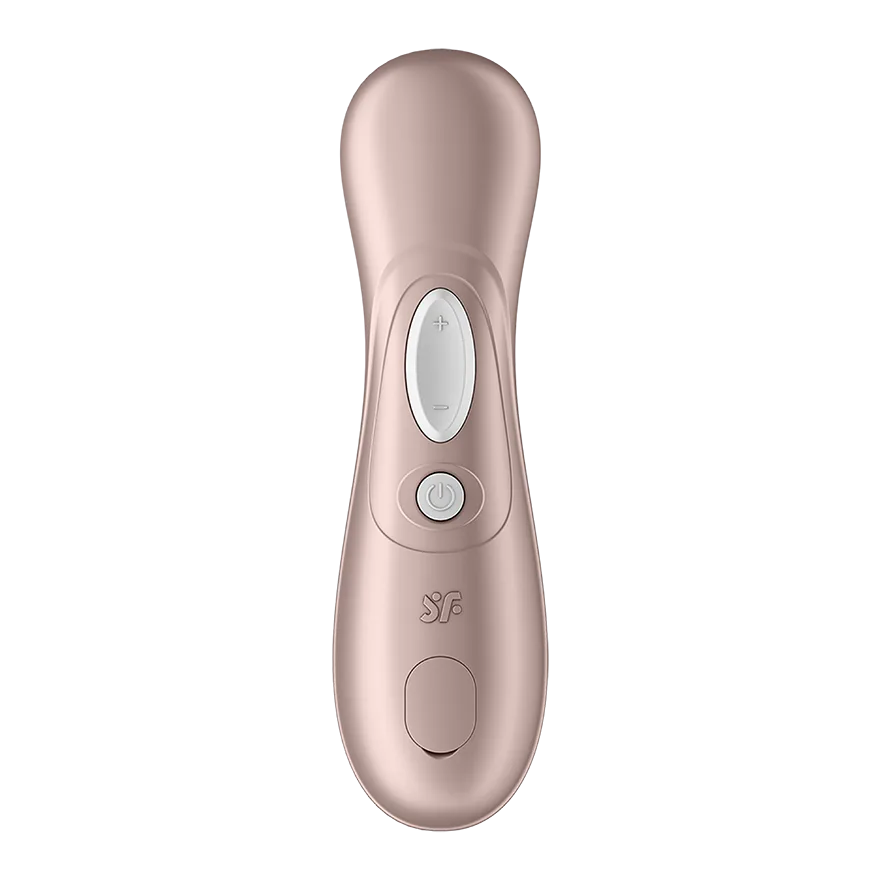
Ion 2 doesn’t work with vibration but with Pleasure Air—pulsing air pressure that is directed at the most sensitive area rather than along the entire length. Arcwave states the dimensions as 153.5 × 51.98 × 83.19 millimeters, medical-grade silicone and body-friendly ABS plastic as materials, three preset patterns with Autopilot, 90 minutes of operating time, 120 minutes of charging time, a magnetic charging cable, IPX7, and a two-year warranty. The manufacturer also highlights a construction they call CleanTech and a Twist to Open design that makes the product possible to open and clean.
So the two products solve different problems. Quiver is a full-size, textured tunnel with heat and broad vibration. Ion 2 is a shorter product with a technology that concentrates the stimulation. If you choose based on documentation, cleanability, and water resistance, Ion 2 wins by a wide margin—it has a published specification for every point where Quiver lacks it. If you choose based on insertable length, sleeve material, and USB-C, Quiver wins.
The item has EAN 850069779238.
We don’t have price data for this market.
The inventory situation is unusually good in the price-check data. The price-check involved seven stores. That’s not always the case in this category.
The prices in the table above are updated when the stores’ product feeds are updated, but always check the final price at checkout.
It’s for you if you already know that a full-size Fleshlight works for you and you want heat and vibration without switching product format. It’s for you if you think the moment of soaking the sleeve in warm water before every use is what makes the product stay in place. It’s for you if you want to be able to charge with the same cable as your phone. And it’s for you if you want two motors with separate rhythms rather than one steady vibration.
It’s not for you if you put a lot of importance on documentation. There is no product page on the manufacturer’s site, no manual, no published IP rating, no published heating temperature, no battery capacity, no sound level, and no model-specific warranty text. For a product in a higher price range, that’s a long list.
It’s also not for you if you prioritize cleaning the most. The combination of a SuperSkin material that requires careful drying and an electronics unit with a USB-C connection and unclear water resistance makes it the hardest of the entire comparison. Fleshlight Vibro Lady solves the same problem better, and Fleshlight Classic solves it best of all.
And it’s not for you if you only want to try whether heat and vibration add anything. Satisfyer Men Heat Vibration has eleven programs, a published heating temperature, IPX7, and a fifteen-year warranty. This is one way to answer the question, and the answer applies even if you later upgrade.
Fleshlight’s own return policy is the only manufacturer text that applies to Quiver, and it is strict. Goods can be returned within 30 days of delivery for a refund of the product value, but only if they are unopened and unused — the manufacturer explicitly states that opened or used goods are not accepted for return. For manufacturing defects or incorrect delivery, 90 days from delivery apply, and the manufacturer then sends a replacement item at its own expense after the issue has been documented with a photo.
No manufacturer warranty beyond what is stated in the document is specified. The product page states a two-year product warranty, but it’s a store claim and not a commitment from Fleshlight. Compared with Satisfyer’s fifteen years and Arcwave’s two years, Quiver is therefore the model in this comparison where the warranty situation is documented the worst.
What applies at all times, however, are your statutory rights. In the EU and EEA, consumers buying online generally have a 14-day right of withdrawal, starting when the goods are received. Under EU rules, sealed goods that are not suitable for return for health or hygiene reasons are exempt from the right of withdrawal once unsealed. In the EU, the seller is liable for defects that exist at delivery and appear within at least 2 years (the legal guarantee).
A practical limitation is worth knowing: under EU rules, sealed goods that are not suitable for return for health or hygiene reasons are exempt from the right of withdrawal once unsealed. The legal guarantee, however, always applies—meaning the seller is liable for defects that exist at delivery and appear within at least 2 years, if (for example) a motor or a heating element stops working.
Fleshlight Quiver isn’t included in any ranking yet. In best i test guides, the entire categories are compared against each other using five shared criteria, with what was left out shown.
Every numerical piece of information in the text can be traced to one of the sources below. The links were checked manually on the specified date.