

Review
Review: We-Vibe Melt 2
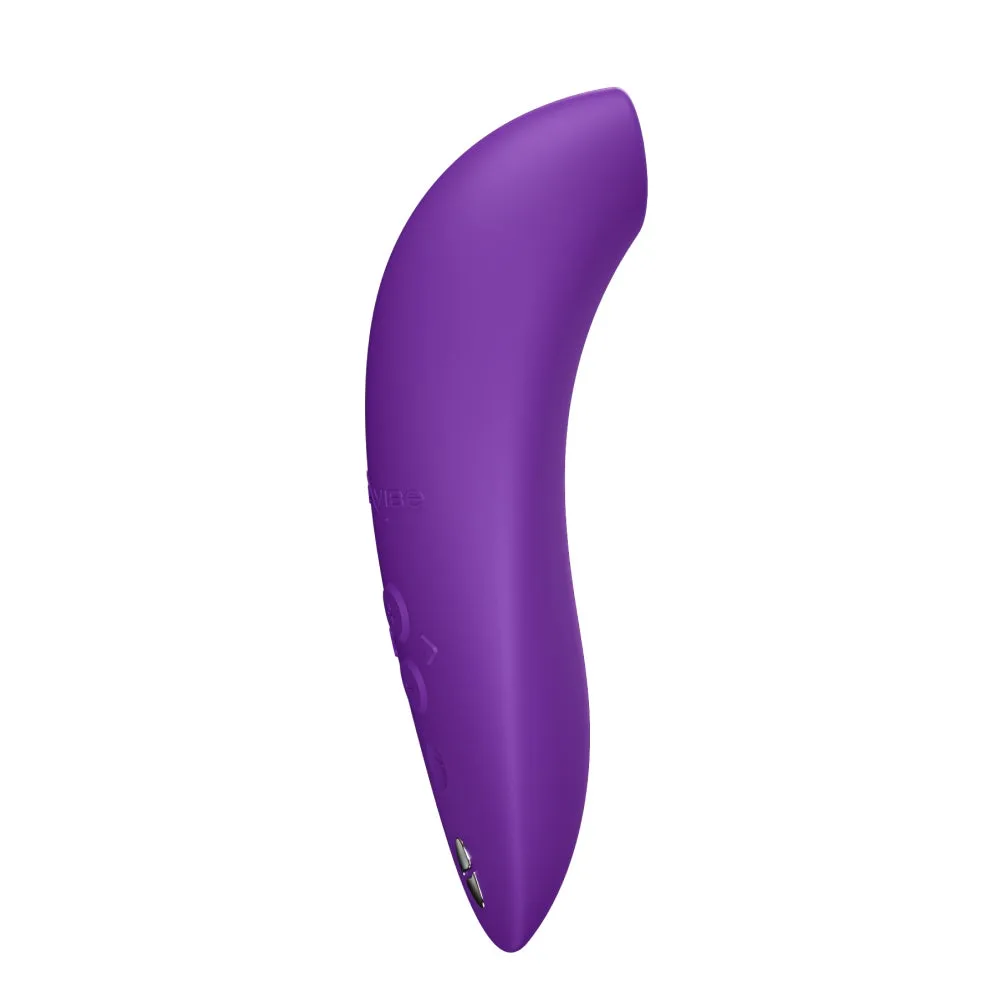
We-Vibes air pressure vibrator with app — twelve levels and six suction patterns.
29 July 2026
Review · Clitoral vibrator · Lay-on vibrator
We-Vibe’s Magic Multitasker reviewed against the manufacturer’s own specifications, PDF manual, and price data from eight Swedish stores. Eight intensity steps, seven vibration modes, body-friendly silicone without phthalates, IPX7 according to IEC 60529, up to two hours of operation, and travel lock — at a price where there’s a 38 percent difference between the cheapest and most expensive store.
A lay-on vibrator that does several things instead of just one perfectly: eight intensity steps, seven vibration modes, a wide contact surface, a really good travel lock, and two hours of operation on a 90-minute charging time. What you pay for is a product-specific charging cable, just two years of warranty, and a specification where neither weight, battery capacity, nor sound level is published — plus the inconvenient fact that We-Vibe Tango X has the same published electronics for 43 SEK less.
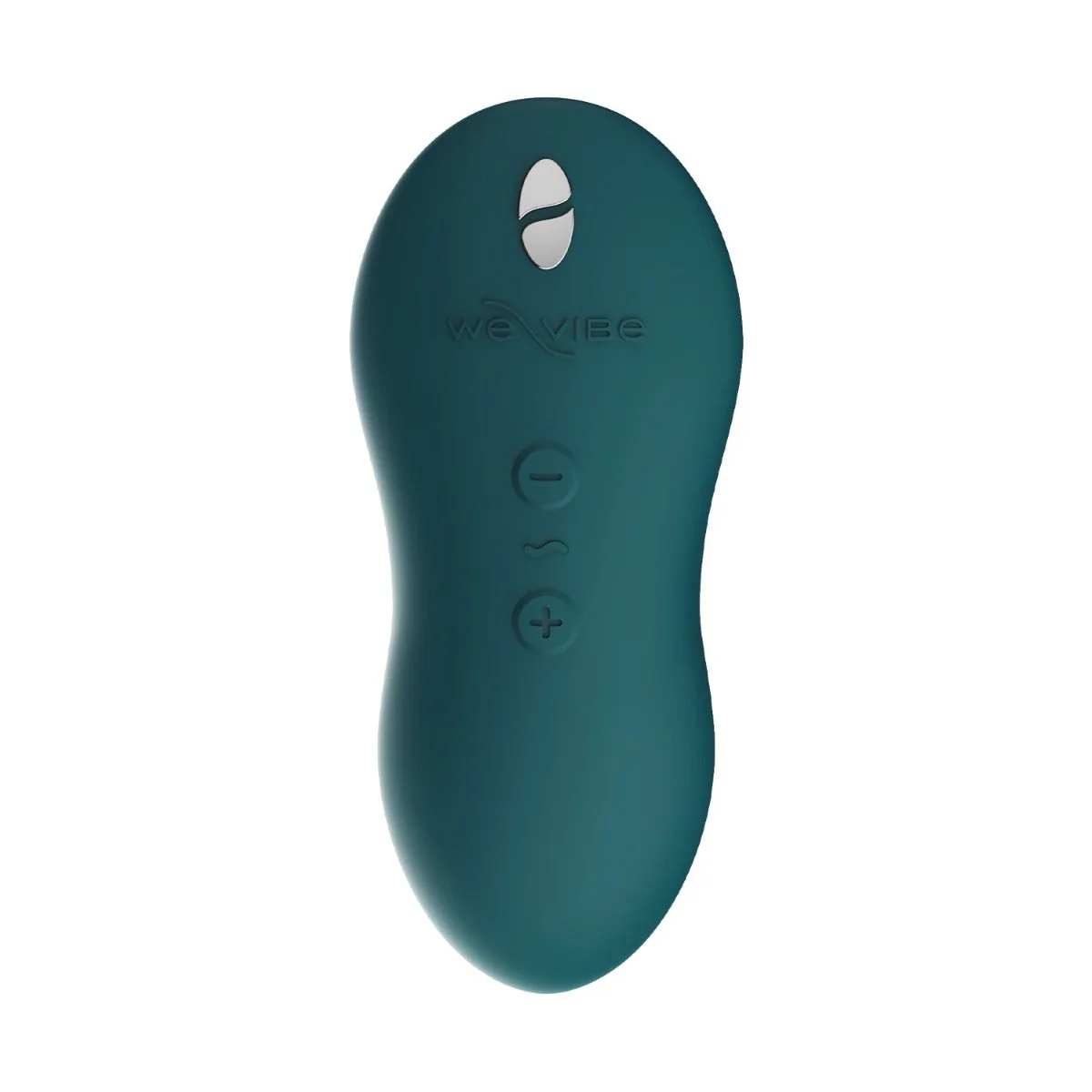
We-Vibe Touch X is the model the manufacturer itself calls Magic Multitasker, and the name is unusually informative for something coming from a marketing department. This is not an air pressure product and not a plug-in vibrator. It’s a handheld vibrator that is pressed against the body — a so-called lay-on vibrator — with a soft, shaped tip at one end and a tapering waist that’s meant to fit between two bodies. We-Vibe explicitly describes it as suitable for both clitoral stimulation and body massage, and as something that’s placed between partners during sex.
The specification is short and easy to check: eight intensity levels, seven vibration modes, enclosure rating IPX7, runtime up to two hours, 90 minutes of charging time, a safety latch, and a two-year manufacturer’s warranty. The dimensions are 102.23 × 43.26 × 34.30 millimeters according to the manufacturer’s own measurement drawing, which makes the Touch X one of the physically smallest products in its price category. In Sweden, the item is sold by eight stores at prices between 722 and 999 SEK, and five of them had it in stock at the price check.
This review is exclusively about the Green Velvet variant with EAN 4251460603942, the manufacturer’s item number SNTCSG6. We-Vibe sells Touch X in two colors — Crave Coral and Green Velvet — and each has its own EAN. Functionally, they’re identical, but check the number if you compare prices, because several stores list both colors on the same product page and show the lowest price of the two.
The category is worth explaining, because it’s often confused with air-pressure products in Swedish store texts. An air-pressure product — Womanizer, Satisfyer Pro, We-Vibe Melt — uses a closed chamber that is placed over the clitoris and creates alternating under- and over-pressure. The chamber never touches the clitoris directly, and the stimulation happens through pressure waves in the air.
A lay-on vibrator does the exact opposite. It transfers mechanical motion from a motor through the material to the skin, just like a standard vibrator, but it’s shaped to be applied to a larger area instead of inserted. That Touch X belongs specifically in that category is not an interpretation from our side: in the manufacturer’s EU Declaration of Conformity for model number 21000-02, the object of the declaration is described verbatim as a lay-on vibrator for couples use. We-Vibe describes the vibrations as deep and "rumbly"—a word used in this product category for low-frequency vibrations that propagate through tissue, as opposed to high-frequency buzzing that stays on the surface. We-Vibe does not publish any actual frequency value in hertz, either on the product page or in the manual, so the description should be read as a design objective rather than a measurement.
The practical point you can establish is that the difference determines who the product is suitable for. If you already know that air pressure works best for you, there’s no reason to buy Touch X. On the other hand, if you think that air-pressure products feel too concentrated—or if you want to be able to use the same product over a larger area, including together with a partner—you buy a lay-on vibrator precisely because the stimulation is broader and less point-like.
We-Vibe has three products with very similar names in its lineup, and they get mixed up routinely in Swedish stores. The differences are actually significant.
The conclusion from this setup is uncomfortable but useful: Touch X and Tango X are, as far as the manufacturer’s published figures go, the same product in two housings. The difference you pay 43 SEK more for is the shape and contact surface, not the motor power or the number of modes. It’s worth knowing this before you pay 43 SEK more for Touch X.
The material question is the only property of an intimate product that cannot be compensated for with experience or care, and it determines whether the product is still hygienic after five years. We-Vibe lists two materials for Touch X: ABS and body-friendly silicone, free from phthalates and BPA and made without latex. It has a shared construction, not an all-silicone product.
Silicone is a non-porous material. A non-porous surface can be cleaned, because there are no microscopic cavities where residue can get trapped. It is the single most important property of a material that is meant to sit against mucous membranes, and that is why the material declaration weighs more heavily than almost any other line in a specification.
That ABS is included in the material list means that parts of the construction are hard plastic. We-Vibe does not specify which parts are which material, but the construction is standard for the product category: a molded inner shell of ABS that carries the motor, battery, and buttons, with a silicone casing over it. The manufacturer’s product images show a silicone surface across the entire body, with the buttons as soft raised areas in the silicone itself rather than as separate plastic buttons.
In practice, the consequence for you is small as long as the silicone covers everything that comes into contact with the skin, and the manufacturer’s images suggest that it does. But there is still a difference compared with, for example, We-Vibe Melt 2, where the material specification is only body-friendly silicone without ABS. The difference is primarily relevant over time: a seam between two materials is always a place where dirt can collect, and that is why a single-material construction is preferable if everything else is equal.
Phthalates are a group of plasticizers used to make plastic—above all, soft PVC—flexible. The Chemical Inspection Authority (Kemikalieinspektionen) describes them as substances that can affect the hormone system and make reproduction more difficult, and several of them are therefore restricted or banned within the EU in a large number of products. This product category is repeatedly subject to supervision because it contains softened plastic against skin and mucous membranes.
We-Vibe explicitly states that the material in Touch X is free from phthalates and BPA and made without latex. It is an unambiguous declaration, unlike terms such as "TPE" or "jelly rubber", which say nothing at all about which plasticizers are included. Silicone does not require phthalate plasticizers to become soft—the softness comes from the polymer’s own structure—and that is why silicone as a material specification is, in itself, better information than almost any other item in a product specification.
The latex assignment is relevant for anyone who is allergic to latex. Latex allergy causes reactions on the mucous membranes faster than on normal skin, and an intimate product is therefore exactly the type of use where the information matters. The fact that the manufacturer writes it out is a plus. The manual adds a practical instruction that belongs in the same paragraph: stop using the product if you notice cracks or signs of deterioration in the surface material. A damaged silicone surface cannot be repaired and can no longer be cleaned properly.
The We-Vibes specification table gives the dimensions as 10.22 × 4.33 × 3.43 centimeters. The manufacturer’s own dimension drawing in the product gallery is more precise and states 102.23 millimeters in length, 43.26 millimeters in width, and 34.30 millimeters in thickness. It’s about the size of a small computer mouse, and that shape is intentional: the drawing shows an asymmetrical body with a broad, rounded top, a waisted middle, and a narrower, softly rounded tip.
The manual’s overview image names two design details under the heading ergonomic shape. One is the soft tip — the part that is meant to be placed against the body. The other is a recess, which the manufacturer’s product images show on the underside, opposite the buttons. We-Vibe does not state in plain text what the recess is intended for, but the placement is the one that is usually used so that a product rests stably against the palm instead of being held between the fingers. The manufacturer, in turn, states that Touch X should be held in the palm of the hand.
We-Vibe does not publish the weight, neither on the product page, in the specification table, in the manual, nor in the EU declaration of conformity for model number 21000-02. It’s a conspicuous gap in a category where weight actually matters — a product that is supposed to stay in place against the body during movement behaves completely differently depending on whether it weighs 80 or 200 grams. What can be established is that the dimensions are small: the volume is a fraction of a Womanizer or a wand, and the construction is silicone over an ABS shell with a battery that provides two hours of operation. Information about the exact grams that circulates among retailers is not covered by the manufacturer.
The packaging is worth a paragraph. The manufacturer’s own image of what’s included in the delivery shows the product in a cardboard box, a charging cable, a fabric storage pouch, a quick guide, and a sheet with safety information. The image shows the color Crave Coral, but the contents are the same for Green Velvet according to the specification. The storage pouch is not a luxury in this category but a practical necessity: silicone attracts dust and lint, and a product that sits loose in a drawer gets dirty between uses.
The interface on the We-Vibe Touch X consists of three buttons, all arranged in a row on the top side: plus, a wave symbol, and minus. The manual’s overview image names them directly: the plus button starts the product and increases the vibration. The minus button decreases the vibration and turns the product off if it’s held pressed in. The wave button switches pattern mode.
Three buttons are located on the underside compared with most competitors in this price range, and that’s a deliberate choice. The manual mentions a shortcut that says a lot about the philosophy: if you hold down the plus button, the product goes straight to maximum intensity instead of stepping up eight times. It’s the kind of detail that matters in practice but that almost never appears in store text.
The start sequence is a press of plus. From there, plus and minus step between the eight intensity levels, and the wave button switches between the seven patterns. Turning off is done by holding down the minus button. An LED on the top side is the only feedback—the product has neither a display nor an audio signal for mode changes.
A note about what the manufacturer does not specify belongs here. We-Vibe states eight intensity levels and seven pattern modes, but it publishes no information about how the two scales work together, meaning whether the intensity can be set freely within each pattern or whether certain patterns have fixed strength. The button labeling in the manual—plus and minus for intensity, wave for patterns—points to two independent controls, but the manufacturer doesn’t spell that out, and it also doesn’t publish any information about the number of possible combinations. In practice, this means that comparisons like "56 modes" that appear with some retailers are the stores’ own multiplication, not the manufacturer’s stated information.
We-Vibe names all seven patterns on the product page: Pulse, Wave, Cha-Cha, Tease, Tempo, Heartbeat, and Vibrate. Beyond that, the manufacturer doesn’t go as far as: what each pattern does purely technically—in what tempo, with what amplitude, and over what length of cycle—We-Vibe does not specify, either on the product page or in the manual. So the names are the only thing you have to go on before you buy, and they’re chosen by a marketing department rather than by an engineer.
Seven patterns are a normal number in this price range, and it’s worth saying plainly that patterns are the specification that matters least in practice. The pattern in this product category is that users return to continuous vibration and one or two rhythmic programs, and that the rest is never used again after the first evening. The number that actually determines how useful a vibrator is—the motor’s amplitude and frequency—is not published by We-Vibe or by any of the compared manufacturers.
The lock is the feature that sets Touch X apart from most cheaper vibrators, and the manual states exactly how it works. Press and hold the plus and minus buttons at the same time for two seconds. The product pulses twice as confirmation and is then locked. The same combination unlocks it again. The lock is also automatically disabled if the product is connected to charging.
The benefit is easy to describe: a vibrator that turns on by itself in a suitcase is a problem that is as predictable as it is embarrassing, and the only technical solution is a lock. That it is disabled during charging is also a well-thought-out detail—this is exactly the scenario where a user would otherwise think the battery is dead.
Two things from the manual belong in the same context. According to the manufacturer, the product is explicitly not designed for anal use. And it is sold as a novelty product without any medical purpose—if you are under medical care or use any medical device, the manufacturer says you should consult a doctor before using it.
We-Vibe markets Touch X as whisper-quiet and highlights discretion as one of the model’s main selling points—the wording on the product page is that nobody should notice what you’re doing. The question is what that means in numbers, and there the answer has to be honest: We-Vibe does not publish any measured decibel value for Touch X, either on the product page or in the manual. There is also no comparison chart with reference sound, which several competitors in the category publish.
What you can, however, reason about is the construction. A vibrator of this type gets its sound from a motor inside a housing, and the sound increases with intensity. The fact that the manufacturer describes the vibrations as deep and low-frequency suggests that the sound profile sits at a lower frequency than that of a small high-RPM eccentric motor, but it says nothing about sound pressure. Sites that provide an exact decibel number for Touch X either present their own measurement or a value without a source.
A practical tip that applies regardless of model: place the product on a soft surface between uses, and hold it in your hand instead of against a tabletop when you try out the positions. A hard surface acts like a resonance box and noticeably amplifies the sound—that is by far the most common reason a product is perceived as loud.
We-Vibe Touch X is rated IPX7. The rating comes from the international standard IEC 60529, which defines enclosure classes for electrical equipment. The number 7 in the second position means that the product is tested for submersion in water to a depth of one meter for 30 minutes. The manufacturer states the consequence plainly on the product page: the product can be used anywhere and is easy to clean.
The difference vs a splash-proof product is greater than the wording suggests. Splash protection covers water droplets and, at best, water jets, but not submersion. Such a product can handle a damp cloth and possibly a shower, but not a bathtub, and it should not be held under running water—use some common sense about buttons and the charging contact.
With IPX7, the entire product can be rinsed off without taking precautions. It’s a genuine everyday advantage and a prerequisite for the product to be usable in the shower or bath. If a product is missing an IPX rating entirely, treat it as not waterproof—never does the absence of a rating indicate that the product would be approved.
An important limitation from the manual: the water resistance applies to the product, not the charging cable. The manufacturer states expressly that the charging cable must never be submerged in water or other liquids. Therefore, wipe the charging contacts before you connect the cable after a bath.
The manual’s guidance is brief: wash with soap and water, or with the manufacturer’s own cleaning product. Rinse the product in lukewarm water after each use, use unfragranced soap, wipe it with a clean towel, and let it air-dry before putting the product back into the fabric pouch that comes with it.
The question about lubricant follows the same rule as for all silicone products: use water-based. A silicone-based lubricant should not be used on silicone—it breaks down the surface over time and makes it porous, and a porous surface can no longer be cleaned properly; it can only be replaced. Oil-based products such as coconut oil leave a film that’s hard to remove and that also breaks down materials over time. We-Vibe’s warranty terms expressly exclude damage caused by aggressive chemicals and cleaning agents, which makes this more than just a matter of preference: using the wrong product costs you both the surface and the warranty.
Two temperature details from the manual that rarely appear in store texts: the product and its battery must not be exposed to temperatures above 45 degrees, which rules out boiling water and a dishwasher despite IPX7. And the product is specified for indoor use in the range +10 to +45 degrees. The latter is relevant for anyone who stores items in a cold storage room or leaves the product in a car during winter.
We-Vibe lists a runtime of up to two hours and a charging time of 90 minutes. The ratio is unusually favorable—most products in the category charge for about as long as they run—and two hours of runtime is plenty of margin for a product that is practically used in tens of minutes at a time. The battery, according to the manufacturer, is a USB-rechargeable lithium-ion battery, and the manual explicitly states that it is not replaceable.
Charging is done via a charging cable that connects to a USB port. The manual’s overview image names the charging contacts on the product, and the wording in the troubleshooting section—that the LED is off if the charger isn’t correctly positioned on the Touch X—shows that the cable is held against the contacts rather than plugged into a port. That means the cable is product-specific: if you lose it, no regular USB-C cable works, and you must get a replacement from the manufacturer. The advantage of this design is that no opening in the housing is needed, which is part of the explanation for why the product can be rated IPX7 without a rubber plug.
According to the manual, the charge indicator has three modes. A quickly blinking LED means the product is charging. A steady light means it is fully charged. A turned-off LED means there is no power, or that the charger isn’t seated correctly. The manual also states that a full charge takes up to 90 minutes depending on how discharged the battery was when you started.
The manual includes three practical instructions that are worth knowing. The battery doesn’t need to be fully discharged before charging it again—it’s an old habit from the days of nickel batteries that doesn’t apply to lithium-ion. If you charge via a computer’s USB port, charging is interrupted when the computer goes into sleep mode, which is a classic reason a product seems broken the next morning. And any regular USB power adapter with the correct rated power can be used—however, no adapter is included in the delivery. The manual’s technical data lists the rated markings: 100–240 volts input and 5 volts, 0.75 ampere output.
We-Vibe does not publish the battery’s capacity in mAh or its voltage for Touch X, either on the product page or in the PDF manual. The document that would otherwise normally contain electrical data is the EU declaration of conformity, but We-Vibe’s declaration for Touch X (model number 21000-02) cites only the EMC directive 2014/30/EU and the RoHS directive 2011/65/EU, with the addition 2015/863, and it provides no rated values at all for the product itself. It’s worth noting because competitors do: Satisfyer states 3.7 volts and 220 mAh for the Pro 2. Without the capacity, you can’t convert runtime into power consumption, and you can’t compare how heavily the cell is stressed between models.
What generally applies to lithium-ion batteries also applies here: capacity drops with the number of charge cycles, the battery is not replaceable, and the product does best when it’s charged regularly instead of being stored fully discharged. The manufacturer writes in the manual itself that the product should be charged regularly even when it isn’t used—just to guarantee a long battery life. With use a couple of times a week, it’s the battery, not the silicone, that sets the limit for service life—and since the cell is permanently fixed, the product is practically used up when the battery is.
The model number is 21000-02 according to the manual’s technical data. It doesn’t appear on the product page and is hard to find elsewhere, but it’s the designation that identifies the product in a warranty case. We-Vibe also states that the serial number is on the underside of the packaging above the larger barcode—so save the box, or photograph the label before you throw it away.
We do not have price data from shops in your market yet.
Tango X shares all published electronic specifications with Touch X and costs 43 SEK less. What you pay for is the shape, not the motor.
Three comparisons are relevant: against We-Vibe’s own bullet vibrator with an identical electronics specification, against the brand’s air-pressure product in the same price range, and against the cheapest broad route into clitoral stimulation. All the information below comes from the respective manufacturers’ own specifications, and all prices come from the stores’ product feeds on July 29, 2026.
The difference is the shape. Tango X costs from 679 SEK, i.e. 43 SEK less than Touch X. On every line the manufacturer publishes, they’re identical: eight intensity levels, seven vibration modes, IPX7, operating time up to two hours, 90 minutes of charging time, USB-rechargeable lithium-ion battery, ABS, and body-friendly silicone without phthalates, BPA, or latex, plus a two-year warranty.
The difference is the shape. Tango X measures 99.8 × 22.9 × 24.3 millimeters versus Touch X at 102.23 × 43.26 × 34.30. In practice they’re about equally long, but Tango X is roughly half as wide and significantly thinner—it’s a bullet with a point-shaped tip, while Touch X has a wide contact surface that’s meant to be pressed against a larger area. Tango X is also delivered with a 2 ml sample of the manufacturer’s glide lubricant, which Touch X does not.
So the choice between them isn’t about performance but about what kind of stimulation you want. If you want point-shaped, concentrated stimulation and the smallest possible product, Tango X is both smaller and cheaper. If you want a wide contact surface, a shape that can be pinched between two bodies, and something that sits stably in your palm, Touch X is the one that’s designed for that. What you don’t buy for the 43 kronor is more motor, more modes, or longer operating time—there’s no published difference there.
We-Vibe Melt 2 costs from 1,271 SEK, that is 549 SEK more than Touch X. The two products solve the same task with completely different technology, and that’s what makes the comparison interesting.
Melt 2 works with Pleasure Air — air pressure in a sealed chamber — and has twelve intensity levels and six suction patterns, compared with Touch X’s eight levels and seven vibration patterns. Melt 2 also has Smart Silence, which means the product only starts when it makes skin contact, and control via the We-Vibe app—two features that Touch X completely lacks. The material is stated as only body-friendly silicone with no ABS, and the battery as a lithium-ion polymer battery. Operating time and charging time are, in practice, the same: up to 120 minutes of operation and up to 90 minutes of charging. Both have a two-year warranty.
The conclusion is that the price difference buys you a different technology and two extra features, not a better version of the same thing. If you already know that air pressure works for you, Melt 2 is worth the money. If you know you prefer vibration—or want something that works both as a clitoral stimulator and as a body massager—Touch X does a different job for 549 SEK less. If you want app control, it’s only available in the more expensive model; Touch X has neither an app nor Bluetooth. The manufacturer’s EU declaration for Touch X also doesn’t cite any radio equipment directive—only EMC and RoHS—which is what you should expect from a product without radio transmitters.
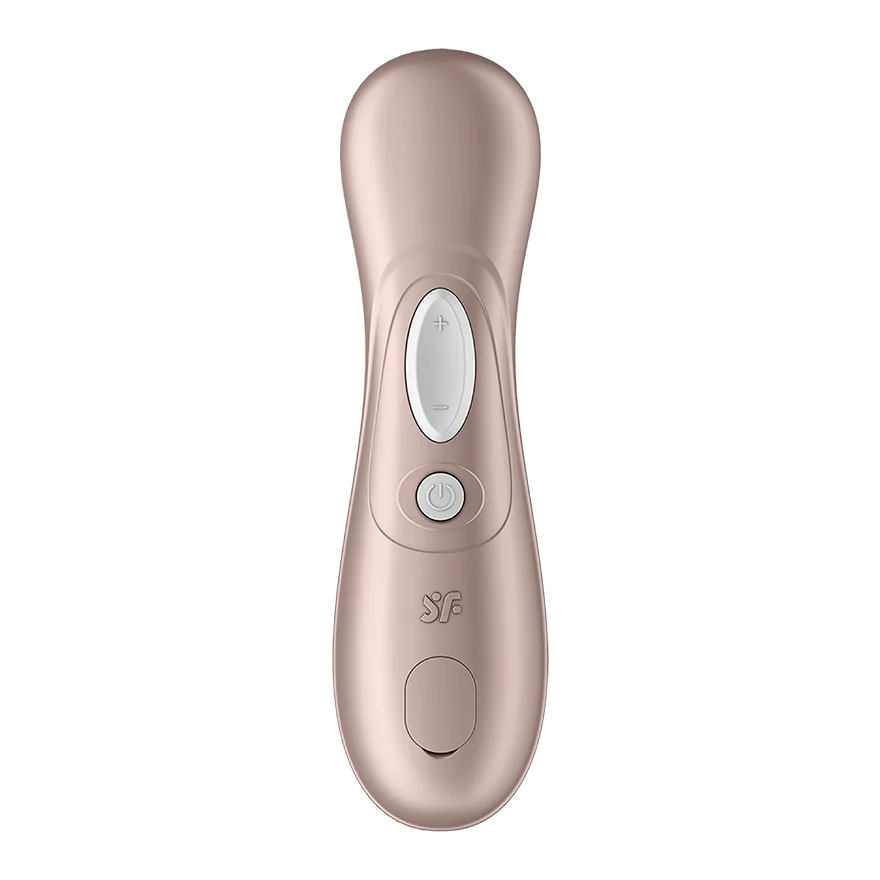
Satisfyer Pro 2 Next Generation costs from 219 SEK. Touch X costs 722 SEK at the lowest, that is a little over three times as much. Both are products for clitoral stimulation, and both are IPX7, but they use different technology: the Satisfyer with air pressure and eleven intensity levels, and Touch X with vibration and eight levels plus seven patterns.
The Satisfyer has a published battery capacity — 3.7 volts and 220 mAh — and it charges via cable using USB. It also has 15 years of manufacturer warranty, which is more than seven times as long as We-Vibes’ two-year warranty. That’s a striking difference in favor of the cheaper product, and it should be taken into account.
What Touch X gives you back is the shape, the latch, a two-hour runtime, and a clearly broader range of use—Satisfyer Pro 2 does one thing, while Touch X is designed for clitoral stimulation, body massage, and use together with a partner. If you’re unsure whether air-pressure technology works for you at all, the Satisfyer is a hard-to-beat way to find out for under 250 SEK. If you know you want vibration, though, that comparison isn’t relevant—and then Tango X is a closer alternative than the Satisfyer.
Eight Swedish shops sell the item with EAN 4251460603942. The cheapest is Joyland at 722 SEK, and the most expensive is Vuxenkul at 999 SEK. That’s 277 SEK, or a 38 percent difference for the exact same item number, the same color, and the same packaging. For comparison, We-Vibe themselves list the Touch X for 99 euros in their own European web shop.
The stock situation is unusually good in this comparison. Five of eight shops had the product in stock at the price check: Joyland at 722 SEK, Vuxen at 899, Mshop at 989, as well as Blush Me and SexleksakerOutlet at 995 SEK each. That means that the cheapest shop is also actually the cheapest available—up to the second-cheapest shop that had stock, the difference is 177 SEK, which is almost a quarter of the product’s price.
The three shops that were out of stock were at 886, 990, and 999 SEK. Shops that list a product as sold out may still have an old price in the feed, and that price is rarely what you actually end up paying when the item comes in again. The spread in prices isn’t because any shop sells a different variant: all eight list the item either under EAN 4251460603942 or under their own item number that is linked to Green Velvet specifically. So it’s about the shops’ own margin pricing.
The prices in the table above are updated when the shops’ product feeds are updated, but always check the final price at checkout. Shipping cost is added by most shops under a certain order value, and in this price range several shops are right around the threshold for free shipping—which can eat into part of the difference between the cheapest options.
It’s for you if you want vibration rather than air pressure, and if you want a wide contact surface instead of a point-shaped tip. It’s for you if you want a product that can be used for more than one thing—the manufacturer explicitly states clitoral stimulation, body massage, and use between partners during intercourse, and the shape with the swooping waist is designed for exactly that third use. It’s for you if you travel and want a real travel lock, and for you who want to be able to rinse off the entire product under running water.
It’s not for you if you want the smallest possible product—there, We-Vibe Tango X is both narrower and cheaper, with identical published electronics specifications. It’s not for you if you want app control, because Touch X has neither an app nor Bluetooth. It’s not for you if you want to be able to charge with the same cable as your phone, because the charging cable is product-specific and excluded from the warranty. And it’s not for you if you require a published battery capacity, measured sound level, and stated weight before purchase, because We-Vibe doesn’t publish any of the three for this model.
One more thing belongs in the decision. Touch X is in a price range where it’s easy to justify both cheaper and more expensive options: Satisfyer Pro 2 Next Generation costs 503 SEK less, Tango X is 43 SEK less with the same specification, and Melt 2 costs 549 SEK more with a completely different technology. Touch X isn’t the obvious winner on any single line in the specification. It’s the one that does the most things—which is exactly what the manufacturer means by Magic Multitasker, and which is also the only reasonable reason to choose it.
We-Vibe states a two-year manufacturer warranty for Touch X, and the terms specify the time as 24 months counted from the first delivery to the customer—however with a cap of a maximum of two years after the manufacturing date. This later limitation is unusual and worth noting: if you buy a product that’s been sitting in the retail supply chain for a long time, the warranty period in theory can be shorter than 24 months. The manufacturer states that in an approved warranty claim, it chooses between replacing the product with a new one of the same type and refunding the purchase price, and that the transport, labor, and material costs for the replacement are covered by the manufacturer.
Read the exclusions before counting on the warranty. It does not cover minor faults that do not affect usability, wear parts such as seals, or consumables—and the terms explicitly list batteries and charging cables as consumables. In practice, that means the two parts that are most likely to break first are outside the warranty. The warranty also does not apply in cases of normal wear, intentional damage, incorrect use contrary to the instructions for use, aggressive cleaning agents, or your own repair attempts. A fault must also be reported within two months from the time you discovered it, and you need to be able to show proof of purchase.
A caveat about what the warranty page actually lists is in order. The list of We-Vibe products covered by the two-year warranty on the manufacturer’s warranty page mentions older models—among others Touch by We-Vibe and Tango by We-Vibe—but not Touch X by name. The Touch X product page, on the other hand, states a straightforward two-year warranty, as does the website footer for the entire site. Save the receipt and refer to the product page’s promise if needed.
We-Vibe’s 100-day satisfaction guarantee is also worth a clarification, since it’s often cited in store texts. According to the manufacturer, it applies only to purchases in We-Vibe’s own web store, it provides a value check to spend in the same store rather than getting money back, and it can be used for one item per order. So if you buy from any of the eight Swedish stores listed above, you are therefore not covered by it.
What always applies, however, are your statutory rights. According to konsumentköplagen, you have three years to complain about defects in the item, regardless of what the manufacturer promises — so it is one year longer than We-Vibe’s own warranty. In the case of distance selling, you also have a right of withdrawal for fourteen days under lagen om distansavtal och avtal utanför affärslokaler. Be aware that, in practice, the right of withdrawal is limited for hygiene products that have been taken out of a sealed package — but the right to complain about defects always applies. If you have questions about what applies in your case, Konsumentverket guides you via Hallå konsument.
We-Vibe Touch X Green Velvet is ranked på plats 11 av 32 in clitoral stimulator best i test, where the entire category is compared against each other using five shared criteria. Guiden vinns av Womanizer Premium 2 Red Gold.
Every numerical piece of information in the text can be traced to one of the sources below. The links were checked manually on the specified date.
This page is machine-translated from Swedish. Read the Swedish original