Skip to content
Luvrate

Guide · PVC clothing

Latex or PVC (vinyl)? The difference in material, feel and care

Latex is natural rubber: a thin, stretchy membrane without fabric that clings to the body but can cause allergy and needs powder and silicone instead of oil. PVC is plastic that is softened to make it pliable. But most of what is sold as PVC and vinyl today is neither – it is polyester with a glossy polyurethane coating.

last updated
27 September 2026
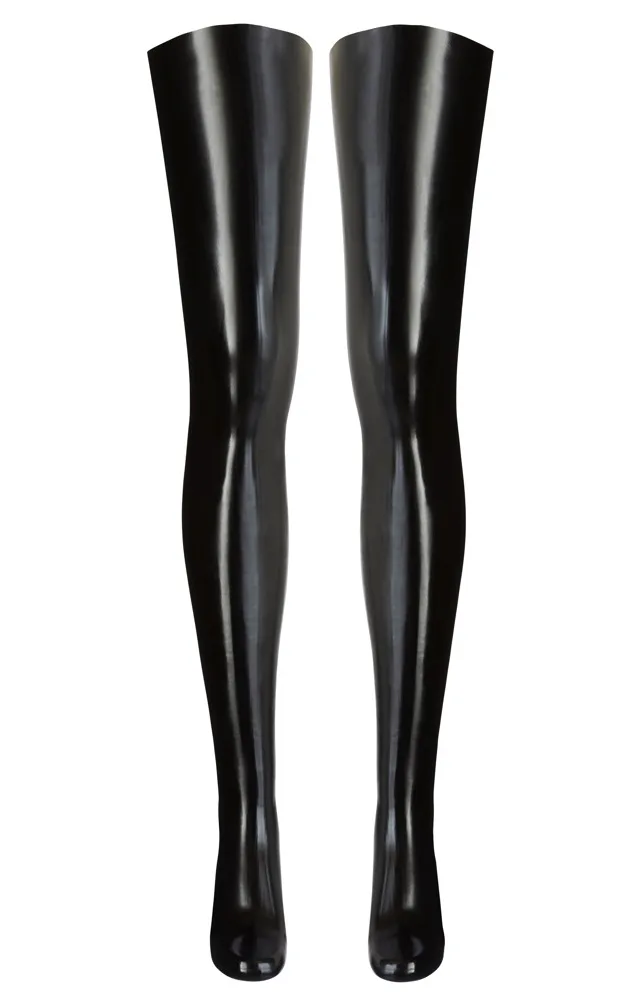
Late-X black thigh-high latex stockings in 100 per cent natural rubber latex with a shaped foot, front view on an invisible mannequin

Latex or PVC – the short answer

Latex and PVC are two completely different materials that both give a glossy surface. Latex is natural rubber, made from the sap of rubber trees. It stretches a lot, has no fabric base and is completely impermeable. PVC, polyvinyl chloride, is a plastic that is hard in itself and made soft with additives known as plasticisers.

In practice, the choice is often between three or four materials, not two. Words such as PVC, vinyl and wetlook describe the surface, not what the garment is made of. In our review of PVC clothing, none of the garments was actually PVC: five were polyester with a polyurethane (PU) coating, three were glossy stretch fabric and one was latex. So read the material declaration, not the product name.

How to choose the size and care for the garments step by step is in PVC clothing: sizing and care. Here we go through the differences between the materials.

Four materials behind the glossy surface

'Lack' – the Scandinavian and German word for shiny clothing – is a catch-all for glossy garments. Vinyl originally refers to PVC, but today is also used for garments without PVC – Orion sells its Black Level garments as 'Vinyl' in English and 'Lack' in German, even though the declaration is polyester with a polyurethane coating. Here is how the four materials differ.

Latex: natural rubber without fabric

Latex garments are a thin rubber membrane. Late-X latex stockings are 100 per cent latex at a thickness of 0.35 millimetres according to the manufacturer Orion, with no polyester, elastane or coating. Orion's material guide describes latex as stretchy yet firm, and points out the drawbacks: the material can cause allergy on skin contact, strong cleaning products and massage oil can dissolve it, nails and jewellery easily damage it, and since latex clothing lacks fabric reinforcement it tears more easily than vinyl clothing.

PVC: plastic made soft

PVC is a plastic that can be made hard or soft by varying the amount of plasticiser. Orion's material guide describes PVC as cheap and robust, resistant to alcohol and oil, but also says it sometimes smells strongly at first – the smell disappears once the product has been aired – and that ageing and UV radiation can change its elasticity so the material becomes brittle or hard. PVC should therefore be protected from prolonged light and sun.

The question of phthalates, covered further down, mainly concerns plasticised PVC.

PU-coated polyester: what is most often sold as PVC and vinyl

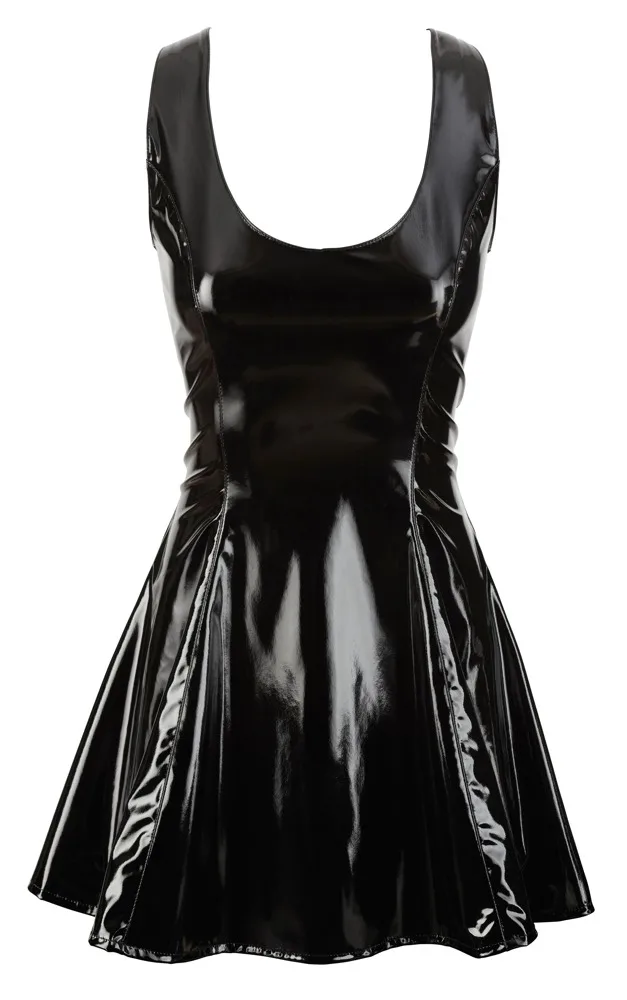
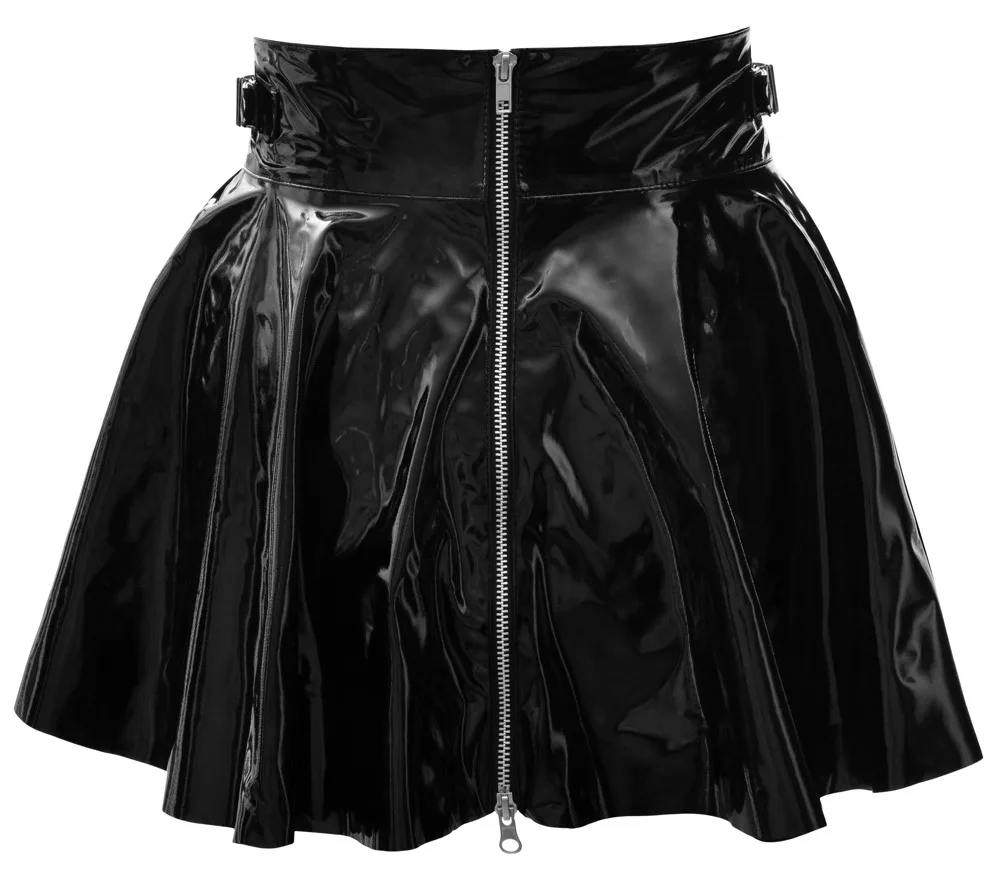
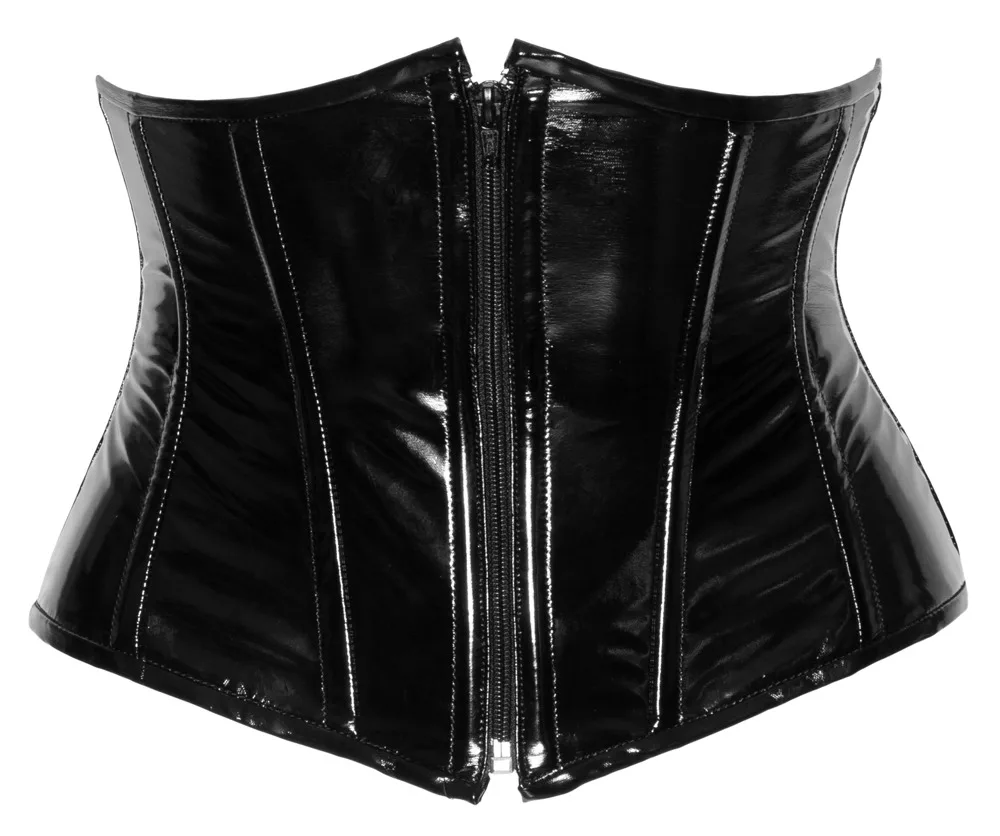
Here the glossy surface is a layer of polyurethane on a woven or knitted polyester. The fabric gives the garment its shape and holds it together; the coating gives the shine. Black Level's vinyl dress, waist corset, PVC trousers and mini skirt are all 100 per cent polyester with a polyurethane coating according to Orion, and none of them contains PVC or latex according to the declaration.

Orion's material guide lists two weaknesses for PU: strong cleaning products and massage oil can ruin it, and the coating can wear off if cleaned too hard. Orion does not publish how thick the coating is for any of the garments.

Wetlook: glossy stretch fabric

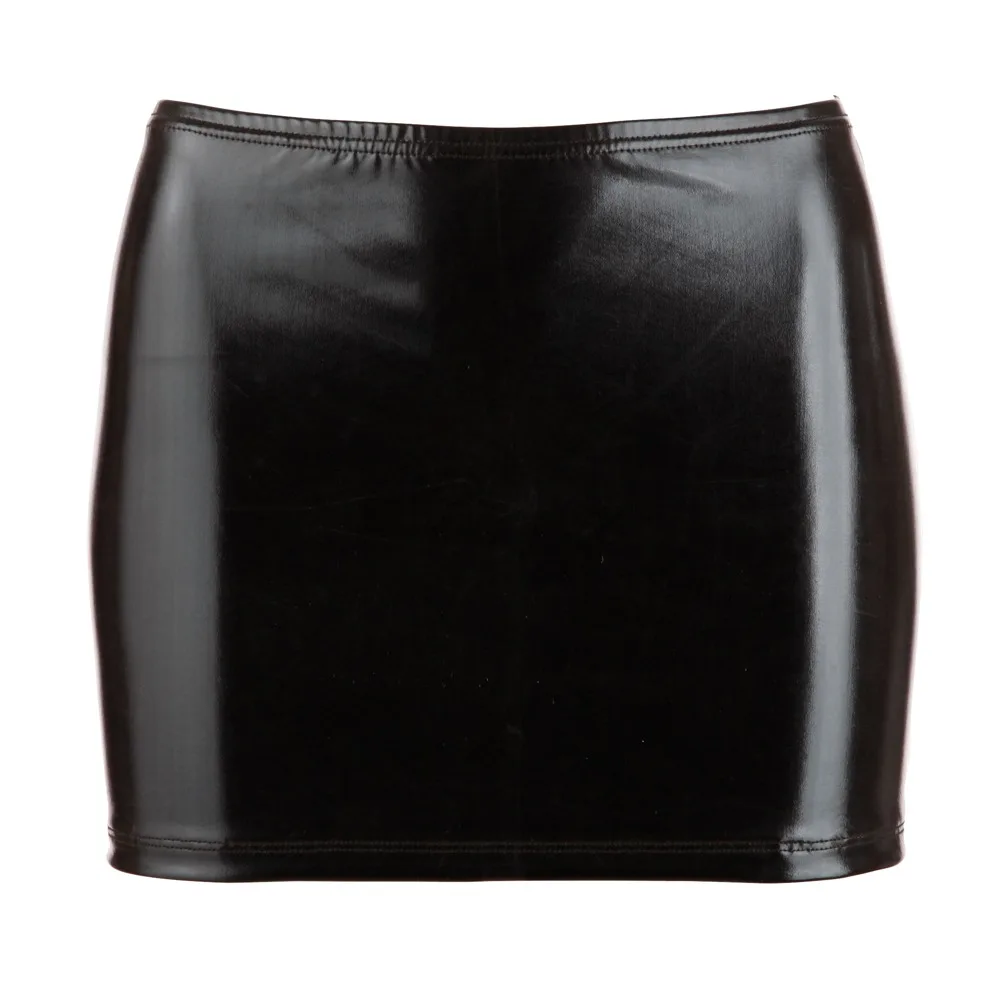
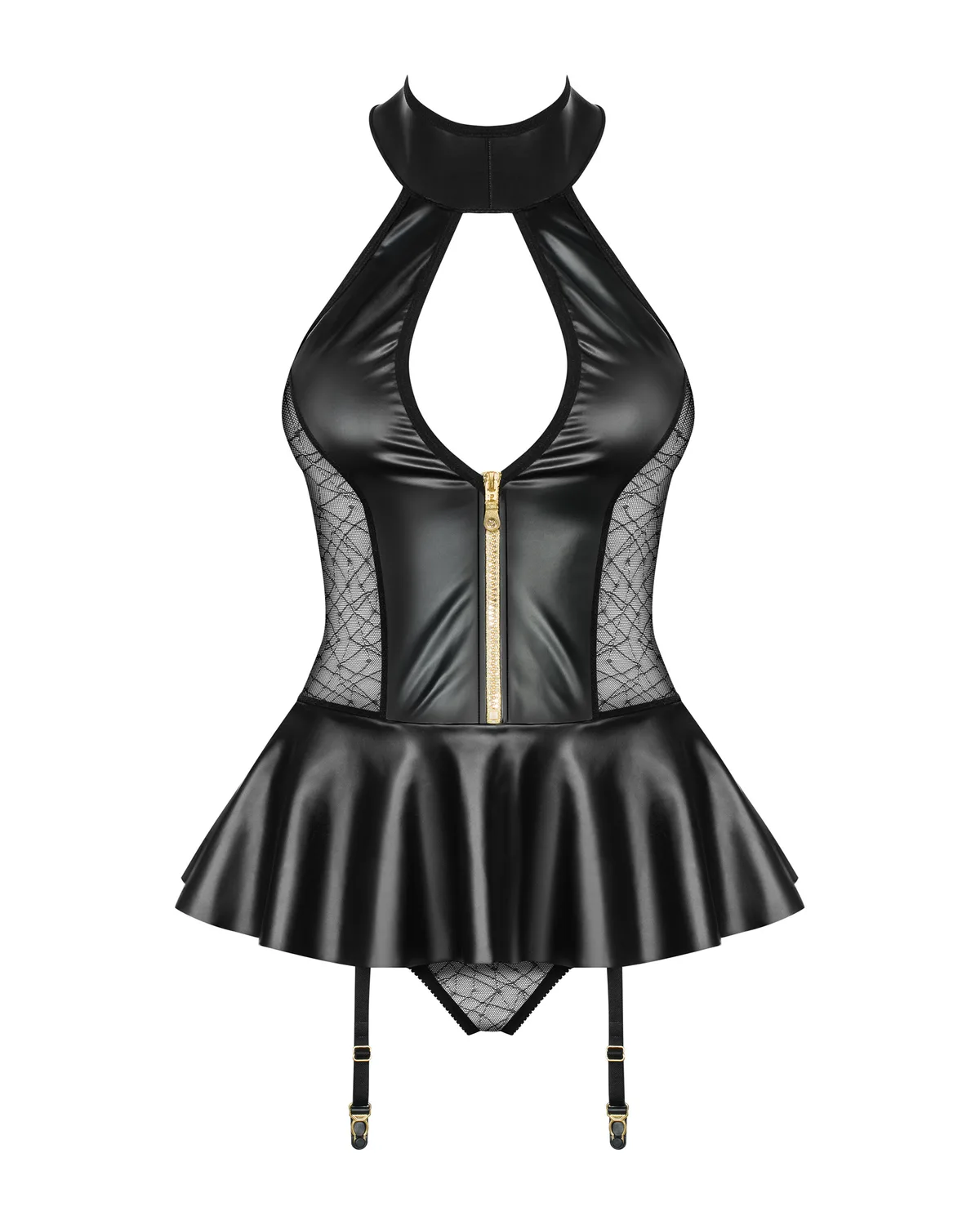
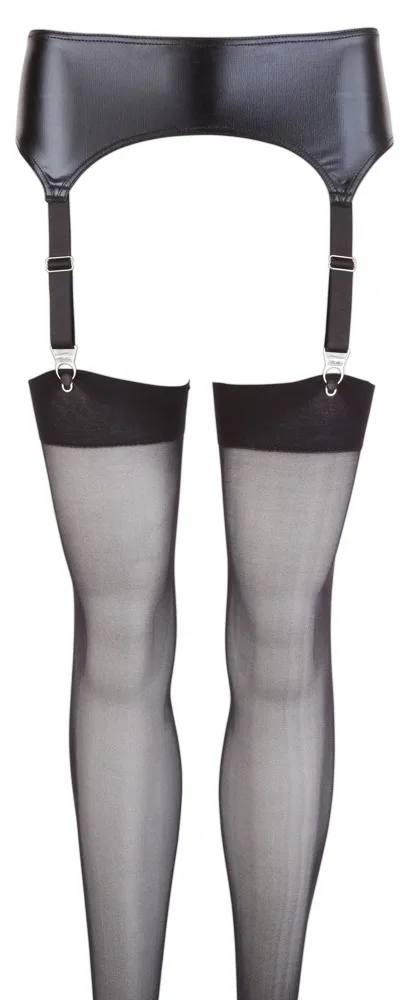
Wetlook is a fabric with a shiny, 'wet' surface. Cottelli's wetlook skirt and the belt of NO:XQSE's suspender belt are 92 per cent polyester and 8 per cent elastane, and no coating is stated. Orion describes the surface of the suspender belt as having a matt sheen. Wetlook stretches like an ordinary stretch garment and is washed like one – it is essentially an ordinary fabric with a different look.

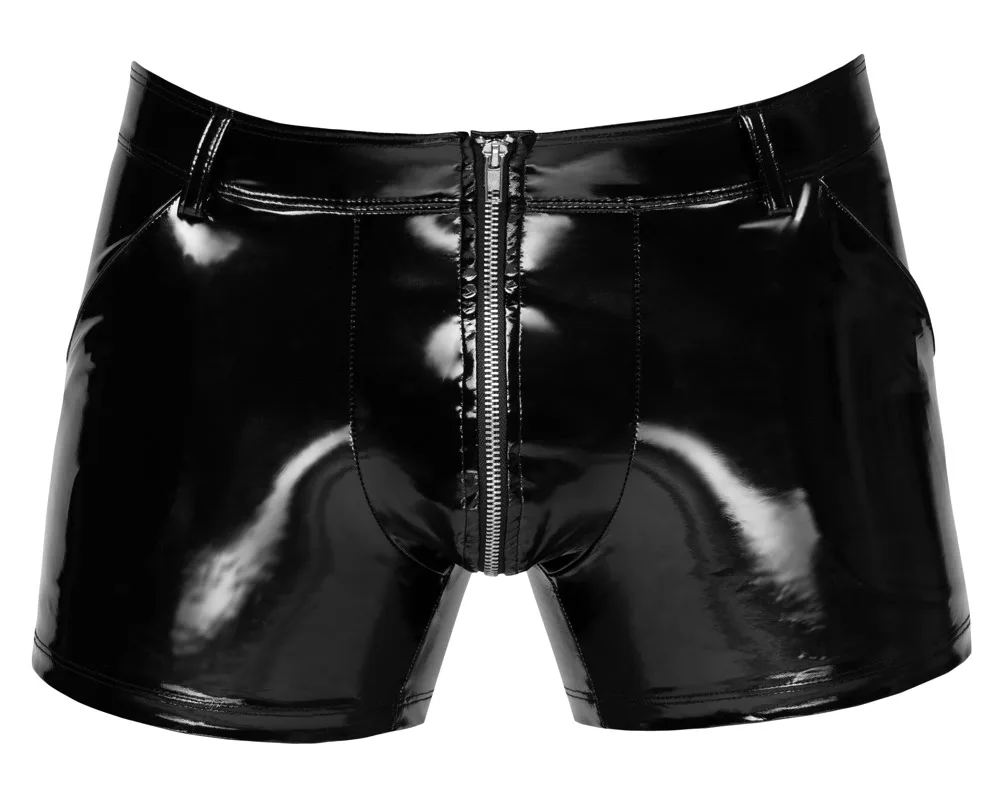
An example of each material

Feel and fit: latex clings, PVC holds its shape

Latex stretches and moulds itself to the body. That is why latex garments are often sold in combined sizes – according to Orion's chart, Late-X latex stockings in S/M cover dress sizes 36 to 42. The downside is that if you are at the top of the range you stretch the material more and therefore put more strain on it when dressing and undressing. Latex also needs its own technique to get on: powdered inside, roll down, press out the air, roll up.

PU-coated polyester without elastane behaves the opposite way. It holds its shape and does not give, so the size has to be right from the start. Black Level's dress, trousers, mini skirt and waist corset have no elastane. The exception in the same range is Black Level's men's shorts, 94 per cent polyester and 6 per cent elastane with a PU coating, which Orion describes as four-way stretch.

Wetlook is closest to an ordinary stretch garment. Soft PVC can vary a lot depending on how much plasticiser has been used, and we have no PVC garment in our review to refer to.

What the impermeable materials – latex, PVC and a full coating – have in common is that they do not breathe like an ordinary fabric. Expect it to get warm over longer periods.

Care: latex and PVC need different things

Latex. Orion's care page for latex clothing specifies hand washing in lukewarm water, about 30 degrees, with a grease-free detergent. Grease, perfume, oils and certain metals – copper, brass and bronze – react with latex, and too much direct sun can make the surface dull and faded. Completely dry garments are lightly dusted with latex powder so the surface does not stick together. For shine, Orion sells a silicone spray, not an oil.

PU-coated polyester. According to Orion's customer information for the Black Level garments: hand washing in clear, lukewarm water with a mild detergent, drying with a soft lint-free cloth, and storage hanging on a hanger since the glossy surface creases easily. No powder is needed.

PVC. Orion's material guide says PVC should be protected from prolonged light and sun and that an initial smell disappears with airing. Follow the care label in the garment for washing.

Wetlook. Gentle hand washing with a delicates detergent according to Orion for the Cottelli and NO:XQSE garments.

Store the materials apart. Orion's customer information says the garments should be stored on their own and not together with products made of other materials, to avoid chemical reactions. So a latex stocking and a PVC skirt that are sold to be worn together should not be stored together.

Which lasts longest?

No manufacturer in our review publishes a lifespan, but they point out different weak spots. For latex it is holes: Orion's care page writes that a small hole is enough for the material to split, and there is no fabric holding the garment together. For PU-coated polyester it is the surface: the coating can wear or be damaged, but the fabric underneath holds the garment together. For PVC it is ageing: UV and time can make the material brittle.

So if you want a garment that withstands the most everyday wear with the least care, you will usually choose PU-coated polyester. If you want the fit of latex, expect to take more care when dressing, undressing and storing.

Garments with fabric that holds them together

Latex allergy: the most important difference

Natural rubber latex can cause allergy on skin contact, and Orion explicitly warns about it on its latex garments. The allergy is a reaction to proteins in natural rubber and can cause anything from skin problems to breathing difficulties. If you have a latex allergy or suspect you do, choose PU-coated polyester, wetlook or PVC – none of them is natural rubber.

Two things can be confusing. Despite the similar name, elastane is a synthetic fibre and not latex. And a manufacturer's shared care leaflet can contain a section on latex even for garments that contain no latex – it is the material declaration for your particular garment that counts. The same allergy affects the choice of condom; latex-free options and which lube is suitable are covered in lube and condoms. If a garment causes you problems, take it off and contact a healthcare professional if it does not go away.

Phthalates: the question concerns plasticised PVC

Phthalates are a group of substances long used as plasticisers in PVC. They do not occur in latex as a material, and they are not relevant to PU-coated polyester or wetlook in the same way, since there is no plasticised PVC there. Orion's material guide lists being phthalate-free as a property of the PVC the manufacturer uses.

That a garment contains no PVC does not, however, mean the manufacturer discloses everything it contains. None of the manufacturers in our review publishes an additives declaration or a phthalate certificate for its PVC and latex garments. If you buy PVC, look for an explicit statement that the material is phthalate-free. More on material issues in toys and accessories in safe materials in sex toys.

Four common misconceptions about latex, vinyl and PVC

'Vinyl means PVC.' Not any more. Orion sells its Black Level garments as vinyl, but the declaration is polyester with a polyurethane coating. It is the declaration that shows whether there is PVC in the garment, not the name.

'Elastane is a type of latex.' No. Elastane, which in North America is called spandex, is a synthetic fibre. A wetlook garment with 8 per cent elastane contains no natural rubber.

'Wetlook is the same as PVC.' Not in terms of material. The wetlook garments in our review are knitted stretch fabrics with no declared coating, which stretch and are washed like an ordinary synthetic garment. A PU-coated PVC-look garment does not give if it has no elastane and, according to Orion, should be hung on a hanger so it does not crease.

'Latex needs oil to shine.' The opposite. Orion says oils, grease and perfume react with latex, and the shine product Orion sells for latex and PVC clothing is a silicone spray. Orion's care page also recommends showering beforehand and not using deodorant or perfume afterwards.

Latex or PVC – which should you choose?

Choose latex if you want a garment that clings like a second skin, do not have a latex allergy and are prepared to powder it, use silicone for shine and store the garment in the dark and separately.

Choose PU-coated polyester if you want a glossy PVC look with the least care and risk: hand washing, a hanger, no powder. The size has to be right, since the material usually has no elastane.

Choose wetlook if you want shine with stretch and easy washing, and can live with a more matt surface.

Choose PVC if you are specifically looking for that material, and in that case check that the manufacturer states it is phthalate-free.

The garments in all three categories from our review, ranked, are in best PVC clothing. If you are looking for something softer than PVC, see sexy lingerie.

If you want to avoid latex

Frequently asked questions about latex and PVC

What is the difference between latex and PVC?
Latex is natural rubber: a thin, stretchy membrane without fabric that can cause allergy and does not tolerate oil. PVC is a plastic made soft with plasticisers; it withstands alcohol and oil but can become brittle from UV light and age according to Orion's material guide.
Is shiny 'lack' clothing the same as PVC?
Not necessarily. 'Lack' is a catch-all for glossy garments. Many PVC-look and vinyl garments are polyester with a polyurethane coating and contain no PVC – that is the case for all the Black Level garments in our review.
Is vinyl latex?
No. Vinyl refers to plastic, either PVC or, today, often PU-coated fabric. Latex is natural rubber. Check the material declaration if you have a latex allergy.
Can you wear PVC clothing if you are allergic to latex?
PU-coated PVC-look garments, wetlook and PVC are not natural rubber. The latex-free garments in our review state no latex in the declaration. Real latex garments should be avoided if you have a latex allergy.
Which material is easiest to care for?
Wetlook and PU-coated polyester. Both are hand washed with a mild detergent and need no powder. Latex requires hand washing without grease, powdering before storage and protection from oil, sun and certain metals.
Can you use oil on latex clothing?
No, not ordinary oil. Orion says grease, perfume and oils react with latex. For shine, Orion sells a silicone spray. Use latex powder or a silicone-based care product.
Does PVC contain phthalates?
Plasticised PVC has long been made soft with phthalates, but phthalate-free PVC exists – Orion's material guide lists being phthalate-free as a property of the PVC the manufacturer uses. If you buy PVC, look for an explicit statement that the material is phthalate-free.

About the author

Elin Sandberg Founder

I run the site. The reviews are produced with AI assistance, and every review is based on the manufacturer’s own specifications, product data sheets and price data from the shops that sell the product — all sources are listed at the bottom of the page and can be checked. I compare the models on what can actually be documented: material, dimensions, power levels, water-resistance rating, warranty and price. If you find a mistake, I want to know.
  • 395 reviewed products
  • Source-backed specifications
  • No sponsored placements

Sources

  1. Properties and drawbacks of latex, PVC and PU: allergy, oil, cleaning products, lack of fabric reinforcement, plasticisers, smell, UV and light, and phthalate-free PVC ORION Wholesale — Material information — checked 2026-09-27
  2. Hand washing latex at about 30 °C, reaction with grease, perfume, oils and metals, sun and shine spray ORION Wholesale — Instructions for looking after latex clothing — checked 2026-09-27
  3. The material 100% latex, the 0.35 mm thickness and the allergy warning for Late-X latex stockings ORION Wholesale — official wholesale page for Late X Stockings, item 29000411011 — checked 2026-09-27
  4. The material 100% polyester with a polyurethane coating for Black Level Vinyl Dress Orion Wholesale — product page for Vinyl Dress, item 28510591012 — checked 2026-09-27
  5. The material 92% polyester and 8% elastane for Cottelli Wetlook Mini Skirt ORION Wholesale — wholesale page for Cottelli PARTY Skirt, item 27702881011 — checked 2026-09-27
  6. The material 94% polyester and 6% elastane with a polyurethane coating and four-way stretch for Black Level Vinyl Pants ORION Wholesale — official wholesale page for Black Level Vinyl Pants, size M — checked 2026-09-27
  7. Hand washing, lint-free cloth, hanging storage and storage separate from other materials for Black Level's PVC garments Orion / OV-Großhandel — customer information leaflet (PDF) for item 28517331021 — checked 2026-09-27