Skip to content
Luvrate

Guide · Vibrators

Thrusting vibrators: how they work

A thrusting vibrator—thrusting vibrator—moves back and forth by itself instead of just vibrating. There are two main types: the pulseator, where a weight swings inside a closed housing and moves the entire product, and the telescopic, where the shaft actually moves in and out. They differ in motion, water resistance, cleaning, and battery life.

last updated
27 September 2026
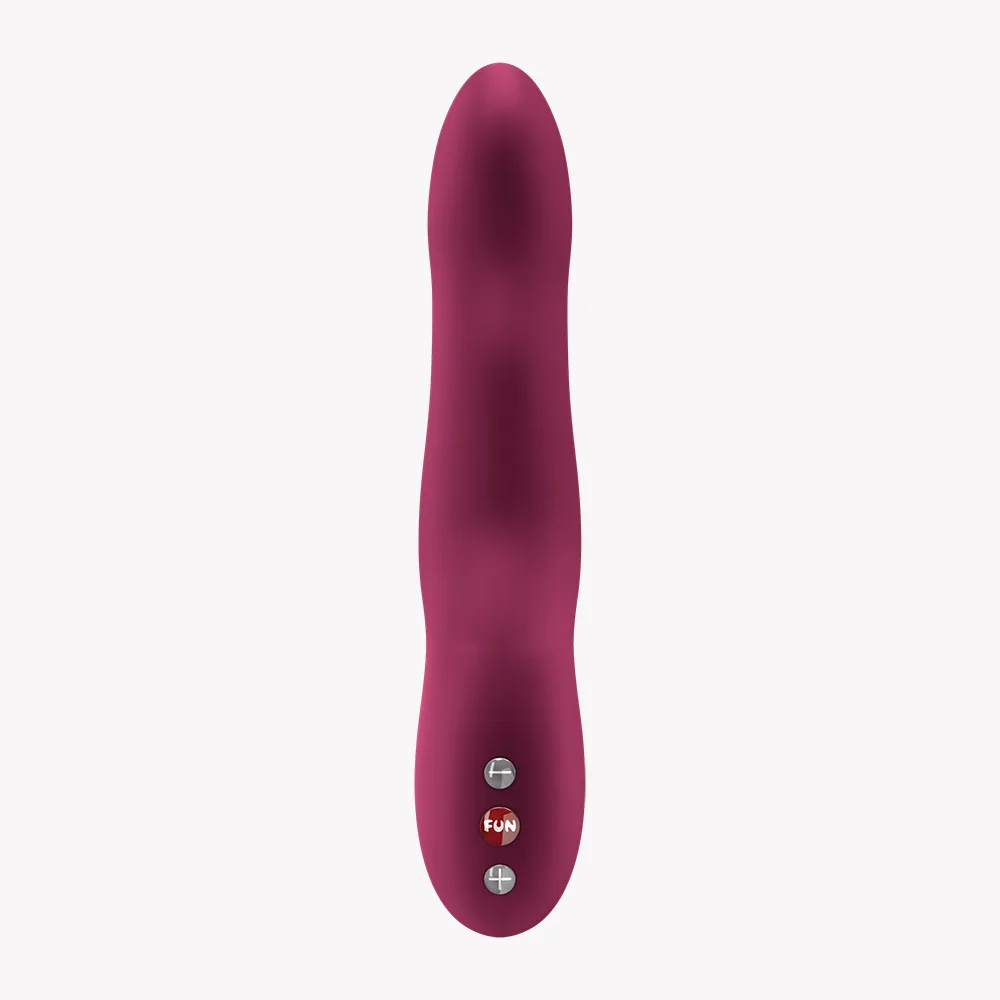
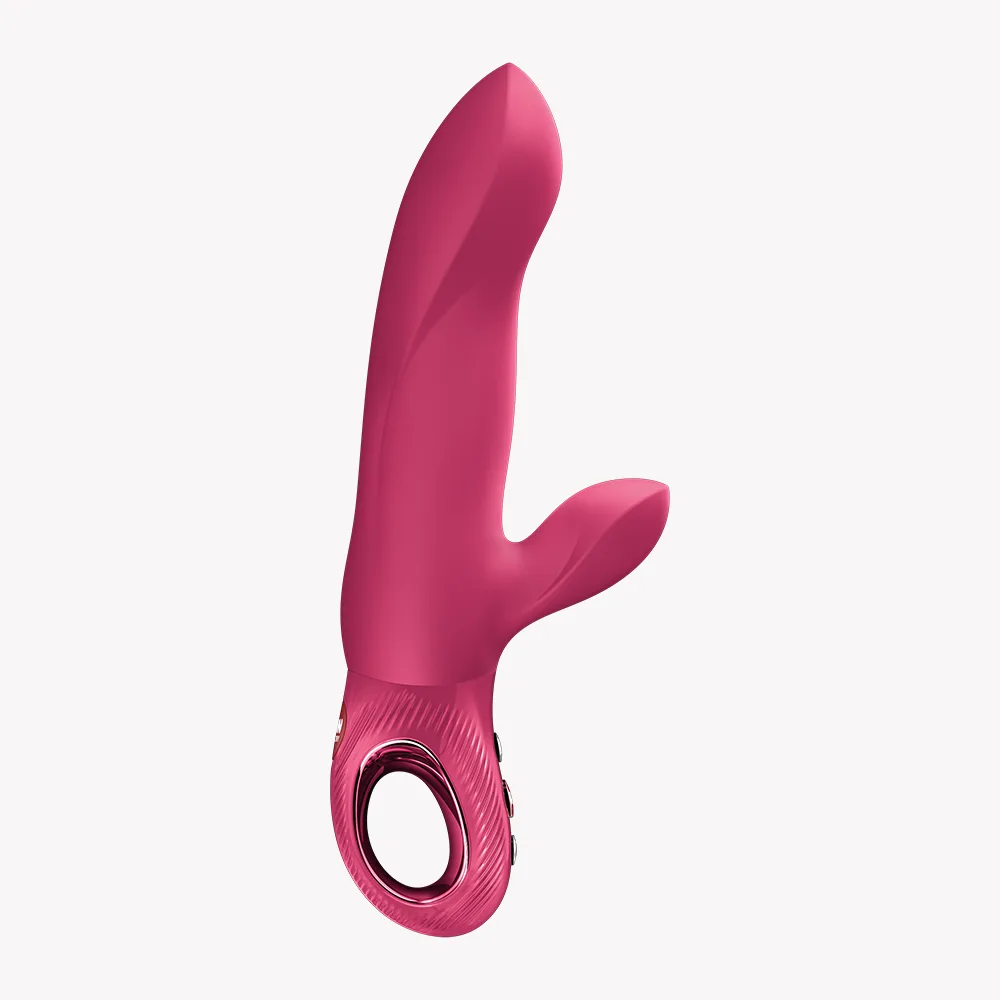
Fun Factory Bi Stronic Arc in the color Raspberry, a thrusting rabbit pulseator with a curved tip and a handle shaped like a loop

Short answer: a vibrator that moves by itself

A regular vibrator buzzes. A thrusting vibrator thrusts—it makes a back-and-forth motion that otherwise would require you to guide the toy with your hand. That’s why it’s sometimes called a thrusting vibrator, a thrusting vibrator, or a pulseator. The motion is the whole point, and it’s also what makes the product type more expensive, heavier, and more battery-hungry than a regular vibrator.

The most important thing to understand before you buy is that the word thrusting is used for two completely different designs. One moves the entire product from the inside; the other pushes out and pulls in part of the shaft. They look the same in a store listing, but they have different motion, different water resistance, and different care. The rest of the guide explains the difference, what the numbers in the specifications mean, and how to choose.

Do you want to compare models right away? The guide to thrusting-vibratorer where fifteen models have been reviewed based on the manufacturers’ information.

How does a thrusting vibrator work? Two completely different mechanisms

Both types create a thrusting motion, but they do it in different ways. That determines how the motion feels, how the product should be cleaned, and whether it can handle water.

Pulseator: a weight that swings inside

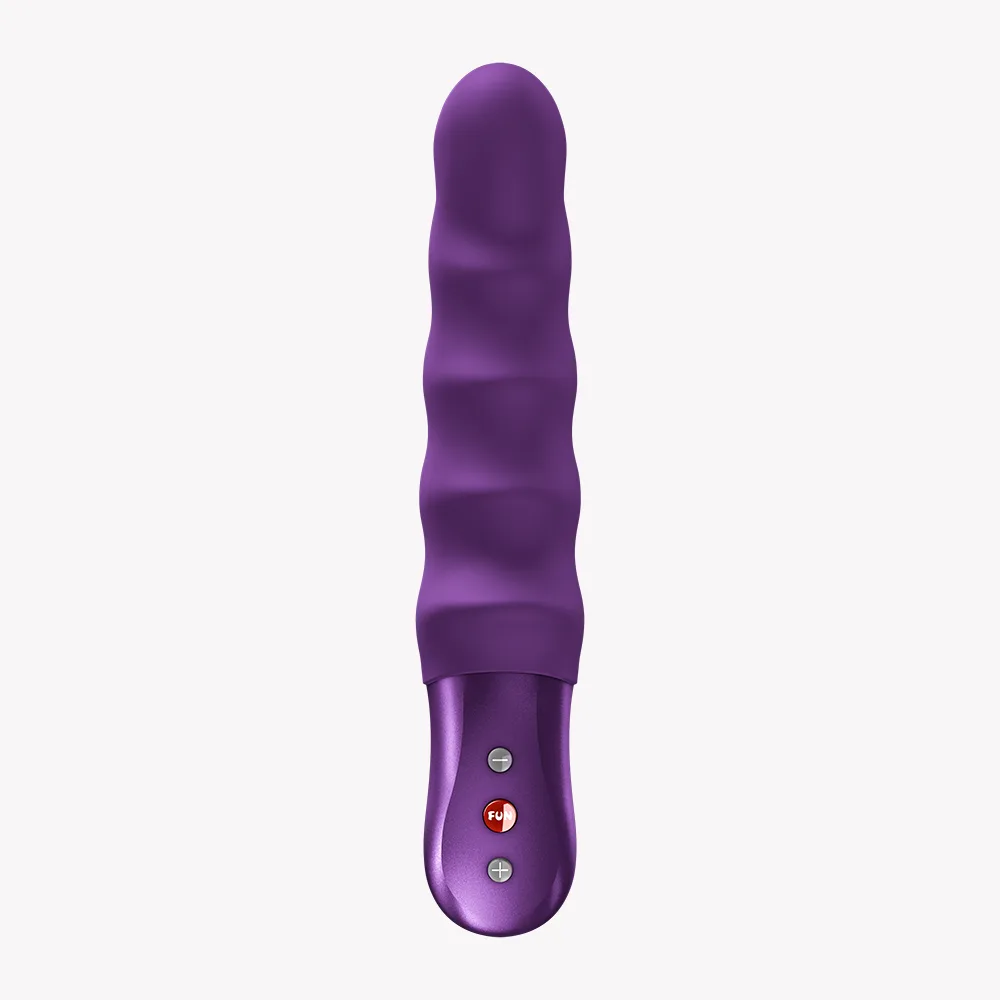
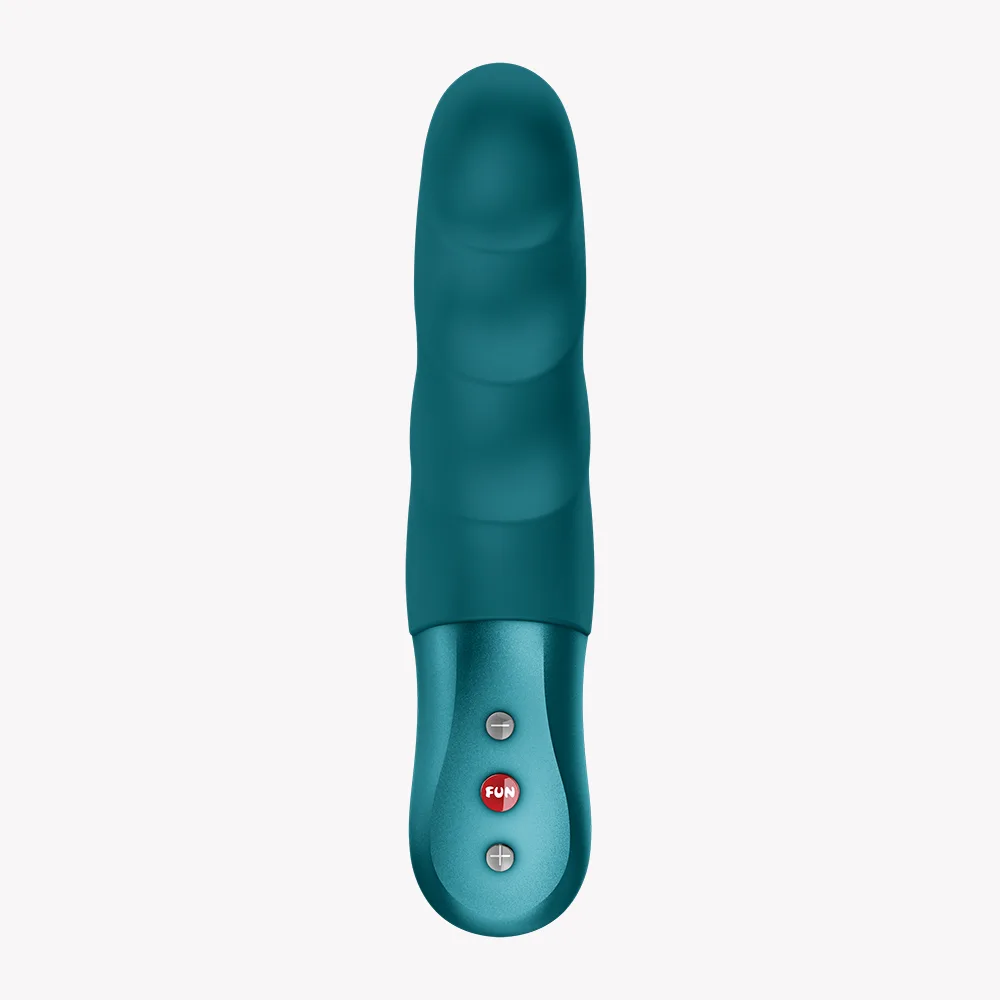
Fun Factory, which manufactures the Stronic series, describes the mechanism as a magnet-driven swinging component. A mass moves back and forth inside the product, and because the motion comes from within, the whole toy is moved. So you don’t have to guide it with your hand—it thrusts by itself, and it can be used hands-free without a mount or suction cup.

The design has a big advantage: the housing is closed. No rod goes through a seal, and no creases need to be kept clean. Bi Stronic Arc, Stronic Wave, Stronic Surf and Stronic Petite are all IPX7 according to the manufacturer, which means they can be submerged one meter for 30 minutes according to the IEC 60529 standard.

The downside is the battery. Moving a lot back and forth draws much more current than vibrating. Bi Stronic Arc is stated to have about 30 minutes of runtime and about three hours of charging, with a 900 mAh cell. Stronic Wave and Stronic Surf are stated to be about 40 minutes.

The telescopic: the shaft that slides out and in

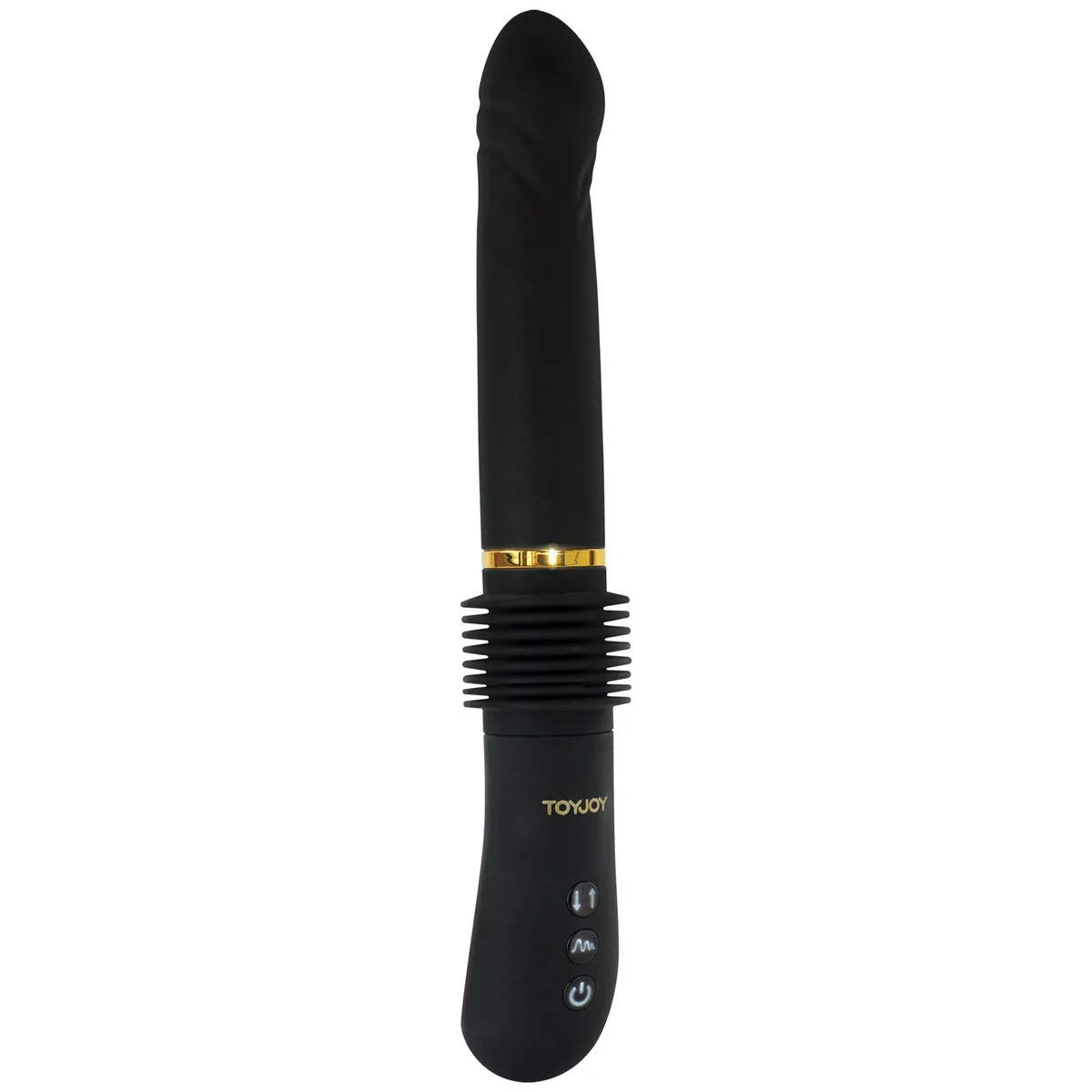
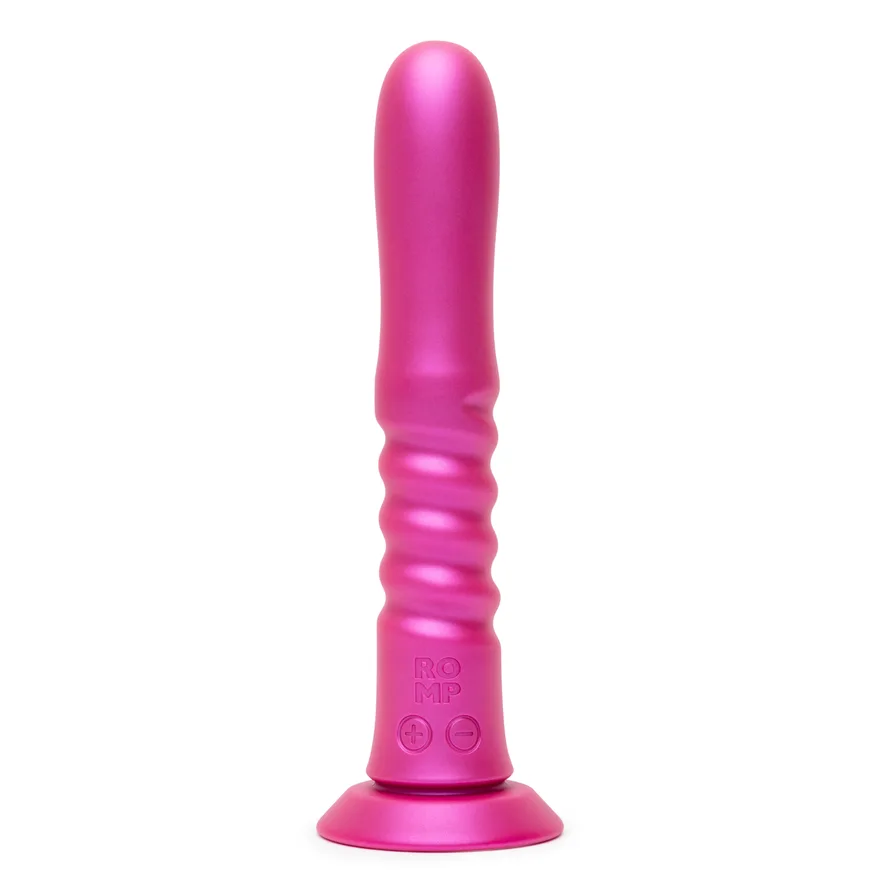
The other type literally does what the word promises. A motor drives a rod that pushes out part of the shaft and pulls it back in, often through a pleated bellows. ToyJoy Magnum Opus Thruster pushes out the shaft from 31 to 39 centimeters according to the manufacturer’s dimension sketch—an eight-centimeter thrust stroke. ROMP Jiggle works on the same principle in a smaller format and has a suction-cup base.

The telescopic model provides a movement that feels more like penetration, but it costs two things. The bellows or sliding rod is harder to get completely clean than a smooth silicone shaft, and the seal has to be able to handle something moving through it. None of the telescopic models in our review reaches IPX7: ROMP Jiggle is IPX6 and can be rinsed but not submerged, and Magnum Opus is, according to the manual, only splash-proof and may not be used in water.

Hybrid types: egg, rabbit, and realistic models

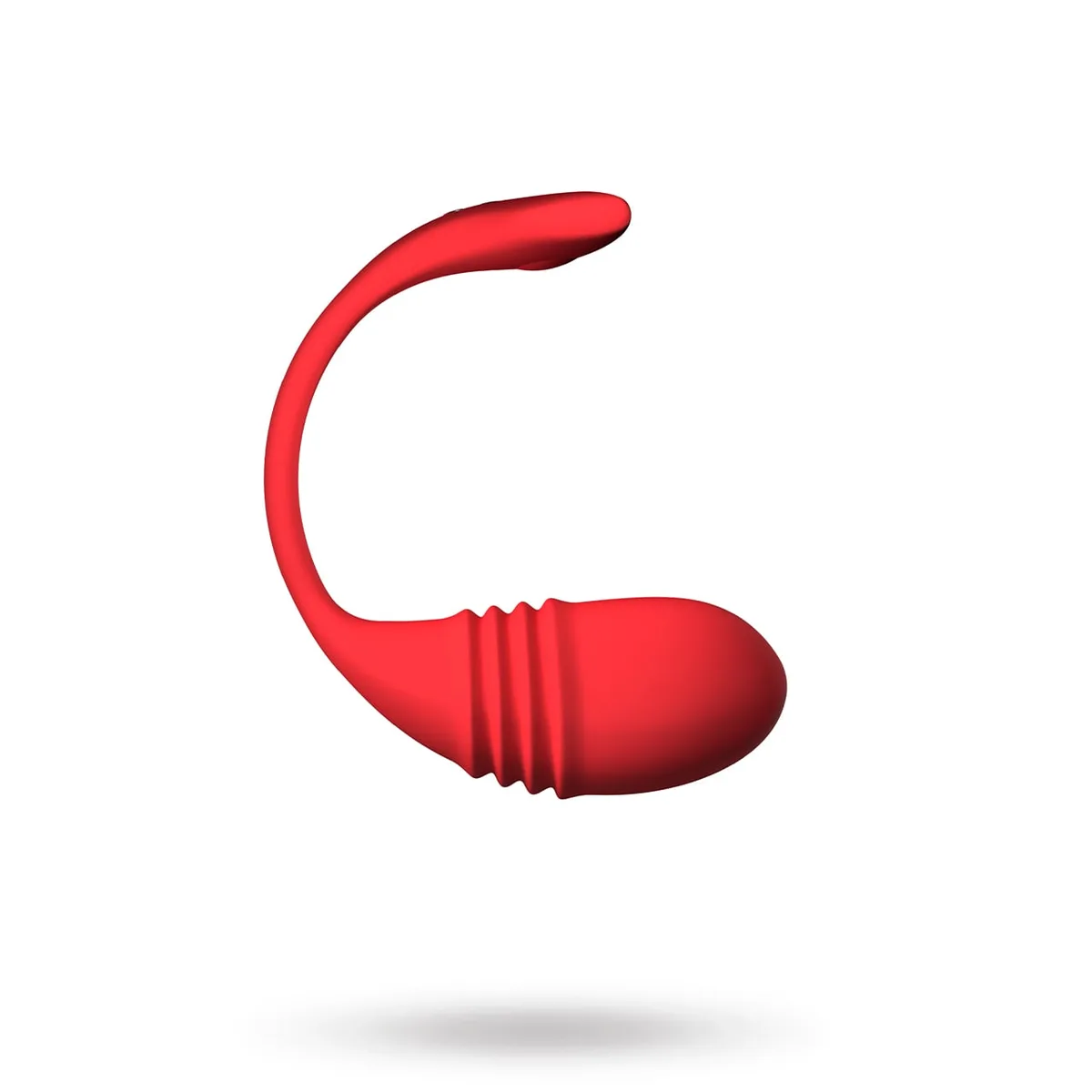
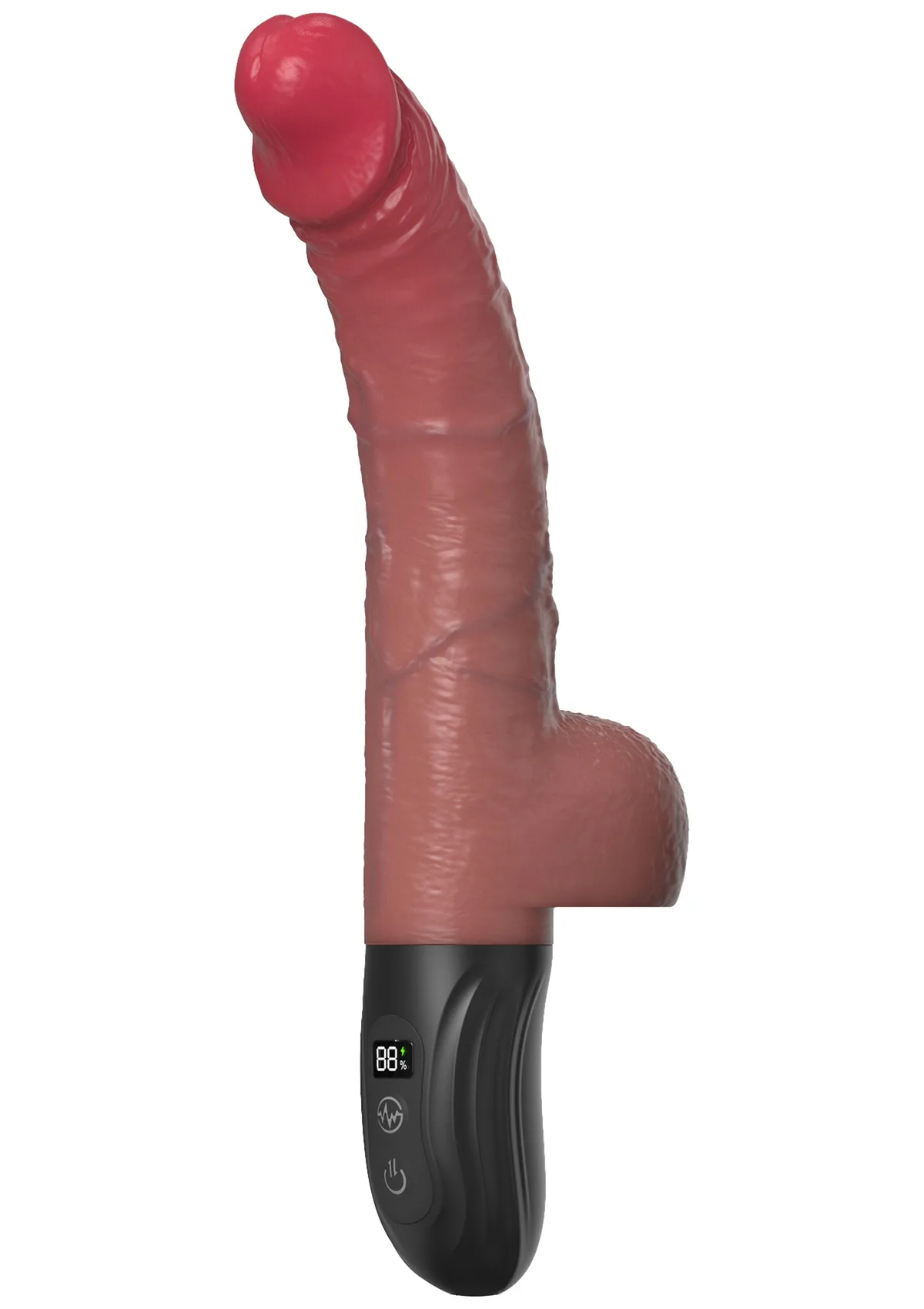
Between the two types there are products where the thrust is one of several functions. Lovense Vulse is an egg with a thrust function. Svakom DuoGlow is a rabbit that thrusts, rotates, vibrates, and heats, with a detachable clitoral part. Hidden Desire Realistic Thrusting Wigglingis a realistic dildo that thrusts, sweeps side to side, and vibrates.IntoYou Ascenhas three independent motors: thrust and swing in the shaft, shaft vibration, and a clitoral ball.

Pulsators: thrusts from within, can handle water

Stroke length and thrusts per minute: what the manufacturers state

The movement of a thrust vibrator is described by two numbers: stroke length—how far the movement goes—and speed, most often given as thrusts or strokes per minute. Those are the two figures that actually say something about how powerful the movement is. Unfortunately, they are rarely published.

For Lovense Vulse, a ten-millimeter stroke length and up to 120 strokes per minute are stated—one of the few manufacturers that publishes both. ToyJoy states an eight-centimeter stroke length for Magnum Opus but no speed. Svakom states 85 strokes per minute for DuoGlow, together with rotation, vibration, and pulsation frequencies. For Hidden Desire's realistic model, a thrust of almost two centimeters is given, and a side-to-side sweep of up to five.

Fun Factory publishes neither of the two for its pulsators. This is not a lack in their documentation otherwise—they publish battery, materials, and the enclosure rating in detail—but rather a result of the mechanics: a swinging mass does not have a stroke length in the same way as a telescopic rod. For you as a buyer, that means there is no number to compare a pulsator and a telescopic one with. So then compare the number of thrust programs, the number of speed steps, and whether the thrust can be controlled separately from the vibration.

Longer strokes are not automatically better. Ten millimeters on an egg-shaped head that sits inside feels completely different from eight centimeters on a shaft that you hold in your hand. Think about where the movement is supposed to be felt—and start at low speed.

Where the manufacturer publishes the motion

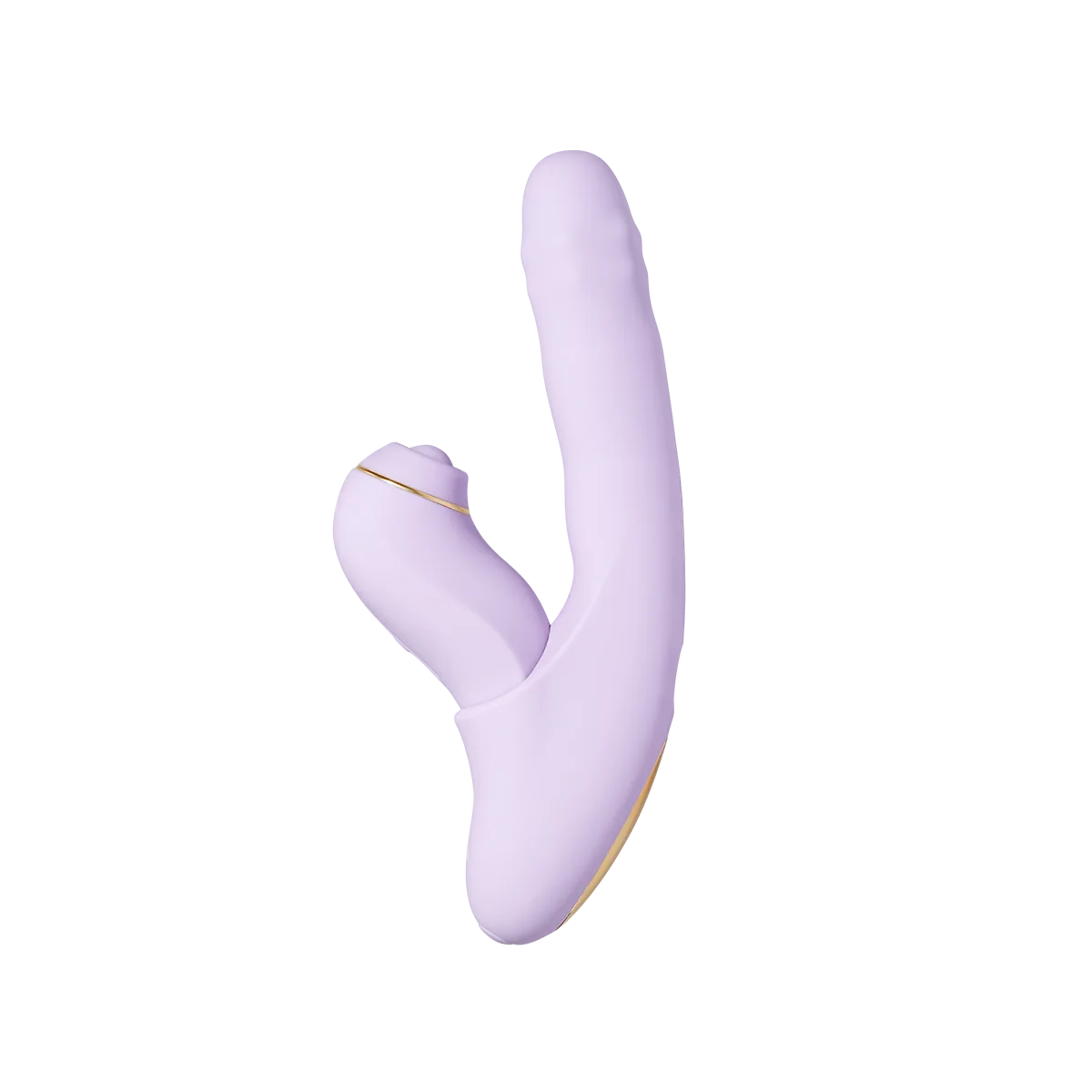
Svakom DuoGlow in pastel purple, assembled with the pulsing stimulator attached to the vibrator’s shaft
7.2

Five functions and sound level

Svakom DuoGlow

85 strikes per minute plus rotation, vibration, pulsing, and heat up to 38 °C. The manufacturer states a maximum of 60 dB for the vibration part and IPX7.

Lowest price £71.99

Price checked 26 September 2026

How loud is a thrust vibrator?

Expect that a thrust vibrator can be heard more than a regular vibrator. The sound doesn’t come just from the motor, but also from the mechanics and the mass that turns at each end of the motion, and each direction change produces a mechanical sound.

Almost no manufacturers publish a measured value. Svakom is an exception and states a maximum of 60 dB for the vibration part and a maximum of 55 dB for the stimulator in DuoGlow, but without any information on the measurement distance—and without distance you can’t compare a decibel level directly with other products. Fun Factory, Lovense, and ROMP publish no decibel values for their thrusting models.

The surface also affects it. A product that’s attached with a suction cup to tile, glass, or the side of a bathtub gets a surface that acts like a resonance box, and that amplifies the sound more than a soft surface. If sound matters to you, compare with the models in silent vibrators—and expect that a thrusting model doesn’t belong there.

Battery and charging: motion uses power

Runtime is the most common objection to thrust vibrators, and it follows the mechanics rather than the price. A few examples from the manufacturer’s information: Stronic Petite about 30 minutes on about three hours of charging, Lovense Vulse up to 1.08 hours on 60 minutes of charging, Svakom DuoGlow one hour per section on 2.5 hours of charging. IntoYou Ascen is stated as up to 100 minutes on 50 minutes of charging, and ROMP Jiggle up to 90 minutes at the highest speed.

Read the runtime carefully. Some manufacturers state it at the lowest setting, others at the highest. ROMP’s claim at the highest speed is unusually honest. Feel free to charge the product fully before using it, so it doesn’t stop mid-session.

Also check the cable. Fun Factory’s Stronic models are charged with a standard USB-C, but the cable is not included in the package. Lovense Vulse and IntoYou Ascen have a magnetic, product-specific charging cable—if you lose it, a regular USB-C cable won’t work.

Handsfree: pulsator, suction cup, or remote control

One big reason to choose a thrusting vibrator is to avoid having to make the movement yourself. You can solve it in three ways. The pulsator moves on its own and can only be held in place. A telescope with a suction cup base—which, like the ROMP Jiggle with its suction cup of 7,4 centimeters—can be attached to a smooth surface. And a model with remote control or an app, like Hidden Desires’ realistic model with remote control and a removable suction cup, can be controlled without you having to reach the product.

A suction cup on a thrusting vibrator has a tougher job than on a regular dildo. Every thrust sends a force through the base that tries to rip the cup off, and that’s why it needs a smooth, tight surface like tile or glass and a clean, lightly damp cup. More about that in dildo with suction plug.

The line toward sex machines is drawn with products that are built to be fixed in place and work completely without being held. It’s a different type of product and a different buying decision, and they’re not included here.

If you want handsfree or a longer motion

Who is a thrusting vibrator for?

A thrusting vibrator is for you if you like penetration and motion rather than just vibration, and if you want to avoid having to make the movement with your hand. It can also be a way to get deeper stimulation than a standard G-spot vibrator provides.

It’s a worse fit if you want something quiet, something small to travel with, or something with a long runtime. It’s rarely an obvious first purchase—a regular vibrator will teach you what you like first. If you want to start there, read how do you use a vibrator or the overview sex toys for women. Are you looking for a rabbit without thrusting? there is rabbitvibrator-guiden.

Care, lube, and safety

Clean the shaft vibrator before and after every use according to the manufacturer’s instructions. A pulsator with IPX7 can be rinsed under the tap—make sure any rubber plug over the charging port sits correctly, because Fun Factory ties water resistance to this. A telescopic device with IPX6 can be rinsed but not submerged, and a model that’s only splash-proof must be wiped off. Be extra careful with folds and bellows, where lube and moisture easily get left behind.

Use a water-based lube for silicone toys, because silicone-based lube can damage them. Use a condom if you share the toy. Only use a shaft vibrator anally if the manufacturer explicitly states that it’s intended for this and it has a base that prevents it from sliding in. Stop if anything hurts. How to clean different materials is in how to clean sex toys, and more vibrators are in the category vibrators.

Frequently asked questions about shaft vibrators

What is a shaft vibrator?
A vibrator that makes a thrusting back-and-forth motion on its own, instead of just vibrating. It’s also called a thrusting vibrator or a pulsator.
What’s the difference between a pulsator and a thrusting vibrator with a telescopic design?
In a pulsator, a weight swings inside a closed casing and moves the entire product. With a telescopic design, the shaft actually moves in and out. Pulsators are more often waterproof; telescopic models provide a longer stroke.
Are shaft vibrators loud?
They’re usually louder than regular vibrators, because the mechanism changes direction with each thrust. Almost no manufacturers publish decibel values, and a suction cup against tile amplifies the sound.
How long does the battery last in a shaft vibrator?
Often shorter than in a regular vibrator. Manufacturers’ claims range from about 30 minutes for several pulsators to around 100 minutes for some models.
Can you use a shaft vibrator in the shower?
Only if it’s IPX7 or higher. Many pulsators are, while telescopic models are usually only IPX6 or splash-proof and may not be submerged.
What does stroke length mean?
How far the movement goes with each thrust. Lovense, for example, states 10 mm for Vulse and 8 cm for Magnum Opus. Many manufacturers do not publish the measurement at all.

About the author

Elin Sandberg Founder

I run the site. The reviews are produced with AI assistance, and every review is based on the manufacturer’s own specifications, product data sheets and price data from the shops that sell the product — all sources are listed at the bottom of the page and can be checked. I compare the models on what can actually be documented: material, dimensions, power levels, water-resistance rating, warranty and price. If you find a mistake, I want to know.
  • 395 reviewed products
  • Source-backed specifications
  • No sponsored placements

Sources

  1. Thrust mode, vibration program, battery, runtime, and IPX7 for Bi Stronic Arc Fun Factory — Quick Start Guide, Bi Stronic Arc (PDF) — checked 2026-09-27
  2. Magnet-driven swinging body, thrust modes, and runtime for Stronic Petite Fun Factory — official product page, Stronic Petite — checked 2026-09-27
  3. 10 mm stroke length, up to 120 strokes per minute, runtime, and charging time for Vulse Lovense — official product page, Vulse — checked 2026-09-27
  4. Thrusts, rotations, and vibrations per minute, sound level, and battery for DuoGlow Svakom — official product page, DuoGlow — checked 2026-09-27
  5. Thrust length 8 cm, dimensions, and that the product is only splash-proof ToyJoy — official product page, Magnum Opus Thruster — checked 2026-09-27